The Xerxes Inscription at Van Castle: A Monument of Persian Power
A Testament to Persian Greatness
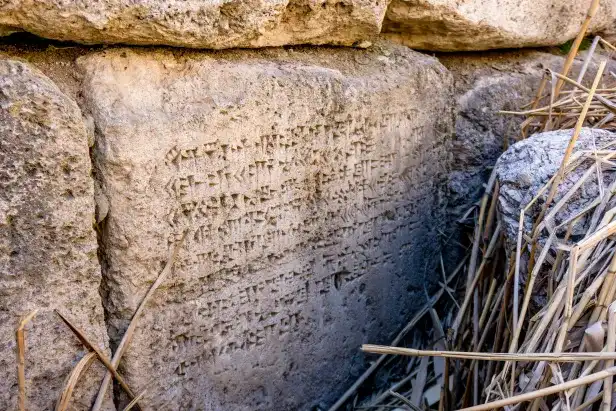
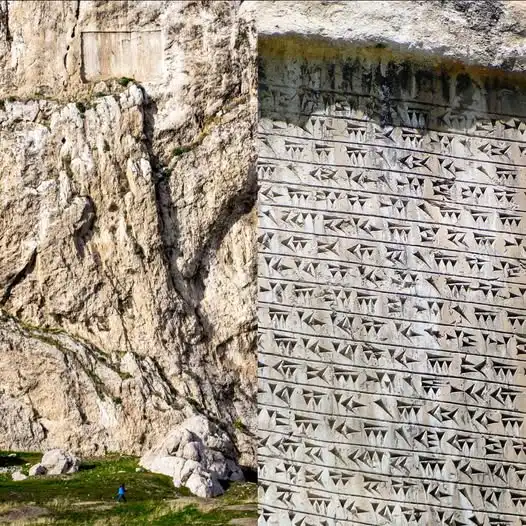
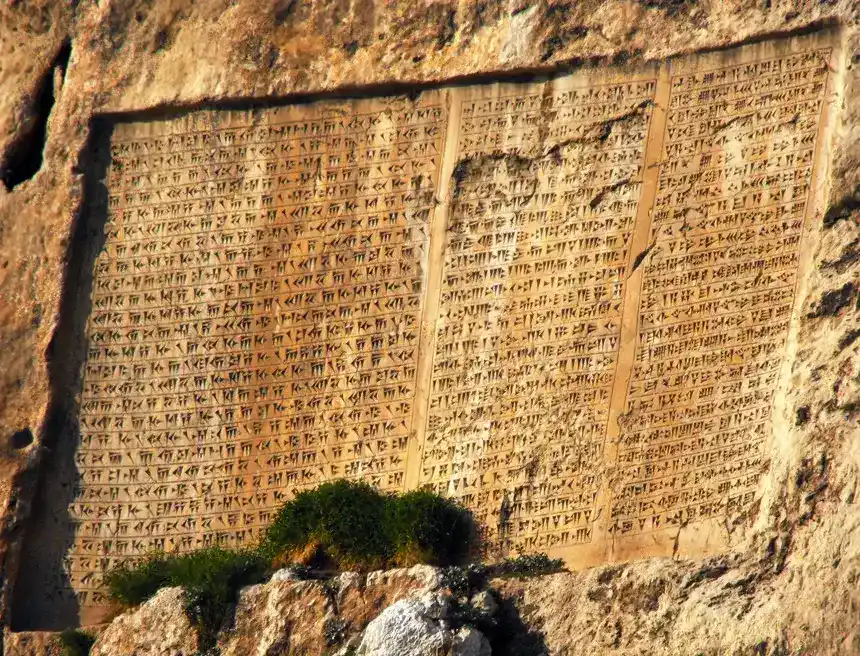
High on the cliffs of Van Castle in eastern Turkey lies one of the most remarkable inscriptions of the ancient world — the Xerxes inscription. Towering at roughly 49 feet wide and 82 feet tall (15 by 25 meters), this monumental text stands as a powerful relic of the Achaemenid Persian Empire. Carved during the reign of Xerxes I (486–465 BC), the inscription was written in three languages: Old Persian, Elamite, and Akkadian.
This trilingual design underscored the empire’s diversity and ambition, allowing Xerxes’ words to resonate across his vast domains. More than a royal boast, the inscription reflects a blend of political propaganda, engineering achievements, and cultural diplomacy, embodying the grandeur of one of history’s most influential empires.
Who Was Xerxes I?
Xerxes I, also known as Xerxes the Great, ruled the Persian Empire during its height in the early 5th century BC. Son of Darius I, he inherited an empire stretching from modern-day India to Greece and from the Caucasus to Egypt.
Xerxes is most famously remembered for his military campaigns against Greece, particularly the Battle of Thermopylae and the Battle of Salamis, which became legendary episodes in world history. However, beyond warfare, Xerxes also devoted significant effort to consolidating imperial authority through monumental construction projects, inscriptions, and infrastructure development.
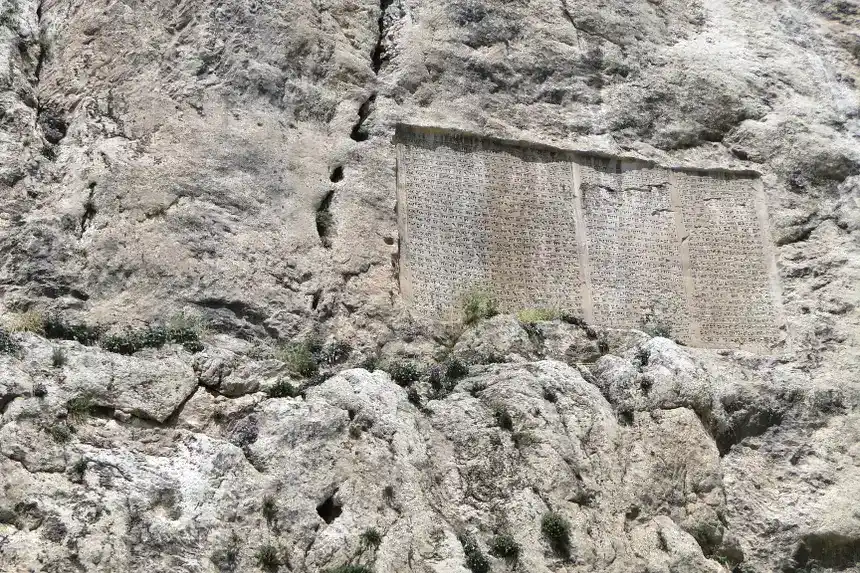
The inscription at Van Castle is one such effort, standing as a political statement carved in stone — literally embedding Persian authority into the landscape.
The Location: Van Castle in Eastern Anatolia
Van Castle (known as Tushpa in antiquity) overlooks Lake Van in modern-day eastern Turkey. Originally built by the Urartians in the 9th century BC, the fortress stood on a massive rock outcrop and commanded key trade and military routes linking Persia to Anatolia.
By placing his inscription on this ancient fortress, Xerxes both appropriated the symbolic power of earlier civilizations and reinforced Persian dominance over a strategically important region. This act reflects a deliberate political choice: the empire showcased its continuity with the past while asserting its own supremacy.
The Monumental Inscription
Size and Structure
The Xerxes inscription is colossal, measuring nearly 82 feet high and 49 feet wide. Its sheer size ensured visibility from afar and permanence across generations. The text was carefully carved into the cliffside in straight, formal lines, underscoring the Persian tradition of monumental writing.
Languages Used
The inscription was written in three languages:
-
Old Persian – the royal language of the Achaemenid dynasty.
-
Elamite – used widely in administration and scribal culture.
-
Akkadian – the diplomatic language of Mesopotamia, understood across much of the Near East.
This trilingual format reflects the empire’s multicultural administration, ensuring the king’s message reached diverse peoples under Persian rule.
Content of the Inscription
The text highlights Xerxes’ achievements, with a particular focus on infrastructure and canal systems. It describes his vision to expand agriculture through advanced water management projects.
Engineering and Canals
Xerxes emphasized the construction of canals and irrigation systems, vital for sustaining agriculture in the empire’s arid regions. These projects boosted food production, supported urban centers, and integrated regions into the broader imperial economy.
Political Message
By inscribing his deeds into stone, Xerxes reminded both subjects and rivals that Persian rule was not only about conquest but also about prosperity and stability. The canals symbolized life-giving power, linking the emperor directly with divine authority to sustain the earth.
Religious and Cultural Themes
Like many Achaemenid inscriptions, the text invoked the blessings of Ahura Mazda, the supreme god of Zoroastrianism. Xerxes portrayed his rule as divinely sanctioned, reinforcing the moral legitimacy of his reign.
Persian Engineering and Innovation
The inscription also reflects the Persians’ advanced approach to engineering and statecraft. By investing in canals and irrigation, Xerxes demonstrated the importance of infrastructure as a political tool.
Persian kings regularly used construction projects to:
-
Ensure steady food supplies for their populations.
-
Strengthen regional trade networks.
-
Create jobs and stability in newly conquered territories.
-
Cement imperial unity by binding diverse lands through shared prosperity.
Such initiatives reveal a sophisticated vision of empire, where engineering served governance just as much as armies did.
Symbolism of the Inscription
The Van Castle inscription symbolized several important themes:
-
Imperial Power: Its scale reflected the magnitude of the Persian state.
-
Cultural Inclusivity: By writing in three languages, Xerxes acknowledged the empire’s diversity.
-
Permanence: Carving into rock symbolized eternal rule, far surpassing perishable records.
-
Integration with Past Civilizations: By choosing an ancient Urartian fortress, Xerxes connected his rule to earlier traditions of kingship in Anatolia.
Historical Significance
Confirmation of Sources
The inscription helps historians cross-reference ancient sources about Xerxes and his policies. While Greek historians like Herodotus focused mainly on Xerxes’ wars, the Van Castle inscription highlights another side of his rule: infrastructure and domestic policy.
A Rare Surviving Monument
Unlike many inscriptions that have been lost or destroyed, the Van Castle text remains remarkably intact. Its preservation provides scholars with invaluable material for studying Old Persian script, Achaemenid administration, and linguistic interaction in antiquity.
The Inscriptions of the Achaemenids
The Van Castle inscription forms part of a broader Persian tradition of monumental inscriptions, which include:
-
The Behistun Inscription by Darius I, detailing his conquests.
-
Persepolis inscriptions, celebrating royal building projects.
-
Naqsh-e Rustam inscriptions, carved onto royal tombs.
Each of these monuments served to broadcast imperial ideology, blending propaganda, religion, and practical achievements.
Visiting Van Castle Today
Modern travelers to Van, Turkey, can explore the ruins of Van Castle and see the inscription carved into its cliffs. Though weathering has worn parts of the text, its grandeur remains clear.
The site offers a stunning view of Lake Van and provides a unique glimpse into both Urartian and Persian history. For historians, linguists, and tourists alike, the inscription is a testament to humanity’s enduring desire to leave a mark on the world.
Legacy of the Xerxes Inscription
The Xerxes inscription at Van Castle endures as one of the largest and most important relics of the Persian Empire. Beyond its sheer scale, it symbolizes the dual strategy of Achaemenid rule — blending military might with infrastructure, cultural diplomacy, and religious legitimacy.
For Xerxes, inscribing his achievements into stone ensured that his legacy would outlast battles, shifting borders, and even the empire itself. Today, over 2,500 years later, the monument continues to speak across time, reminding us of the ambition, innovation, and resilience of ancient Persia.
Conclusion
Carved high into the cliffs of Van Castle, the Xerxes inscription remains a monumental echo of the Persian Empire’s vision. It represents a ruler who sought to project his power not only through conquest but also through enduring infrastructure and cultural inclusivity.
As a relic of the Achaemenid world, the inscription bridges past and present, showing how humanity has always sought to engrave its achievements into history — literally and figuratively.