Wooden Shoes with Cloven Hooves: A Curious Trick of American Outlaws
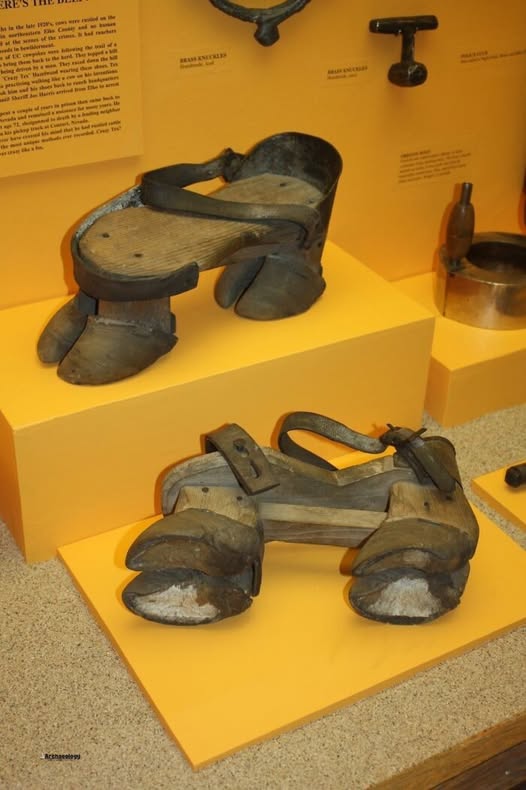
History is full of fascinating stories about human ingenuity, especially when survival, secrecy, and crime collided on the American frontier. Among the strangest relics of this era are wooden shoes fitted with cloven hooves—a clever disguise worn by cattle rustlers and moonshiners in rural America during the late 19th and early 20th centuries. These shoes were not everyday footwear, but rather a tool of deception designed to fool trackers and lawmen by leaving behind trails that resembled cattle or mule prints instead of human footsteps.
The Origin of Wooden Shoes with Hooves
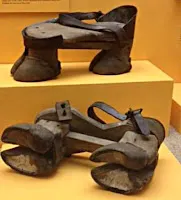
In the rugged landscapes of rural America, justice was often local, swift, and sometimes brutal. Cattle rustling and moonshining were profitable but dangerous pursuits, and perpetrators needed every trick in the book to escape capture. Out of this need arose the idea of hoofed shoes—a pair of wooden soles with leather straps, carved or fitted with cow or mule hooves on the bottom.
This design served one simple purpose: to confuse trackers. When rustlers or bootleggers walked across muddy fields or dirt trails, they left behind animal-like tracks instead of human footprints, throwing pursuers off their trail.
Construction: Simple but Ingenious
The brilliance of these shoes lay in their simplicity. Each pair was crafted using:
-
Sturdy wooden soles – often made from oak or other strong wood.
-
Leather straps – to secure the shoes to a person’s boots or bare feet.
-
Cloven hooves or carved impressions – attached or carved into the base, creating authentic livestock prints.
Some versions were crude, while others showed remarkable craftsmanship, with carefully shaped hoof marks that made the tracks indistinguishable from those of real cattle or mules.
The Role in Cattle Rustling
Cattle rustling was a serious crime in the American West and rural South, where livestock represented wealth, food, and survival. Rustlers would sneak onto ranches under the cover of night, drive cattle away, and sell them elsewhere.
The hoofed shoes gave these thieves an advantage. Ranchers or lawmen tracking missing cattle would often follow the trail of hoof prints, assuming it was just stray livestock. In reality, those tracks often concealed the movements of the rustlers themselves, allowing them to disappear into the night undetected.
A Tool of Moonshiners
While cattle thieves were the first known wearers of these wooden shoes, moonshiners—illegal distillers of alcohol—also adopted the trick. During the Prohibition era (1920–1933), many rural families made moonshine to support themselves. To avoid government agents, moonshiners wore these shoes when transporting supplies or finished liquor through forests and farmland.
The hoof prints they left behind blended seamlessly into the rural environment, masking their smuggling routes and hiding the bustling underground industry that sustained entire communities.
The Cat-and-Mouse Game Between Outlaws and Lawmen
The wooden hoof shoes highlight the never-ending battle of wits between criminals and law enforcement. Just as rustlers and moonshiners developed ingenious tools of deception, lawmen adapted their methods of investigation. Some sheriffs eventually learned to recognize the oddities in false hoof prints, such as unnatural stride patterns or inconsistencies in depth.
Nevertheless, these shoes worked often enough to become legendary, symbolizing the resourcefulness of people living on the margins of society.
The Symbolism of Human and Animal Boundaries
There is a playful irony in these shoes. They blurred the line between human and animal, making a man appear as a cow or mule in the dirt. This transformation wasn’t just about trickery; it reflected deeper themes of survival, ingenuity, and adaptation.
-
For rustlers, the shoes were a way to reclaim wealth from powerful landowners.
-
For moonshiners, they symbolized independence and resistance against restrictive laws.
-
For history, they represent how ordinary people used creativity to navigate harsh realities.
Artifacts of Frontier Ingenuity
Today, surviving examples of these shoes are rare and highly valued by collectors, historians, and museums. They are more than curiosities; they are artifacts of rural ingenuity, preserving a story of how cunning individuals shaped their lives in the shadows of American history.
Why These Shoes Fascinate Us Today
Modern readers are captivated by the story of hoofed shoes because they illustrate the hidden corners of history—moments when cleverness outmatched authority, and when survival demanded thinking outside the box. Unlike monumental events such as wars or revolutions, these shoes remind us that history is also built on small, creative acts of deception.
Their playful design sparks the imagination, while their practical use reveals the harsh realities of frontier life. They are a perfect example of how artifacts can carry both humor and hardship within them.
Legacy in Folklore and Popular Culture
Though not as well-known as cowboy boots or spurs, hoofed shoes occasionally appear in folklore and regional tales. They embody the trickster spirit found in many American stories, where cleverness often triumphs over authority.
In popular culture, they have inspired writers, reenactors, and even artists, who see them as a quirky yet powerful symbol of rebellion and survival.
Conclusion
The wooden shoes with cloven hooves are more than odd relics of the past. They are a window into the ingenuity of cattle rustlers and moonshiners who sought to outwit pursuers in the unforgiving landscapes of rural America. Blurring the lines between human and animal, crime and survival, humor and desperation, these shoes stand as a testament to the resourcefulness that defined life on the margins.
From cattle raids to moonshine trails, they remind us that history is not only shaped by epic battles and great leaders, but also by the clever tricks and hidden struggles of ordinary people.
ALSO READ: The Roman Rock Crystal Jar from the Galloway Hoard: A Jewel of Viking Age Scotland