White House Ruins in Canyon de Chelly: Ancient Puebloan Legacy in Navajo Lands
A Window Into Ancient America
In the heart of northeastern Arizona, where sandstone cliffs tower over winding canyons, lies one of the most fascinating archaeological treasures in the United States—the White House Ruins. Nestled within Canyon de Chelly National Monument on Navajo tribal lands, the ruins reflect the resilience and ingenuity of the Ancestral Puebloans who inhabited this dramatic landscape for centuries.
Alongside nearby wonders such as Mummy Cave and the striking 800-foot Spider Rock spire, the White House Ruins are part of a cultural tapestry that stretches back thousands of years, combining prehistoric artistry, ancient engineering, and living Native traditions.
The Setting: Canyon de Chelly’s Sacred Landscape
A Canyon of Towers and Shadows
Canyon de Chelly (pronounced “de-SHAY”) is one of the longest continuously inhabited landscapes in North America. The canyon’s soaring sandstone cliffs, some rising more than 1,000 feet, cradle streams, fertile fields, and hundreds of archaeological sites.
Navajo Tribal Lands
Unlike many U.S. national monuments, Canyon de Chelly lies entirely within the Navajo Nation. The land remains sacred and actively lived in, as Navajo families still farm and graze livestock in the canyon, continuing traditions that stretch back generations.
The History of the White House Ruins
Ancestral Puebloan Origins
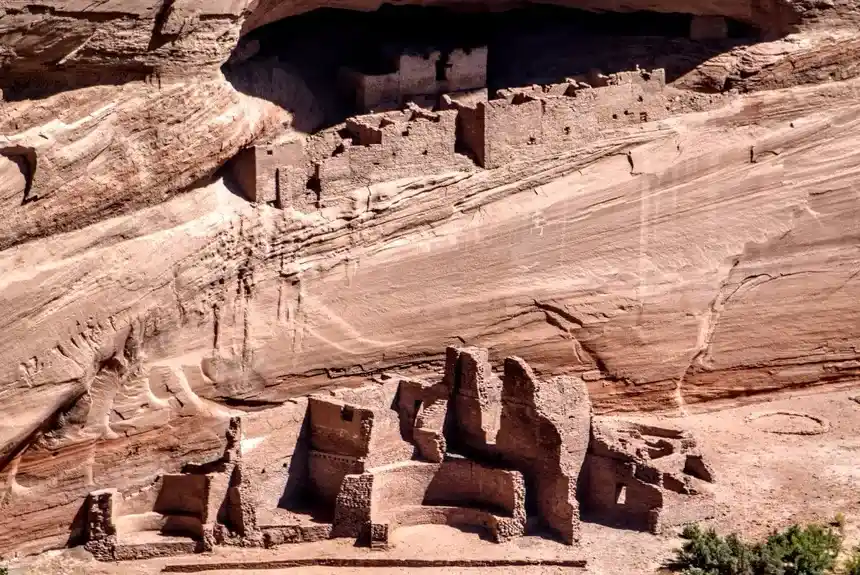
The White House Ruins date back to around 1060 CE, when Ancestral Puebloans (Anasazi) constructed multi-storied stone and adobe dwellings within a natural alcove of the canyon walls. The settlement grew over centuries, eventually consisting of more than 60 rooms and ceremonial kivas.
Why “White House”?
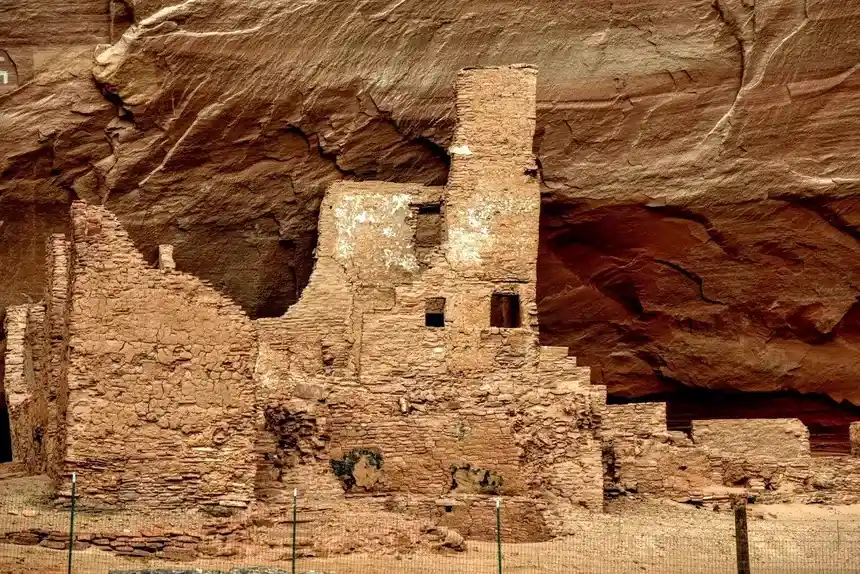
The name comes from a prominent plastered wall painted in white, which remains visible today. This striking detail set the site apart from other dwellings in the canyon.
Abandonment and Transition
By the late 13th century, the Ancestral Puebloans gradually abandoned the site, likely due to a combination of climate change, drought, and social shifts. Later, Navajo peoples made the canyon their home, leaving behind rock art, dwellings, and oral histories that continue to resonate with their descendants.
Architecture and Engineering
Cliff Dwellings in Harmony with Nature
The White House Ruins represent a brilliant use of natural geography. Built into an alcove in the canyon wall, the structures provided shade from the desert sun and protection from invaders.
Layout of the Site
-
Lower Rooms: Storage and domestic spaces for everyday life.
-
Upper Rooms: Perched high within the alcove, accessible via ladders or handholds carved into the rock.
-
Kivas: Circular underground chambers used for rituals and ceremonies.
Building Materials
The Puebloans used sandstone blocks bound with adobe mortar, creating structures that have endured for nearly a millennium despite exposure to the elements.
Rock Art and Petroglyphs
Canyon de Chelly is famous for its prehistoric rock art, and the White House Ruins are no exception. Visitors can see petroglyphs and pictographs depicting human figures, animals, and spiritual symbols. These carvings and paintings provide rare insights into the beliefs and daily life of the canyon’s ancient inhabitants.
Cultural Significance
For the Puebloans
For the Ancestral Puebloans, the canyon was both home and sanctuary. Its fertile fields supported agriculture, while its walls offered protection and spiritual connection.
For the Navajo
To the Navajo, Canyon de Chelly remains a sacred homeland, woven into myths, ceremonies, and oral traditions. Sites like Spider Rock are tied to deities and legends, while the ruins themselves stand as reminders of ancestral continuity.
Nearby Landmarks: Mummy Cave and Spider Rock
Mummy Cave
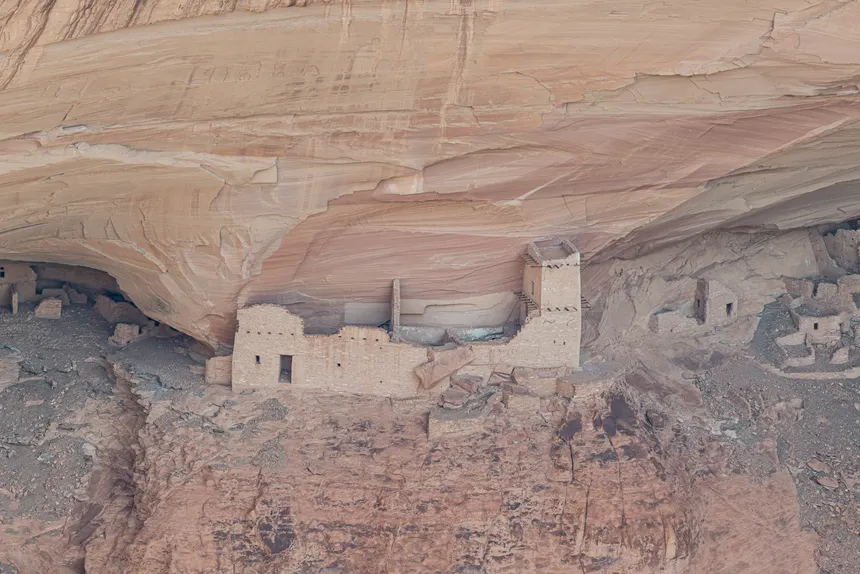
Located a few miles from the White House Ruins, Mummy Cave is another striking cliff dwelling, believed to have housed up to 100 rooms. Its name comes from the mummified remains once discovered inside.
Spider Rock
Towering 800 feet above the canyon floor, Spider Rock is one of Canyon de Chelly’s most iconic features. In Navajo tradition, it is the home of Spider Woman, a powerful deity who taught weaving and plays an essential role in Navajo mythology.
Visiting the White House Ruins
The White House Trail
One of the most popular ways to see the ruins is by hiking the White House Trail, the only trail within Canyon de Chelly that visitors can explore without a Navajo guide.
-
Trail Length: About 2.5 miles round trip.
-
Elevation Change: Roughly 600 feet.
-
Highlights: Stunning canyon views, close-up access to the ruins, and glimpses of Navajo farmlands.
Guided Tours
For a deeper experience, visitors can book guided tours led by Navajo guides. These tours offer cultural perspectives, stories, and access to other restricted areas of the canyon.
Preservation Efforts
The White House Ruins face ongoing challenges from erosion, weathering, and human impact. Preservation teams work alongside the Navajo Nation to protect the site while respecting its cultural and spiritual significance. Visitors are asked to admire from designated viewpoints and avoid touching the fragile structures.
Why the White House Ruins Matter Today
The ruins stand as a bridge between past and present, offering lessons in resilience, adaptation, and cultural continuity. They remind us that the canyon has been a living landscape for thousands of years, with stories etched into its stone walls and carried in the voices of the Navajo people who call it home today.
Practical Travel Information
-
Location: Canyon de Chelly National Monument, near Chinle, Arizona.
-
Access: Free entry to the monument; guided tours available for a fee.
-
Best Time to Visit: Spring and fall, when temperatures are moderate.
-
Facilities: Visitor center, guided tour services, and scenic overlooks.
Fun Facts About the White House Ruins
-
The ruins are nearly 1,000 years old.
-
At its height, the settlement included over 60 rooms.
-
The site is the only ruin in Canyon de Chelly accessible by a public hiking trail.
-
The canyon contains over 2,700 archaeological sites.
-
Spider Rock is visible from the same general area, linking natural and cultural heritage.
Conclusion: A Journey Into Timeless Heritage
The White House Ruins of Canyon de Chelly are not just remnants of stone and adobe—they are echoes of civilizations that shaped the American Southwest. From the Ancestral Puebloans who built them to the Navajo people who preserve their meaning, the ruins embody stories of survival, spirituality, and connection to the land.
For visitors, the journey to the White House Ruins is more than a hike—it is a step into living history, a chance to witness the enduring legacy of Native America against the breathtaking backdrop of Arizona’s canyonlands.
ALSO READ: Aragonese Castle of Ischia: Italy’s Timeless Fortress on the Sea