The Wheel of Life and Death: Totonac Sculpture from El Zapotal
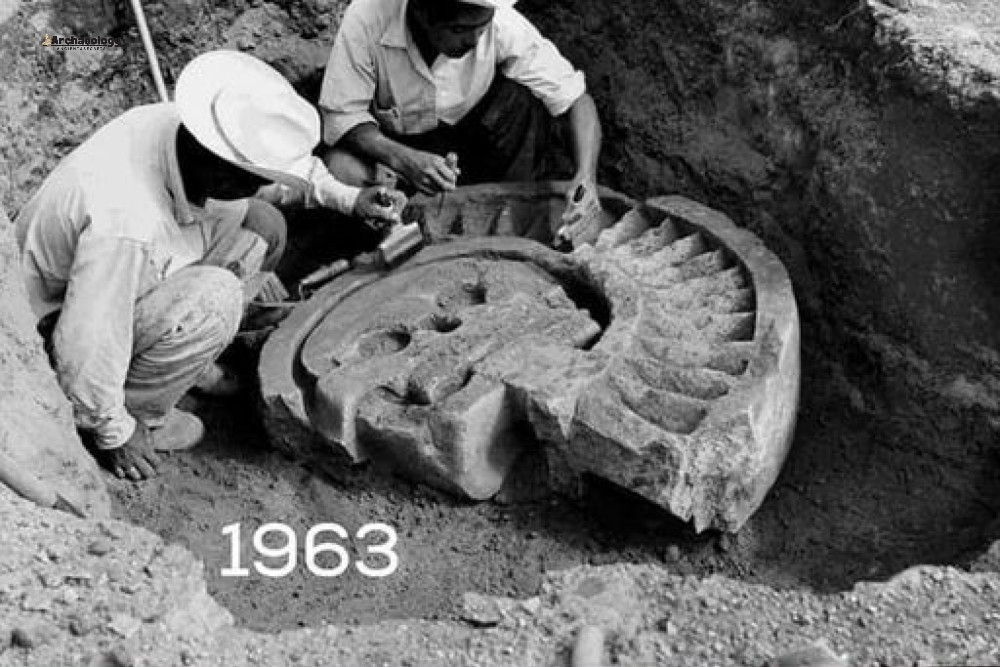
In 1963, archaeologists working at El Zapotal in Veracruz, Mexico uncovered one of the most striking artifacts of the Totonac culture: a stone sculpture now widely referred to as the “Wheel of Life and Death.” Dating between 600–900 CE, this extraordinary piece combines powerful symbolism of mortality, renewal, and cosmic balance.
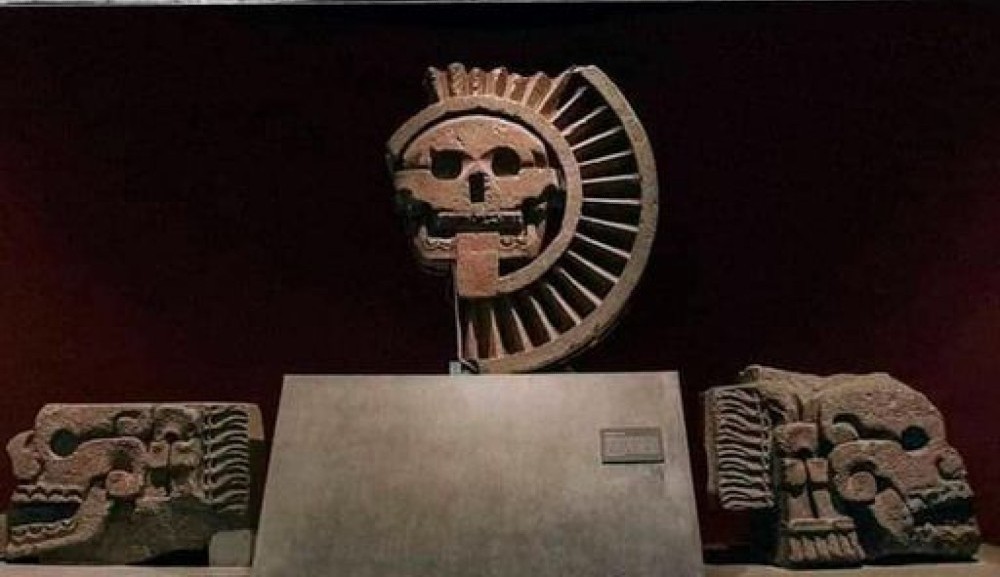
The sculpture depicts a skeletal face framed by a radiating semicircle, uniting images of decay and light, finality and continuity. Unearthed among funerary offerings, it offers profound insight into the Totonac worldview, where death was not an end but part of an eternal cycle.
The Totonac Culture: Flourishing Between 600–900 CE
The Totonac people were one of the major pre-Columbian cultures of Mesoamerica, flourishing along the Veracruz region of eastern Mexico. Renowned for their artistry, agricultural systems, and religious traditions, the Totonacs left behind a rich legacy of temples, sculptures, and ceremonial sites.
During the period between 600–900 CE, the Totonacs were active participants in the cultural exchanges of Mesoamerica. They shared religious motifs with neighboring civilizations such as the Teotihuacanos and Maya, but developed distinctive traditions of their own, particularly surrounding death and fertility rituals.
Discovery at El Zapotal
The El Zapotal site revealed a wealth of funerary materials, including offerings, figurines, and ceremonial objects tied to Totonac burial practices. The discovery of the “Wheel of Life and Death” was particularly significant because it encapsulated the duality central to Totonac cosmology.
This artifact, found in association with other offerings, indicates that it played a role in mortuary ceremonies, serving either as a dedication to deities of the underworld or as a symbolic guide for the deceased through the cycles of existence.
Description of the Wheel of Life and Death
The sculpture is carved in stone, presenting a skeletal face—representing mortality—encircled by a radiating semicircle of lines or spokes. The overall design resembles a wheel or sunburst, merging themes of decay with continuity.
Key Features:
-
Skeletal Face: A haunting reminder of human fragility and the inevitability of death.
-
Radiating Pattern: Suggestive of sunlight, cycles, and renewal, symbolizing the eternal turning of time.
-
Semicircle Design: Represents the balance between opposites—life and death, night and day.
Its macabre yet luminous character reflects the Totonac belief that death was inseparable from life, part of a cosmic cycle rather than a final termination.
Symbolism: Life, Death, and Cosmic Duality
The “Wheel of Life and Death” encapsulates cosmic duality, a theme deeply ingrained in Mesoamerican cultures.
-
Mortality: The skull recalls the transience of human life.
-
Regeneration: The radiating semicircle mirrors the rising sun, representing rebirth, continuity, and the promise of renewal.
-
Cosmic Balance: Like a wheel, the artifact embodies the endless turning of existence, where death feeds life, and life inevitably returns to death.
This dualism reflects the Totonac understanding of the universe as cyclical, where opposites coexist and sustain one another.
Connection to Mictlantecuhtli, the God of Death
The sculpture may have been linked to Mictlantecuhtli, the feared Aztec and Mesoamerican god of death who ruled the underworld, or Mictlan. Although primarily associated with later cultures, similar death deities likely featured in Totonac traditions.
The skeletal imagery strongly suggests underworld associations, while the radiating form implies connections with solar deities governing life’s renewal. This blend underscores the Totonac belief that life and death were not antagonistic forces, but complementary aspects of the cosmic order.
Funerary Context and Ritual Purpose
As the sculpture was found among funerary offerings, it likely played a role in guiding or protecting the dead. Possible ritual functions include:
-
Guardian Symbol: Acting as a protective emblem for the deceased in their journey to the afterlife.
-
Ceremonial Object: Used in rituals invoking gods of death and rebirth.
-
Cycle Marker: Representing the turning of cosmic time and ensuring the deceased’s renewal in another form.
Its placement among offerings highlights the importance of death rituals in Totonac society, where the afterlife was seen as a continuation of earthly existence within cosmic cycles.
Artistic Significance in Totonac Culture
Totonac art often combined naturalistic elements with highly symbolic motifs. The “Wheel of Life and Death” exemplifies this dual approach: it presents a realistic skull alongside abstract radiating patterns.
This blending reflects a cultural effort to merge the tangible and intangible, embodying spiritual truths in physical form. The sculpture is not just an artistic achievement—it is a philosophical statement carved in stone.
The Paradox of the Sculpture: Macabre and Luminous
One of the most compelling aspects of the “Wheel of Life and Death” is its paradoxical nature.
-
Macabre: The skeletal face reminds us of decay and the inevitability of mortality.
-
Luminous: The radiating semicircle evokes sunlight, renewal, and hope.
This tension between darkness and light embodies the Totonac belief that life and death are intertwined. The sculpture becomes a visual meditation on continuity, reminding us that endings are also beginnings.
Preservation and Museum Display
Today, the “Wheel of Life and Death” is carefully preserved and displayed in a museum, where it continues to inspire awe and curiosity. As both an artistic masterpiece and spiritual symbol, it offers modern audiences a glimpse into the Totonac worldview.
Its display not only honors the Totonac heritage but also sparks universal reflections on humanity’s attempts to understand death, continuity, and the mysteries of existence.
Universal Themes: Humanity’s Search for Meaning
While rooted in Totonac culture, the sculpture speaks to universal human questions:
-
What happens after death?
-
How are endings tied to beginnings?
-
How do humans make sense of the cycles of nature and existence?
By carving a skeletal face into a radiant wheel. The Totonacs gave form to these mysteries, expressing through stone what words could not fully capture.
Conclusion
The “Wheel of Life and Death” Totonac sculpture from El Zapotal stands as a profound expression of humanity’s eternal quest to understand the cycle of mortality and rebirth. Discovered among funerary offerings, it reflects the Totonac belief in cosmic duality. Death as not an end but a continuation of life’s eternal wheel.
Its paradoxical design—skeletal yet radiant, macabre yet luminous—makes it one of the most evocative artifacts of ancient Mesoamerica. Preserved today in a museum, it continues to resonate across cultures and centuries. Reminding us that the mysteries of life and death are universal, timeless, and endlessly compelling.