Walking Whales of Egypt: Fossils That Rewrote Marine Evolution
In the sun-scorched heart of Egypt’s Western Desert lies a place where dry sands conceal secrets of the ocean. The Valley of Whales, or Wadi Al-Hitan, has unveiled astonishing fossils of 37-million-year-old “walking whales” that are changing how we understand evolution. These ancient creatures once roamed an Egyptian seascape before the Sahara became a desert, bridging the evolutionary gap between land mammals and today’s fully aquatic whales.
The Hidden Ocean Beneath the Sahara
Long before the golden dunes of the Sahara stretched across northern Africa, this region was submerged under the waters of the prehistoric Tethys Sea. Around 40 million years ago, lush coastlines and shallow lagoons supported a menagerie of marine life, including sharks, rays, turtles, and primitive whales.
One of the greatest geological transformations in Earth’s history turned these waters into sand, yet fossilized skeletons of ancient whales remained entombed. When scientists began excavating the Valley of Whales in the 20th century, they discovered remains so well-preserved that they offered a clear snapshot of mammalian life during the Eocene Epoch.
Discovery of the “Walking Whales”
The most remarkable finds from Wadi Al-Hitan include fossils of early whales belonging to the genus Basilosaurus and Dorudon, along with recently identified four-legged proto-whales that demonstrate key evolutionary transitions. These “walking whales” retained functional hindlimbs and could move awkwardly on land while still being adapted for swimming.
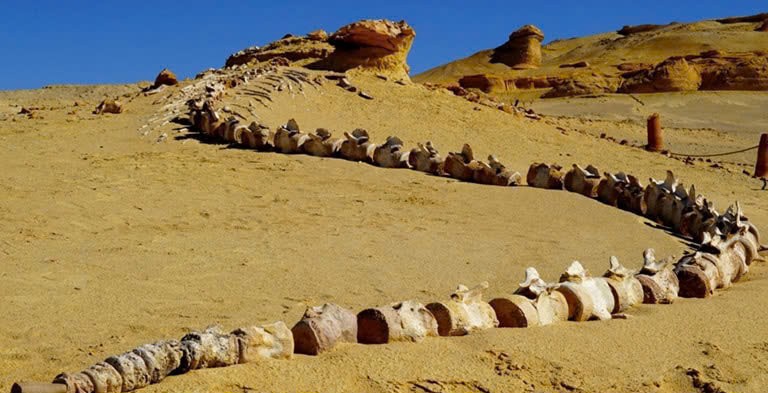
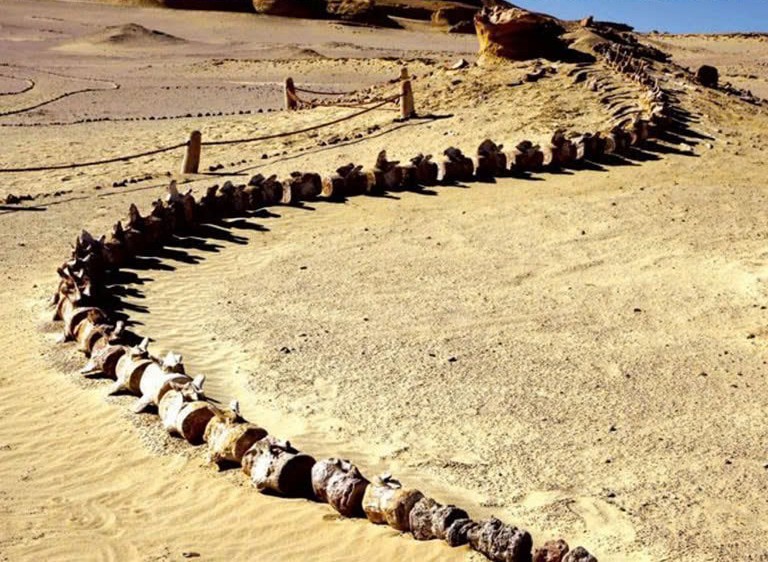
Paleontologists uncovered a nearly complete 65-foot Basilosaurus isis skeleton—the largest and most complete specimen of its kind found anywhere in the world. The sheer scale and preservation of this fossil earned the site worldwide recognition and UNESCO World Heritage status in 2005.
The Remarkable New Museum in the Valley of Whales
Egypt’s Ministry of Environment and UNESCO collaborated to open the Valley of Whales Fossil and Climate Change Museum—a striking structure built directly within the desert landscape. This museum blends sustainable design with cutting-edge curation, featuring fossils displayed under domed roofs that resemble sand dunes.
Inside, life-size reconstructions bring Basilosaurus and other Eocene creatures to life, allowing visitors to walk among the skeletal remains of ancient marine giants. Interactive exhibits explain how climate change reshaped the region from a fertile sea into an arid desert and how whales adapted through evolutionary innovation.
Unraveling the Evolutionary Story
The discovery of walking whales fills a major gap between early terrestrial mammals and modern cetaceans. Genetic and fossil evidence indicates that whales evolved from hoofed land animals related to hippos. Over millions of years, their limbs transformed into flippers, and their nostrils shifted to the top of the head to form blowholes.
The fossils at Wadi Al-Hitan vividly document this transition. They reveal how early whales like Ambulocetus (“walking whale”) and Protocetus still bore functional legs, pelvises, and even rudimentary feet. Despite being partially aquatic, these species represent a fascinating “missing link,” demonstrating how natural selection sculpted mammals for marine life.
Basilosaurus: The Predator King of Ancient Seas
Among the stars of this fossil world, Basilosaurus stands as a true marine titan. Measuring up to 65 feet long, it ruled the warm Eocene waters as an apex predator. Though its name means “king lizard,” Basilosaurus was no reptile—it was a fully marine mammal, albeit with small hindlimbs that served no purpose in swimming.
Studies suggest Basilosaurus had a long, flexible body and powerful jaws capable of crushing prey such as fish and smaller whales. The Valley of Whales fossils even preserve stomach contents, confirming its carnivorous diet and role at the top of the oceanic food chain.
Egypt’s Eocene Ecosystem Reconstructed
Alongside whale fossils, Wadi Al-Hitan contains remains of sharks, sawfish, rays, and marine reptiles, painting a lush picture of the ancient ecosystem. Sediment layers reveal coral reefs and coastal environments once teeming with life.
By analyzing these fossil beds, scientists have reconstructed Eocene climate conditions with remarkable accuracy. Oxygen isotope studies from whale teeth show fluctuating sea temperatures, providing evidence of changing ocean currents and environmental stressors that influenced whale evolution.
This region, once part of the Tethys Sea, became a crucial incubator of marine diversity before tectonic shifts closed the seaways and transformed Africa’s landscape forever.
The Broader Significance for Evolutionary Science
The Valley of Whales stands as one of the most important sites for understanding how life adapts over time. Each fossil unearthed there reinforces the scientific narrative that whales originated from land-dwelling ancestors. The intermediate anatomy captured in these skeletons offers direct evidence of evolutionary transformation—a process once purely theoretical.
Furthermore, the discovery helps scientists trace migration patterns as early whales dispersed from Africa to Asia and eventually worldwide. These Eocene fossils provide a living textbook for evolutionary biology, showing incremental adaptations that shaped one of nature’s most spectacular success stories.
Conservation and Heritage Efforts
As Egypt invests in preserving Wadi Al-Hitan, the site has become a model for sustainable heritage protection. The museum uses solar power, eco-friendly materials, and local design principles that minimize environmental impact. Guided tours are limited to protect fragile fossils, and educational programs engage visitors in climate science and conservation awareness.
UNESCO has praised Egypt’s efforts to maintain the balance between scientific access and environmental stewardship. For archaeologists and paleontologists alike, the Valley of Whales represents a rare union between natural history and cultural heritage.
The Desert That Once Was a Sea
Perhaps the most enchanting aspect of the Valley of Whales is its paradoxical landscape. Standing amidst silent dunes, visitors can imagine waves lapping against ancient shores. Fossilized whale bones lie scattered across the sand, a vivid reminder that this desert was once alive with marine giants.
The transformation from ocean to desert is a testament to Earth’s shifting history. It reflects how climate change, tectonic movement, and time itself reshape the world. In many ways, the story of Egypt’s walking whales is not just about evolution—it’s about adaptation and survival across millennia.
Visiting the Valley of Whales
Wadi Al-Hitan lies about 150 kilometers southwest of Cairo, in the Fayoum Depression. The area is accessible via guided tours departing from Cairo or the nearby city of Fayoum. The best time to visit is between October and April, when desert temperatures are moderate.
Visitors are encouraged to explore the Valley of Whales Museum. Walk along designated fossil trails, and experience the breathtaking desert scenery that hides a prehistoric ocean beneath its sands.
Why These Whales Still Matter Today
Beyond their scientific importance, the walking whales of Egypt speak to our shared heritage as inhabitants of an ever-changing planet. Their bones tell a story of adaptation, resilience, and environmental transformation. Concepts that remain deeply relevant in the age of modern climate change.
By studying these ancient fossils, scientists gain not only insight into evolution. But also inspiration to protect the ecosystems that sustain life today. Each discovery from Wadi Al-Hitan deepens our connection to Earth’s distant past and reminds us of nature’s boundless capacity to evolve.
ALSO READ: Priest’s Tomb Discovery Near the Great Pyramid of Giza: A Journey Into Ancient Egypt’s Sacred Past