The Valley of the Planets: Libya’s Surreal Desert Wonder
Hfdden within the Tadrart Acacus desert in southwestern Libya lies a landscape so strange that it seems almost extraterrestrial—the Valley of the Planets. Unlike the sweeping dunes and jagged cliffs that define much of the Sahara, this valley is scattered with massive disc-shaped boulders that look as if they were dropped from another world. Their smooth, rounded edges and uncanny resemblance to planets have sparked awe, wonder, and countless questions.
How did these bizarre formations come to be? Are they natural works of geological art, or do they hint at forces we have yet to fully understand? This article explores the mystery, science, and significance of one of Earth’s most surreal natural wonders.
The Location: Tadrart Acacus Desert
The Tadrart Acacus desert, located near Libya’s border with Algeria, is a UNESCO World Heritage site known for its prehistoric rock art, stunning dunes, and unusual geological formations. Within this desert lies the Valley of the Planets, a place less famous than its neighboring rock art sites but equally captivating.
The valley’s remoteness has helped preserve its pristine and untouched state. Few travelers have ventured here due to Libya’s ongoing political instability and the harsh desert environment, leaving the Valley of the Planets a largely unexplored natural wonder.
The Surreal Landscape of the Valley of the Planets
Disc-Shaped Rocks
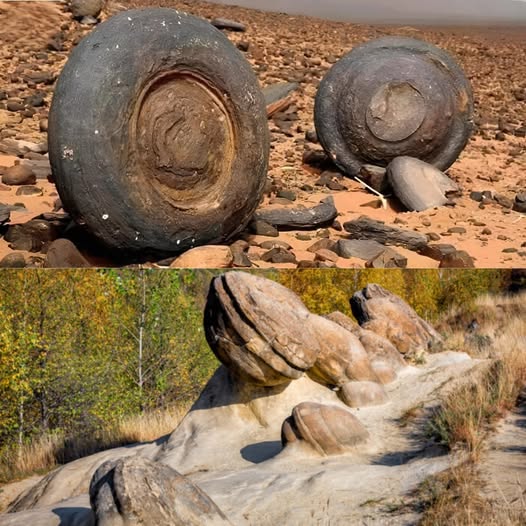
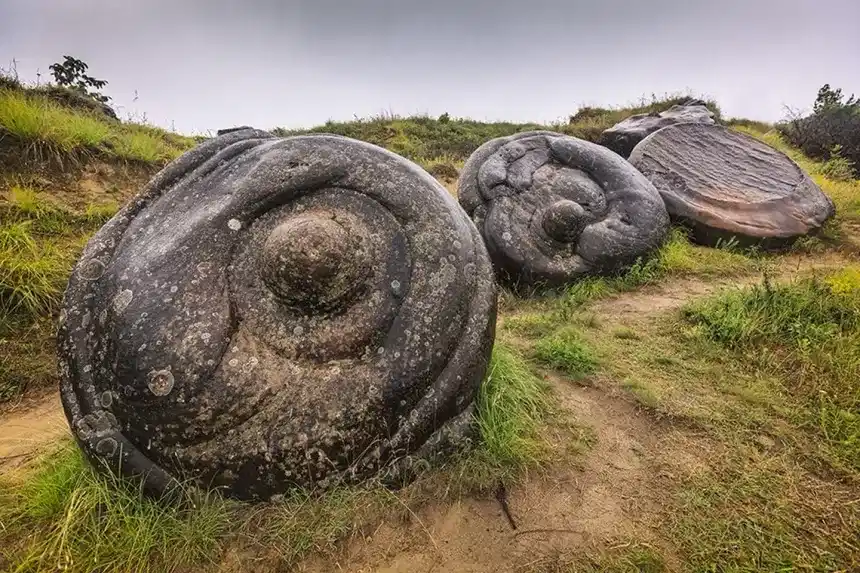
The most striking feature of the valley is its giant disc-shaped boulders. Scattered across the desert floor, these stones resemble enormous coins, tokens, or even alien spacecraft. Their rounded edges and flat surfaces contrast sharply with the jagged cliffs and sandy dunes surrounding them.
An Otherworldly Atmosphere
Walking among these colossal discs feels like stepping onto another planet. The rocks are eerily out of place, standing as solitary monuments to natural forces. Many travelers describe the valley as a Martian or lunar landscape, surreal and almost supernatural.
Geological Theories: How Were They Formed?
Wind Erosion
One leading theory is that these disc-shaped boulders were carved by millions of years of desert winds. As sand-laden gusts swept across the valley, the rocks were sculpted grain by grain, gradually wearing down sharp edges into smooth, rounded shapes. This process, known as aeolian erosion, is common in deserts but rarely produces such uniform, disc-like results.
Ancient Seas
Another possibility is that the Valley of the Planets was once covered by a prehistoric sea. Over time, sedimentary layers may have formed unique rock structures that were later revealed and shaped as the water receded and erosion took over. If true, the valley could represent a geological record of ancient marine environments.
A Unique Geological Formation
Some scientists suggest the discs may be remnants of a rare geological formation—perhaps the result of unusual pressure, mineral composition, or tectonic processes that shaped the rocks long before erosion began. Without in-depth studies, however, the exact origins remain uncertain.
Cultural and Local Perspectives
A Gift from the Heavens
Among local communities, the Valley of the Planets carries deep cultural meaning. Some believe the stones are gifts from the heavens, celestial bodies that fell to Earth and embedded themselves in the desert floor.
Nature’s Reminder
Others see them as a reminder of nature’s power, a message carved in stone about the unseen forces—wind, time, and geological transformation—that shape our planet.
Myth and Mystery
Because the valley remains largely unstudied, myths and legends thrive. The lack of scientific certainty fuels its aura of mystery, making it as much a cultural phenomenon as a geological one.
Scientific Importance of the Valley of the Planets
A Geological Laboratory
For geologists, the valley is a potential natural laboratory, offering rare insights into erosion processes and desert geomorphology. Studying these rocks could reveal new information about how landscapes evolve under extreme conditions.
Connection to Earth’s History
If the formations do indeed date back to ancient seas, they could help reconstruct the geological history of North Africa, shedding light on how the Sahara transformed from a lush, water-rich region into the vast desert it is today.
Comparisons with Other Natural Wonders
The Valley of the Planets can be compared to other strange landscapes, such as the Stone Forest in China or the Bisti/De-Na-Zin Wilderness in New Mexico, but its disc-shaped boulders make it unique.
Challenges to Exploration
Political Instability
Libya’s ongoing political unrest has made travel and scientific research in the region extremely difficult. As a result, the valley remains largely unstudied, its mysteries still waiting to be uncovered.

Remote Location
Even without political challenges, the valley’s remoteness and harsh desert climate pose obstacles. Access requires skilled guides, specialized vehicles, and careful preparation.
Preservation Concerns
Because the Valley of the Planets is relatively unknown and untouched, there is a delicate balance between exploration and preservation. Increased tourism could bring attention but also risks damaging the fragile landscape.
The Allure of Mystery
Part of the valley’s charm lies in its mystery. Unlike well-documented natural wonders, the Valley of the Planets invites speculation. Its unexplored state allows it to straddle the line between science and myth, geology and imagination.
Standing among the disc-shaped boulders, one cannot help but wonder:
-
Are these stones relics of a vanished sea?
-
Were they shaped entirely by wind, or do they carry secrets of Earth’s deeper forces?
-
Could they even hold undiscovered fossils or minerals that tell stories of ancient ecosystems?
Until more research is done, the answers remain buried beneath time’s shifting sands.
Visiting the Valley of the Planets
Travel Considerations
At present, visiting the Valley of the Planets is difficult due to security concerns in Libya. For adventurous travelers, specialized tours occasionally operate in the Tadrart Acacus desert, but conditions can change rapidly.
Best Time to Visit
If accessible in the future, the best time to explore would be spring or autumn, when desert temperatures are more moderate.
What to Expect
Travelers can expect:
-
A surreal landscape of colossal disc-shaped rocks.
-
The vast silence of the desert, broken only by wind.
-
A sense of walking in a place untouched by modernity.
The Valley of the Planets in Global Context
While little-known internationally, the Valley of the Planets deserves recognition alongside other natural wonders. It combines aesthetic beauty, geological mystery, and cultural significance, making it a site of global importance.
In time, with stability and proper research, it could emerge as one of North Africa’s most extraordinary heritage destinations.
Conclusion
The Valley of the Planets in Libya is a landscape where science, myth, and mystery converge. Nestled deep within the Tadrart Acacus desert, it presents a geological puzzle in the form of massive disc-shaped rocks, sculpted by forces we only partly understand.
Whether shaped by wind erosion, ancient seas, or some unique geological process, the formations stand as monuments to time itself. For locals, they are gifts from the heavens. For scientists, they are an unanswered question. and For travelers, they are a vision of another world on Earth.
The Valley of the Planets remains a silent riddle in stone, waiting for its story to be fully uncovered. Until then, it endures as one of our planet’s most enigmatic wonders, a reminder that Earth still holds mysteries beyond imagination.
ALSO READ: Ammonite Fossils: Ancient Spirals of the Mesozoic Seas