The Unexploded 406mm Mk. 13 Shell from USS New Jersey: A Relic of the Vietnam War
A Colossal Shell Frozen in Time
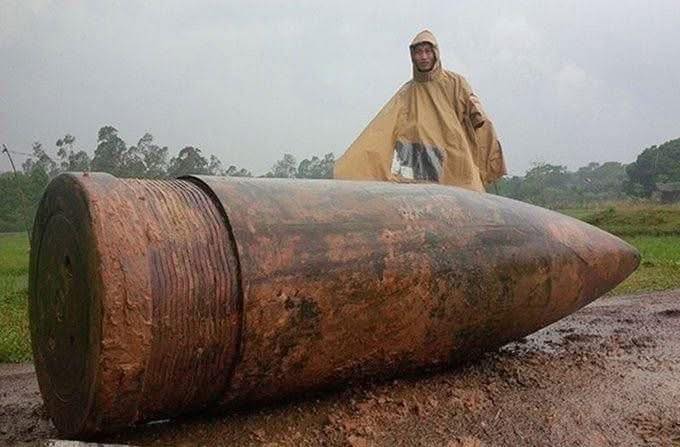
In 2015, in Quang Tri Province, Vietnam, an unusual and chilling discovery was made — an unexploded 406mm Mk. 13 High Capacity shell fired decades earlier by the USS New Jersey (BB-62), an Iowa-class battleship. The massive round, preserved in the soil for nearly half a century, offered a sobering reminder of the destructive power wielded during the Vietnam War.
Although photographed in a way that accentuated its size, the shell was already enormous by design. Measuring 16 inches (406mm) in diameter, weighing over a ton, and capable of creating a 50-foot-wide, 20-foot-deep crater, the Mk. 13 shell was one of the most formidable projectiles ever fired in naval warfare.
The USS New Jersey: Iowa-Class Battleship Power
The Battleship’s Role in Vietnam
The USS New Jersey (BB-62) was commissioned in 1943 and saw action in World War II, the Korean War, and later the Vietnam War. By the time of her Vietnam deployment (1968–1969), she had been reactivated to provide naval gunfire support against enemy positions along the Vietnamese coastline.
Firepower of the 16/50 Cal Mark 7 Guns
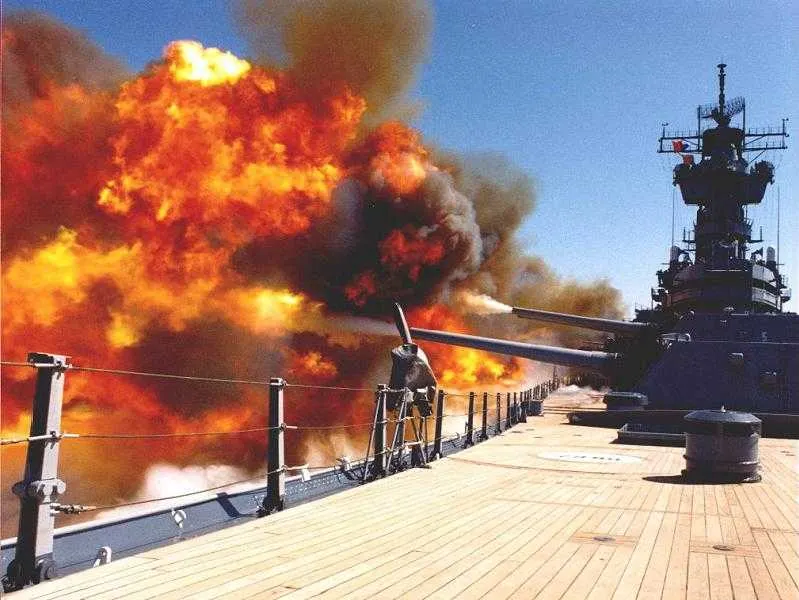
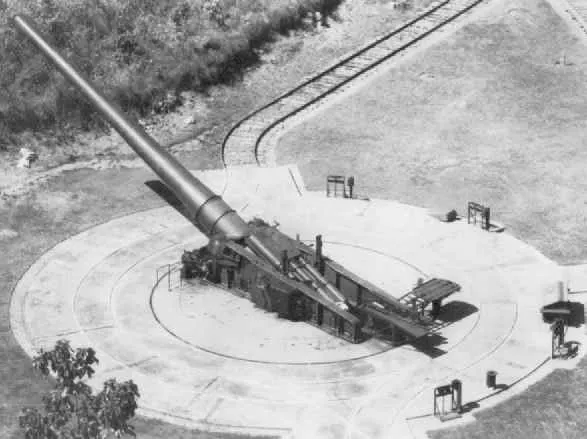
Her main armament consisted of nine 16-inch/50 caliber Mark 7 naval guns, housed in three triple turrets. These guns were capable of firing a variety of shells, including the Mk. 13 High Capacity (HC) shells used for shore bombardment.
Each gun could hurl a shell weighing up to 2,700 pounds (1,225 kg) over a distance of more than 20 miles (32 km). The destructive effect on enemy fortifications, supply lines, and troop concentrations was devastating.
The Mk. 13 High Capacity Shell
Design and Purpose
The Mk. 13 High Capacity shell was designed to maximize blast and fragmentation damage rather than armor penetration. Its thin steel casing allowed for a larger explosive filler, making it ideal for use against lightly armored targets, infrastructure, and troop concentrations.
-
Caliber: 406 mm (16 inches)
-
Weight: Approx. 1,900 pounds (862 kg)
-
Explosive Filler: TNT or Composition B (up to 153 kg)
-
Effect: Creates a crater 50 feet wide and 20 feet deep upon detonation
Effects on Impact
Upon impact and detonation, the Mk. 13 shell unleashed catastrophic destruction. Beyond the physical crater, the shockwave and fragmentation could devastate structures and troops within hundreds of meters.
For the Vietnamese landscape, these shells reshaped hillsides, villages, and jungle terrain, leaving scars still visible decades later.
The Discovery in Quang Tri Province
Unearthing the Relic
In 2015, farmers in Quang Tri Province stumbled upon the unexploded Mk. 13 shell. Although rusted and weathered, its sheer size stunned locals and international observers. Photos of the discovery circulated widely, with the shell appearing even larger than life due to perspective photography.
A Reminder of War’s Legacy
Quang Tri Province, heavily bombarded during the conflict, remains one of the most ordnance-contaminated areas in Vietnam. The discovery of such a massive projectile highlighted the enduring danger of unexploded ordnance (UXO) decades after the war ended.
USS New Jersey’s Firepower in Vietnam
Nearly 6,000 Shells Fired
During her Vietnam War service, the USS New Jersey fired nearly 6,000 16-inch shells at targets along the coast and inland. Her missions included:
-
Destroying supply depots and ammunition stores
-
Attacking North Vietnamese troop positions
-
Disrupting supply routes and infrastructure
The battleship’s immense firepower provided critical support for U.S. and South Vietnamese ground forces.
Strategic Impact
The psychological effect of the New Jersey’s bombardments was equally significant. The thunderous roar of her guns and the devastating impact of her shells earned her a fearsome reputation among both allies and adversaries.
Unexploded Ordnance in Vietnam
The Hidden Danger
Despite decades of clearance work, Vietnam is still dotted with UXO from the war, ranging from cluster bomblets to massive naval shells like the Mk. 13. These remnants continue to pose risks to farmers, construction workers, and civilians.
Clearance Efforts
Organizations such as MAG (Mines Advisory Group) and Project RENEW work tirelessly to locate and safely dispose of UXO across Vietnam. Each discovery, whether a small landmine or a colossal battleship shell, highlights the ongoing humanitarian challenge.
Symbolism of the Mk. 13 Shell Today
A Monument of War’s Scale
The sheer size of the Mk. 13 shell serves as a symbol of the industrial scale of modern warfare. Unlike rifles or grenades, these shells represented an overwhelming application of force, capable of reshaping entire landscapes.
Memory and Reflection
For Vietnam, the unexploded shell is both a relic and a reminder — a monument to destruction but also to resilience, as the land and people continue to recover. For historians, it is an artifact that speaks volumes about the technological power of the Iowa-class battleships and the destructive toll of the Vietnam conflict.
Technical Specifications of the 406mm Mk. 13 High Capacity Shell
-
Type: High Capacity (HC) Naval Artillery Shell
-
Caliber: 16 in (406 mm)
-
Shell Weight: ~1,900 lb (862 kg)
-
Explosive Filler: ~335 lb (152 kg) TNT or equivalent
-
Effective Range (fired from 16/50 gun): ~20 miles (32 km)
-
Impact Crater: ~50 ft (15 m) wide, ~20 ft (6 m) deep
Fun Facts About the USS New Jersey and Its Guns
-
USS New Jersey (BB-62) was the most decorated battleship in U.S. history, serving in WWII, Korea, Vietnam, and Lebanon.
-
Her Mark 7 guns were so powerful that each broadside could equal the destructive force of a small airstrike.
-
The blast from a single 16-inch gun was strong enough to knock a man off his feet if standing too close.
-
USS New Jersey fired her last combat rounds in 1983 off the coast of Lebanon.
Legacy of the Unexploded Shell
The discovery of the unexploded 406mm Mk. 13 shell in Quang Tri Province is more than a curiosity. It is a bridge to the past, a physical reminder of the enormous firepower unleashed during the Vietnam War and the enduring challenges left in its wake.
For locals, it is a reminder of resilience and recovery. For historians and naval enthusiasts, it is a rare chance to study the tangible legacy of the Iowa-class battleships in Southeast Asia. For the world, it is a reminder that even decades later, the remnants of war remain buried in the soil, silently waiting to be rediscovered.
Conclusion
The 406mm Mk. 13 High Capacity shell from USS New Jersey discovered in Vietnam in 2015 is not just a piece of unexploded ordnance — it is a relic that tells the story of naval power, destructive technology, and the lingering consequences of modern war.
From its origins on the decks of the most powerful battleships ever built to its rediscovery in the fields of Quang Tri, the shell embodies both the awesome scale of naval firepower and the long shadow of conflict.
As a symbol, it reminds us of the endurance of war’s scars — etched not only in landscapes but also in memory. And as an artifact, it stands as a testament to the enduring human quest to understand, remember, and learn from the past.
ALSO READ: The Stone Eye of Sri Lanka: A Natural Wonder Shaped by Time