The Sacred Practice of Sky Burial in Zoroastrianism
Zoroastrianism, one of the world’s oldest monotheistic religions, has long upheld a unique and deeply symbolic approach to death. Originating in ancient Persia over 3,000 years ago, the faith teaches reverence for the natural elements—earth, water, fire, and air—as sacred creations of Ahura Mazda, the supreme deity. Because of this belief, Zoroastrians avoid polluting these elements, especially earth and fire, which influences how they handle the deceased.
One of the most distinctive practices to emerge from this philosophy is the use of the Tower of Silence, known in Persian as dakhma. These circular, elevated structures were designed to allow the natural decomposition of human remains without contaminating the earth. Located typically on remote hilltops, Towers of Silence served as open-air ossuaries where bodies were exposed to the sun and scavenging birds, primarily vultures.
This method, called sky burial, reflects a profound ecological and spiritual wisdom. By returning the body to nature through consumption by birds of prey, Zoroastrians believe they fulfill a divine duty to protect the purity of the earth.
Architecture and Function of the Tower of Silence
The design of a Tower of Silence is both functional and symbolic. Typically constructed from stone or whitewashed masonry, the structure consists of a large circular platform divided into three concentric rings. Each ring is designated for a specific group: men, women, and children. The bodies are laid out radially, with feet pointing toward the center.
At the heart of the tower lies a central pit, where the bones are collected after the flesh has been consumed. Over time, the sun and wind further desiccate the skeletal remains. Once fully dried, the bones are often treated with lime to accelerate disintegration. Eventually, the powdered remains are funneled through underground channels into a central well, where they mingle with runoff rainwater that has been filtered through layers of sand and charcoal to prevent contamination of the soil.
The elevated position of the tower ensures that the dead are removed from contact with the earth, preserving its sanctity. The whitewashed surface reflects sunlight, aiding in the rapid decomposition of tissues. Access to the tower is restricted to members of the nasellars—a specialized priestly class responsible for transporting and arranging the bodies.
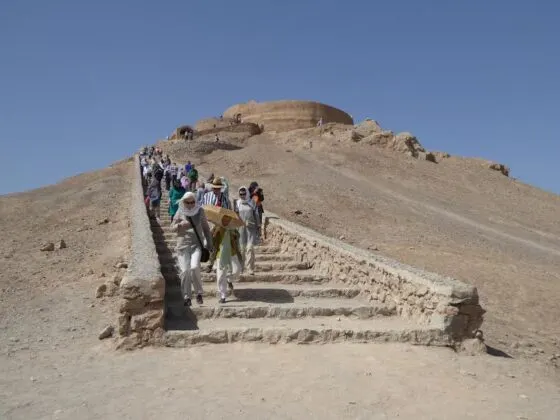
Historically, these towers were maintained by the Zoroastrian community, particularly the Parsis, who migrated to India to escape religious persecution in Persia. While the most well-known Towers of Silence are found in India—especially in Mumbai—several ancient dakhmas still exist in Iran, particularly in Yazd, a historic center of Zoroastrian life.
Historical Roots and Religious Significance
The practice of sky burial dates back to the Achaemenid Empire (c. 550–330 BCE), though it became more formalized during the Sassanian period (224–651 CE). Zoroastrian scripture, particularly the Avesta, emphasizes the battle between purity and decay, with the corpse considered a vessel of druj—spiritual pollution—after death.
According to Zoroastrian theology, the moment of death marks the departure of the soul, leaving behind a body vulnerable to the forces of evil. To prevent the spread of corruption, the body must be isolated from the sacred elements. Burial and cremation are both prohibited: burial defiles the earth, while cremation pollutes fire.
Thus, exposure in a Tower of Silence became the preferred method. It allowed for the swift removal of organic matter by vultures—seen not as unclean, but as efficient agents of purification. This practice aligns with the Zoroastrian principle of humata, hukhta, huvarshta (“good thoughts, good words, good deeds”), extending ethical responsibility even in death.
Decline and Modern Challenges
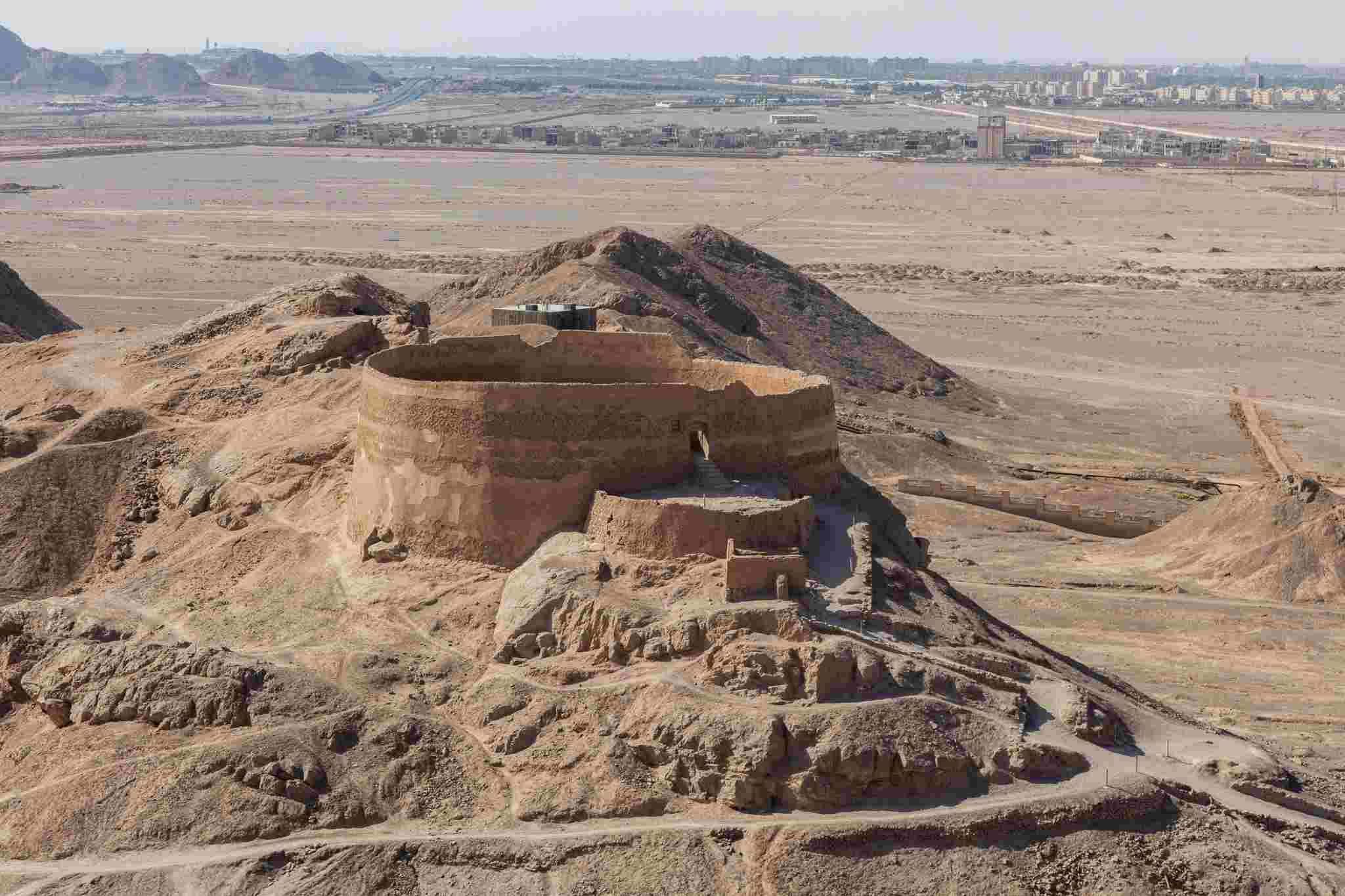
Despite its spiritual logic, the use of Towers of Silence has declined sharply in the 20th and 21st centuries. In Iran, the practice was largely abandoned after the Islamic Revolution of 1979, as the new regime imposed Islamic burial norms. Additionally, urbanization, legal restrictions, and dwindling Zoroastrian populations have contributed to the disuse of these structures.
A critical factor in the decline has been the dramatic reduction in vulture populations across South Asia and the Middle East. In India, the near-extinction of the white-rumped vulture due to diclofenac poisoning in livestock led to the collapse of the sky burial system. Without sufficient scavengers, bodies decompose slowly, creating public health concerns and undermining the ritual’s purpose.
In response, some communities have installed solar concentrators to speed up desiccation, while others have turned to alternative methods such as enclosed composting or even limited cremation under religious dispensation.
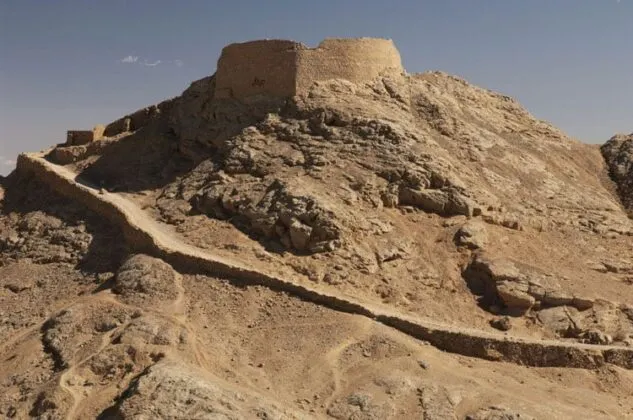
In Iran, ancient Towers of Silence remain as silent monuments to a fading tradition. Many are now protected as historical sites, attracting scholars and tourists interested in Zoroastrian heritage. The most notable examples are located near Yazd and Kerman. Where weathered stone structures perch on arid hills, overlooking desert landscapes.
Cultural Preservation and Global Awareness
Today, the Tower of Silence stands as a powerful symbol of religious resilience and ecological consciousness. While no longer in active use in Iran, efforts are underway. To preserve these sites as part of humanity’s intangible cultural heritage.
Organizations such as UNESCO and local Iranian cultural authorities have recognized the architectural and spiritual value of these structures. Restoration projects aim to stabilize the masonry and prevent further erosion. While educational programs seek to inform the public about Zoroastrian beliefs and practices.
For the global Zoroastrian diaspora, the Tower of Silence remains a touchstone of identity. It represents a way of life rooted in harmony with nature, ethical responsibility, and spiritual discipline. Even as modernity reshapes religious practice, the symbolism of the dakhma endures.
Visiting the Tower of Silence in Iran: A Traveler’s Perspective
For visitors to Iran, especially those exploring the cultural heartland of Yazd. A trip to an ancient Tower of Silence offers a rare glimpse into a nearly vanished world. Though access may be restricted out of respect for religious sensitivities, guided tours often provide detailed explanations and panoramic views.
The journey to these remote sites is part of the experience—winding paths through barren hills. Silence broken only by wind and distant bird calls. The austere beauty of the landscape mirrors the simplicity and solemnity of Zoroastrian philosophy.
Photography is often discouraged, and visitors are expected to dress modestly and behave respectfully. Interpretive signage, where available, explains the religious context and historical background, helping bridge cultural understanding.
Conclusion: A Legacy of Sacred Ecology
The Tower of Silence in Iran is more than an architectural curiosity. It is a testament to a worldview that sees humanity as a steward of nature’s purity. In an age of environmental crisis, Zoroastrian practices offer a compelling model of sustainable end-of-life care.
Though the vultures no longer gather in great numbers, and the towers stand mostly silent. Their message remains urgent: to live—and die—in a way that honors the earth. As interest in eco-friendly burial methods grows worldwide, the ancient wisdom of the dakhma may yet find new relevance.
For historians, theologians, and travelers alike, the Tower of Silence invites reflection on mortality, faith, and our relationship with the natural world.
ALSO READ: The Mask of Xiuhtecuhtli: A 600-Year-Old Aztec Masterpiece of Fire and Divinity