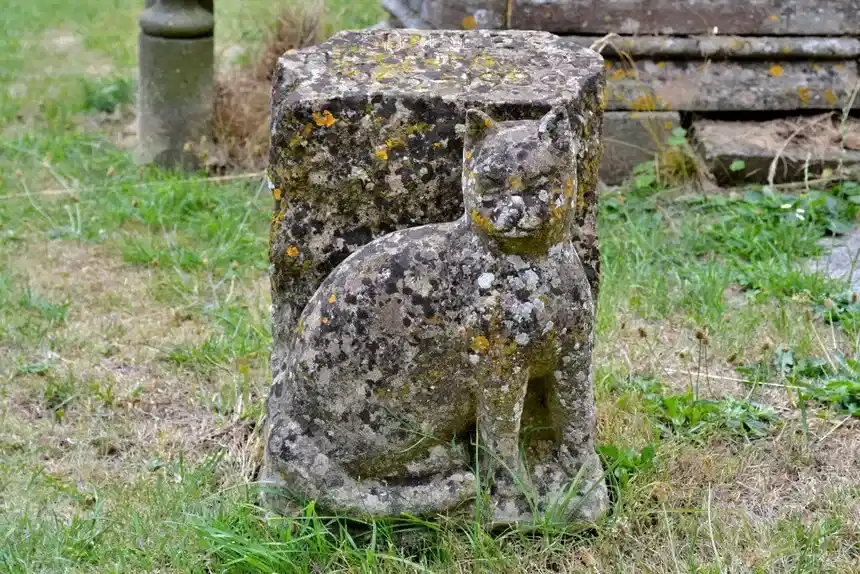
Grave of Tiddles the Church Cat: A Beloved Guardian of St. Mary’s, Fairford
A Church Cat Remembered
History is often told through kings, wars, and monuments—but sometimes, the most touching stories are those of everyday companions who left an indelible mark on their community. One such story belongs to Tiddles the Church Cat, a beloved feline who lived at St. Mary’s Church in Fairford, Gloucestershire, from 1963 until 1980. Tiddles was no ordinary pet; she served as the church’s unofficial guardian, keeping mice at bay and becoming a cherished member of the parish. Today, her memory lives on in a simple but heartfelt headstone in the churchyard, close to the main door, where visitors still pause to pay their respects.
The Life of Tiddles (1963–1980)
Born in 1963, Tiddles arrived at St. Mary’s Church during a time when church cats were not uncommon. Mice and other small animals often found their way into centuries-old buildings, and a resident cat was both a practical solution and a comforting presence.
For seventeen years, Tiddles faithfully performed her duties, earning a reputation as both a mouser and a companion. She became part of the church’s daily rhythm, known to parishioners, clergy, and visitors alike. In many ways, she embodied the warmth and constancy that animals bring to sacred spaces.
St. Mary’s Church, Fairford: A Historical Setting
To understand the significance of Tiddles, one must also appreciate the setting in which she lived. St. Mary’s Church in Fairford is one of Gloucestershire’s architectural treasures, most famous for its complete set of medieval stained glass windows—the only such collection to survive intact in an English parish church.
Against this backdrop of artistic and spiritual heritage, Tiddles became part of the living history of the church. While the stained glass tells biblical stories, the presence of Tiddles told a quieter, earthly tale of care, companionship, and continuity.
The Role of Church Cats
Church cats have a long tradition in Europe. These feline guardians were welcomed into monasteries, abbeys, and churches for centuries, not only for their practical role in keeping mice at bay but also for the companionship they offered clergy and congregants.
In medieval times, cats often carried symbolic meanings, sometimes linked with watchfulness and guardianship. By the 20th century, they were beloved parish mascots, often remembered with affection long after their passing. Tiddles fits perfectly into this tradition.
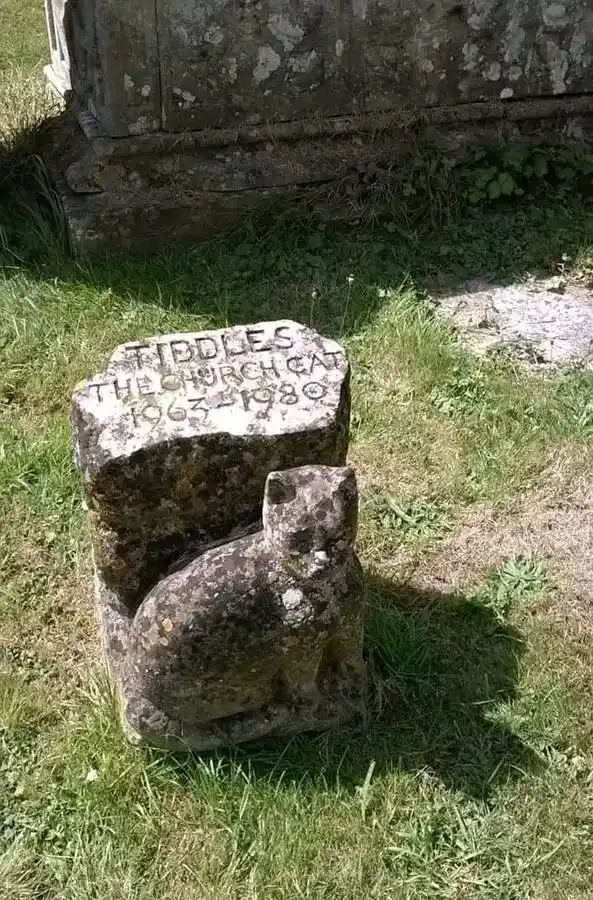
A Headstone for a Faithful Friend
When Tiddles passed away in 1980, the parish of St. Mary’s chose to honor her in an unusual but deeply touching way: they buried her in the churchyard, close to the main door, and gave her a headstone.
The headstone inscription is simple but heartfelt:
“Tiddles the Church Cat 1963–1980. She kept the mice in check.”
This act of commemoration reflects how much Tiddles meant to the community. For a cat to be memorialized in such a way highlights the deep affection parishioners had for her.
Tiddles as Local Folklore
Over time, Tiddles’ story has become part of the local folklore of Fairford. Visitors to the churchyard often notice her grave, and many are charmed by the thought of a cat resting eternally near the church door she once guarded.
Her presence also offers a unique glimpse into the more personal, human side of parish life—a reminder that churches were not only places of worship but also centers of community where animals, too, found their place.
The Charm of Animal Memorials
Tiddles’ grave belongs to a broader tradition of animal memorials in Britain. From loyal dogs to hardworking horses, the British have long recognized the importance of animals in daily life. Cat memorials are less common, making Tiddles’ headstone especially noteworthy.
Such memorials highlight the blurred line between the sacred and the ordinary. Suggesting that devotion and gratitude extend beyond humans to the creatures who share our lives.
Visitors Today
Visitors to St. Mary’s Churchyard in Fairford often make a point of seeking out Tiddles’ grave. The headstone, modest and unassuming, stands as a quiet counterpoint to the grandeur of the church’s medieval stained glass. For many, it is a touching reminder that history is made not only by monumental events but also by small, enduring bonds.
Tourists and cat lovers alike find the site especially meaningful, and Tiddles continues to attract attention as a symbol of loyalty, service, and affection.
The Legacy of Tiddles
Though more than four decades have passed since her death, Tiddles remains a celebrated figure at St. Mary’s. Her story resonates because it is both ordinary and extraordinary: a simple cat who fulfilled a practical role. Yet became beloved enough to be immortalized in stone.
Tiddles represents the timeless relationship between people and animals. A bond that transcends centuries and is deeply woven into cultural memory.
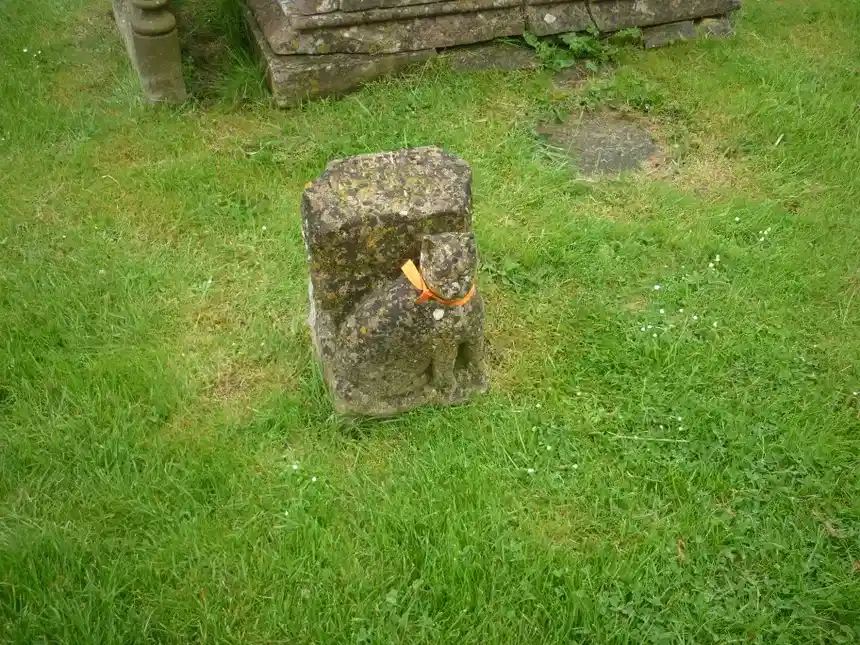
Conclusion: A Small Guardian, Eternally Remembered
The grave of Tiddles the Church Cat is not just a curiosity. It is a testament to how communities cherish the animals that share their lives. In her lifetime, Tiddles guarded St. Mary’s against mice, but in her legacy. She guards something even greater: the memory of everyday devotion, affection, and companionship.
For visitors to Fairford, Gloucestershire, Tiddles’ headstone is a reminder that even the smallest guardians can leave the largest pawprints on our hearts.
ALSO READ: Choctaw Bear Paw Moccasins: Deception and Survival in the 18th Century