The Sunken City of Thonis-Heracleion: Rediscovering Egypt’s Legendary Port
Rediscovery of Thonis-Heracleion
In 2000, French archaeologist Franck Goddio made a groundbreaking discovery off the coast of Egypt: the long-lost city of Thonis-Heracleion, submerged beneath the Mediterranean Sea for over a millennium. Once thought to be a mere legend, this ancient metropolis was revealed in all its glory, with towering statues, grand temples, and a wealth of artifacts that paint a vivid picture of a bustling port city that once served as Egypt’s gateway to the Mediterranean.
Franck Goddio’s Role
Franck Goddio, president of the European Institute for Underwater Archaeology (IEASM), led the expedition that uncovered Thonis-Heracleion. Utilizing advanced underwater surveying technology, Goddio and his team mapped and excavated the site, solving a historic enigma that had puzzled Egyptologists for centuries: Thonis and Heracleion were not two separate cities, but one and the same, known by different names to Egyptians and Greeks.
Historical Background
Origins and Importance
Thonis-Heracleion was founded around the 8th century BCE and served as Egypt’s main port of entry for ships from the Greek world before the rise of Alexandria. The city was strategically located at the mouth of the Canopic branch of the Nile, making it a vital hub for trade, culture, and religious ceremonies.
Greek and Egyptian Perspectives
The city was known as Thonis to the Egyptians and Heracleion to the Greeks, reflecting its dual cultural identity. Greek historians like Herodotus and Strabo wrote about the city, describing its grand temple and its role in ancient rituals. The blending of Egyptian and Greek traditions is evident in the city’s architecture, artifacts, and religious practices.
Discovery and Excavation
Technological Approach
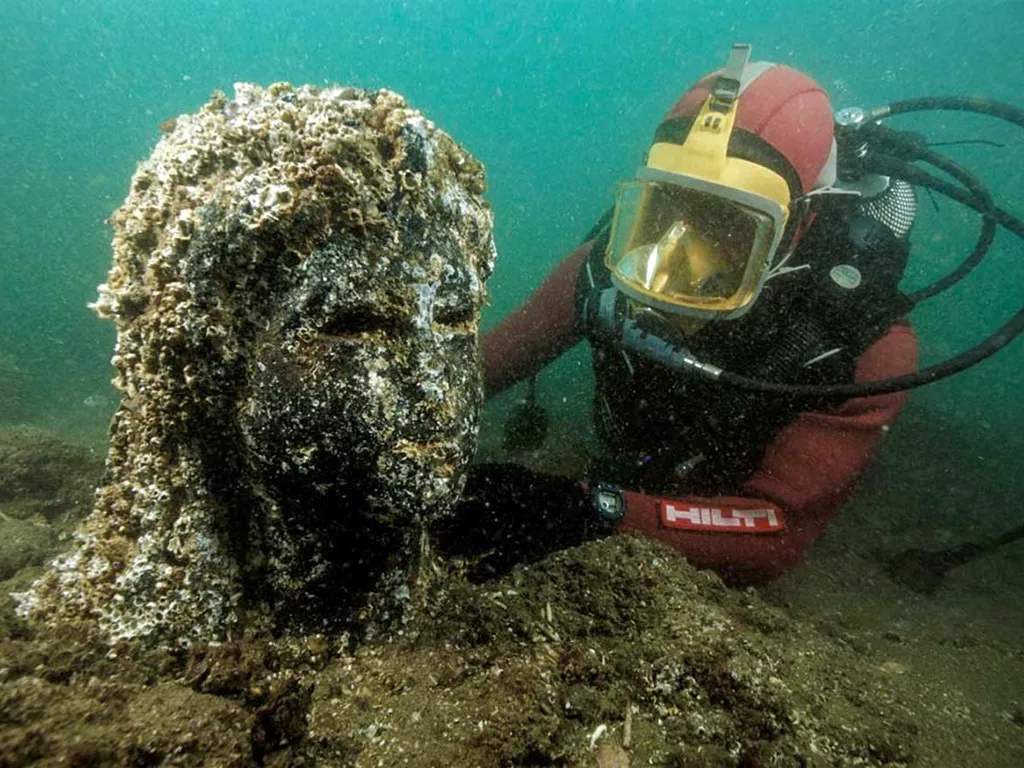
Goddio’s team employed a unique survey-based approach, using cutting-edge technology such as nuclear magnetic resonance magnetometers, multi-beam bathymetry, sidescan sonar, and satellite positioning systems to map the site. The research area spans 11 by 15 kilometers in Aboukir Bay, with the city lying about 10 meters beneath the surface.
Key Findings
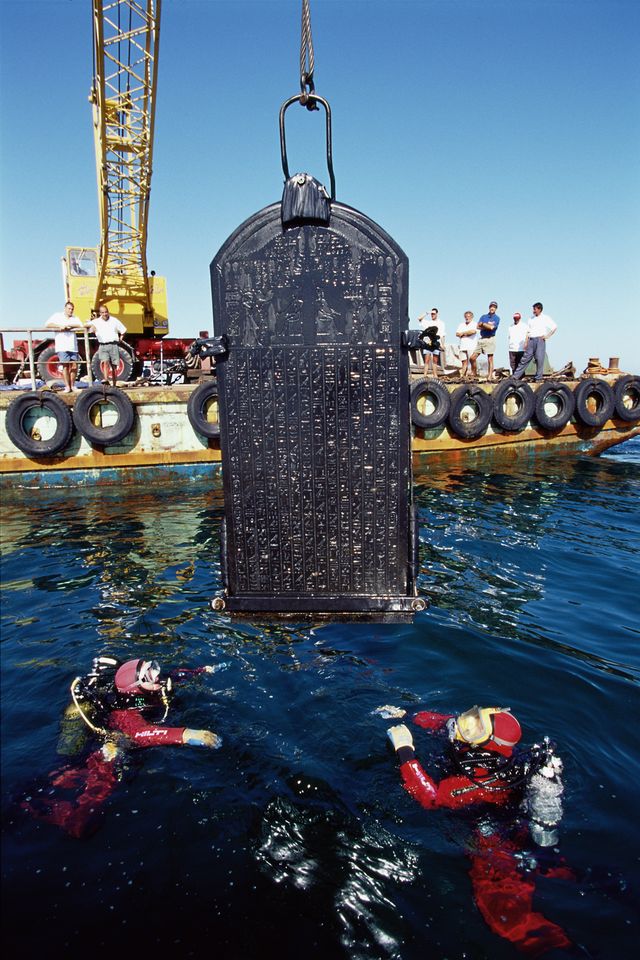
The excavation revealed a treasure trove of artifacts, including 64 ships, over 700 anchors, gold coins, and colossal statues. The team also discovered the remains of a grand temple dedicated to Amun-Gereb, the supreme deity of ancient Egypt. The city’s granite structures, remarkably preserved, hint at a bustling port once crisscrossed by canals, reminiscent of a sunken Venice.
Archaeological Treasures
Statues and Temples
Among the most striking finds are the towering 16-foot statues, including a statue of the god Hapi and a statue of either Cleopatra II or Cleopatra III wearing the tunic of the goddess Isis. The temple of Amun-Gereb, with its intricate carvings and inscriptions, stands as a testament to the city’s religious significance.
Ships and Anchors
The discovery of 64 ships and over 700 anchors provides valuable insights into ancient maritime technology and trade practices. The ships, some of which are remarkably well-preserved, offer a glimpse into the daily life of the city’s inhabitants and the bustling activity of its port.
Coins and Daily Life Artifacts
The excavation has uncovered a wealth of coins, jewelry, ritual animal sarcophagi, and ceramic pieces, many of which are of Greek origin. These artifacts provide evidence of a large Greek population living in Thonis-Heracleion and highlight the city’s role as a center of international trade.
Religious and Cultural Significance
Temple of Amun-Gereb
The temple of Amun-Gereb was the heart of Thonis-Heracleion’s religious life, where rituals related to the continuation of the dynasty took place. The temple’s treasury yielded silver ritual instruments, gold jewelry, and fragile alabaster containers for perfumes and ointments, offering a glimpse into the wealth and piety of the city’s inhabitants.
Mysteries of Osiris
Thonis-Heracleion was also the site of the annual celebration of the Mysteries of Osiris. A ceremony performed in honor of the rebirth of the god Osiris. The ritual involved the procession of Osiris’s ceremonial boat from the temple of Amun-Gereb to his shrine in Canopus. Symbolizing the god’s rebirth and the renewal of life.
Greek Influence
The presence of a Greek sanctuary devoted to Aphrodite and the discovery of Greek weapons and imported objects. Suggest that Greeks played a significant role in the city’s religious and cultural life. The blending of Egyptian and Greek traditions is evident in the city’s architecture, artifacts, and religious practices.
Theories on Submersion
Natural Disasters
Several earthquakes and tidal waves triggered liquefaction. Causing large areas of the Nile Delta to sink into the sea, and with them the city of Thonis-Heracleion. The city was buried for millennia and only rediscovered by the European Institute for Underwater Archaeology in 2000.
Liquefaction and Earthquakes
The process of liquefaction, where saturated soil loses strength and behaves like a liquid. Is believed to have played a key role in the city’s submersion. Consequently, the combination of natural disasters and the city’s location on the Nile Delta made it particularly vulnerable to such events.
Ongoing Research and Future Prospects
Current Excavations
Franck Goddio and his team have rediscovered only about 5% of the ancient city, and they continue excavations every year.
The team’s ongoing research aims to uncover more artifacts and building remains. Shedding new light on the city’s history and significance.
Potential Discoveries
The vast majority of Thonis-Heracleion remains unexplored, offering the potential for new discoveries of important artifacts and more building remains.
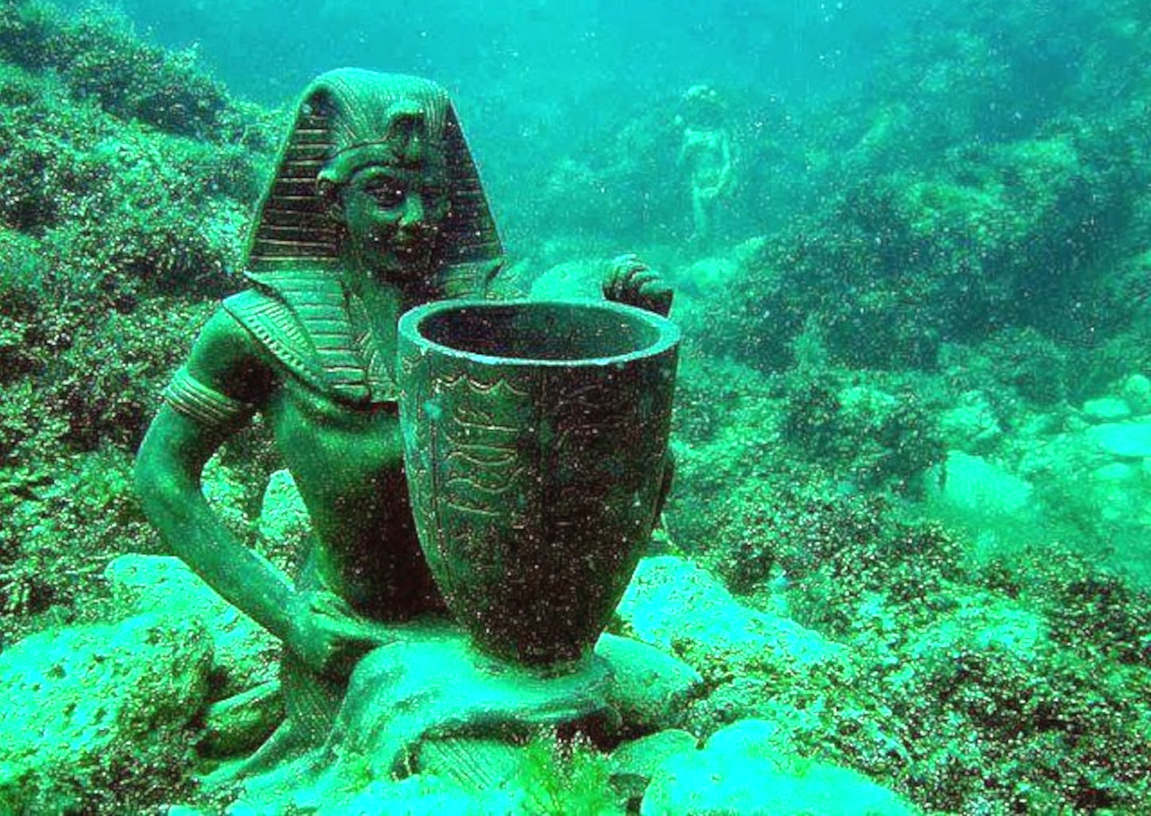
Furthermore, the continued use of advanced technology and collaborative research efforts promises to reveal even more about this legendary sunken city.
Conclusion
Legacy of Thonis-Heracleion
The discovery of Thonis-Heracleion has revived a lost chapter of ancient history. Solving a long-standing mystery and providing valuable insights into the city’s role as a center of trade, culture, and religious life. The ongoing excavations and research efforts continue to uncover new treasures and deepen our understanding of this legendary sunken city.
ALSO READ: Unveiling the Ancient Voices at Newspaper Rock: A Glimpse into Native American Heritage