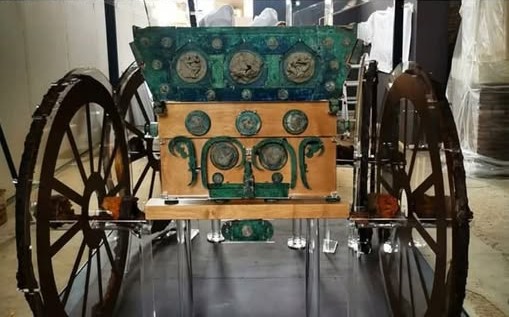
The Face in the Ash – A Whisper from Pompeii
When Time Stopped in Fire
In 79 CE, the ancient Roman city of Pompeii fell silent beneath a storm of fire and ash. Mount Vesuvius, which had slumbered for centuries, erupted with terrifying force, burying an entire civilization under a suffocating rain of volcanic debris. Thousands perished, their final moments sealed forever in layers of pumice and ash.
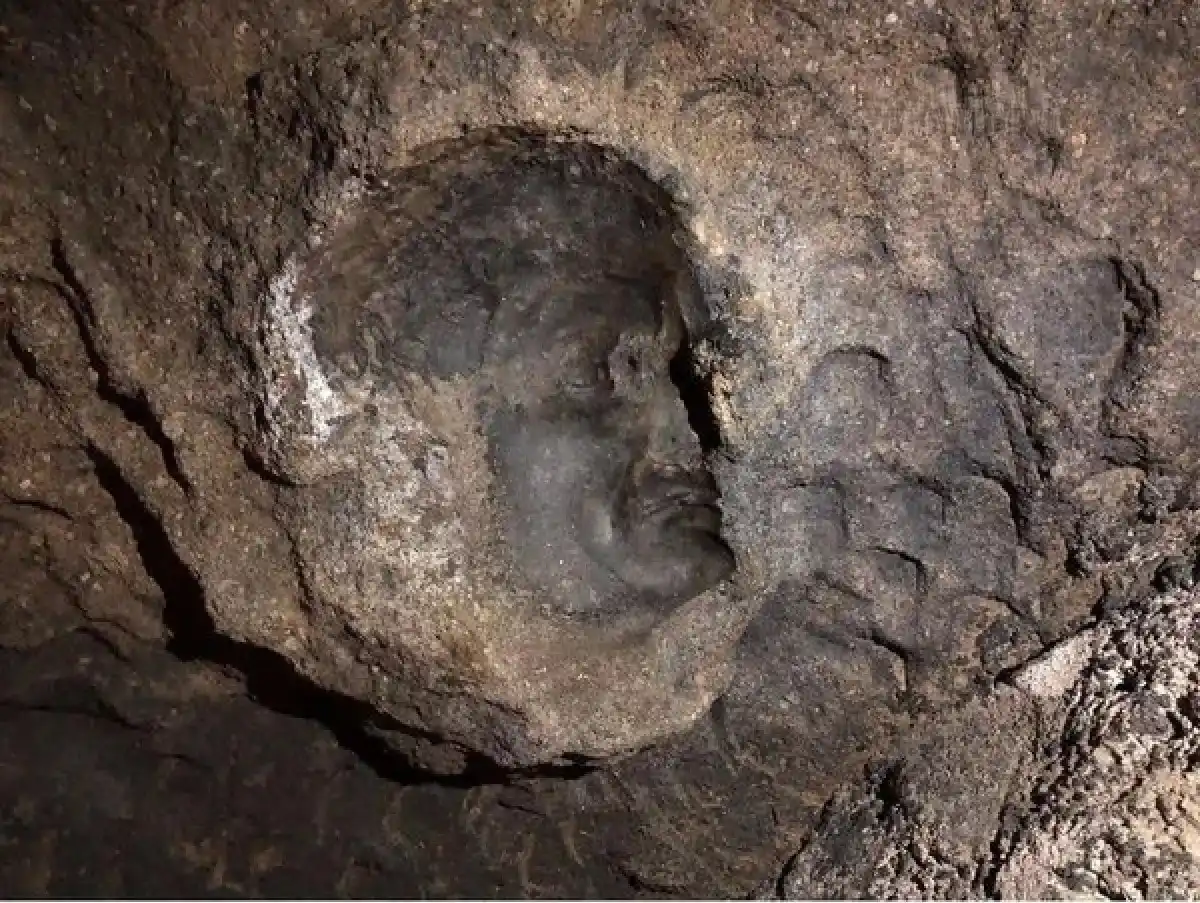
Among the many haunting discoveries unearthed from this ancient tragedy, one stands out — a face formed in ash, its features frozen in the instant of death. This ghostly imprint is not a sculpture made by human hands, but a natural cast shaped by catastrophe. It is the earth’s own memorial — a fragment of human life turned to stone, whispering across two millennia.
The Eruption of Mount Vesuvius: Nature’s Unforgiving Artist
The eruption of Mount Vesuvius began on August 24, 79 CE, and lasted for nearly two days. The sky darkened as a column of ash and gas soared more than 30 kilometers into the air. The nearby cities of Pompeii, Herculaneum, and Stabiae were engulfed in darkness.
For the people of Pompeii, there was no warning. Within hours, roofs collapsed under the weight of falling pumice. Then came the pyroclastic flows — surges of superheated gas and volcanic material racing down the slopes of Vesuvius at hundreds of kilometers per hour. Temperatures reached over 400°C, killing instantly and entombing everything in their path.
The ash acted as both destroyer and preserver. Organic matter — wood, fabric, and even human flesh — disintegrated. But in their place, hollow voids were left behind in the compacted ash layers. Centuries later, these voids would become the key to rediscovering Pompeii’s lost faces.
Discovery of the Human Casts: Life Restored in Stone
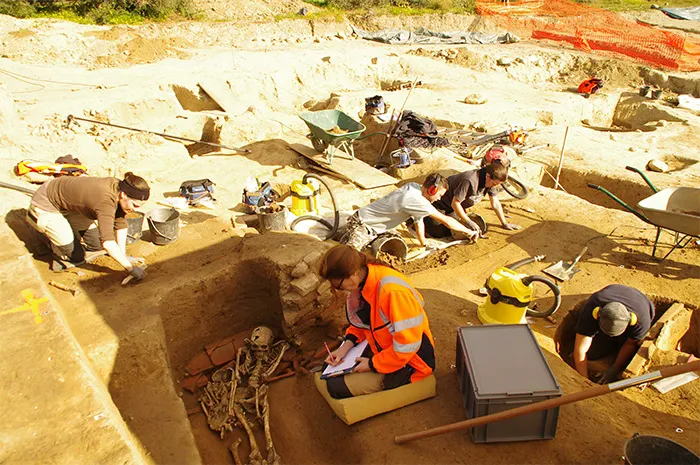
When excavations of Pompeii began in the 18th century, archaeologists uncovered countless human remains and artifacts — but the technique to capture the details of those lost lives came later.
In the 1860s, Italian archaeologist Giuseppe Fiorelli revolutionized the study of Pompeii. He noticed that many voids in the ash contained fragments of bones or traces of organic material. Realizing these were negative impressions of human bodies, Fiorelli devised a method to fill the cavities with plaster of Paris. Once hardened, the surrounding ash was carefully removed, revealing startlingly lifelike casts of Pompeii’s victims — men, women, and children caught in their final moments.
Through Fiorelli’s innovation, Pompeii’s dead were given back their faces, their gestures, their humanity.
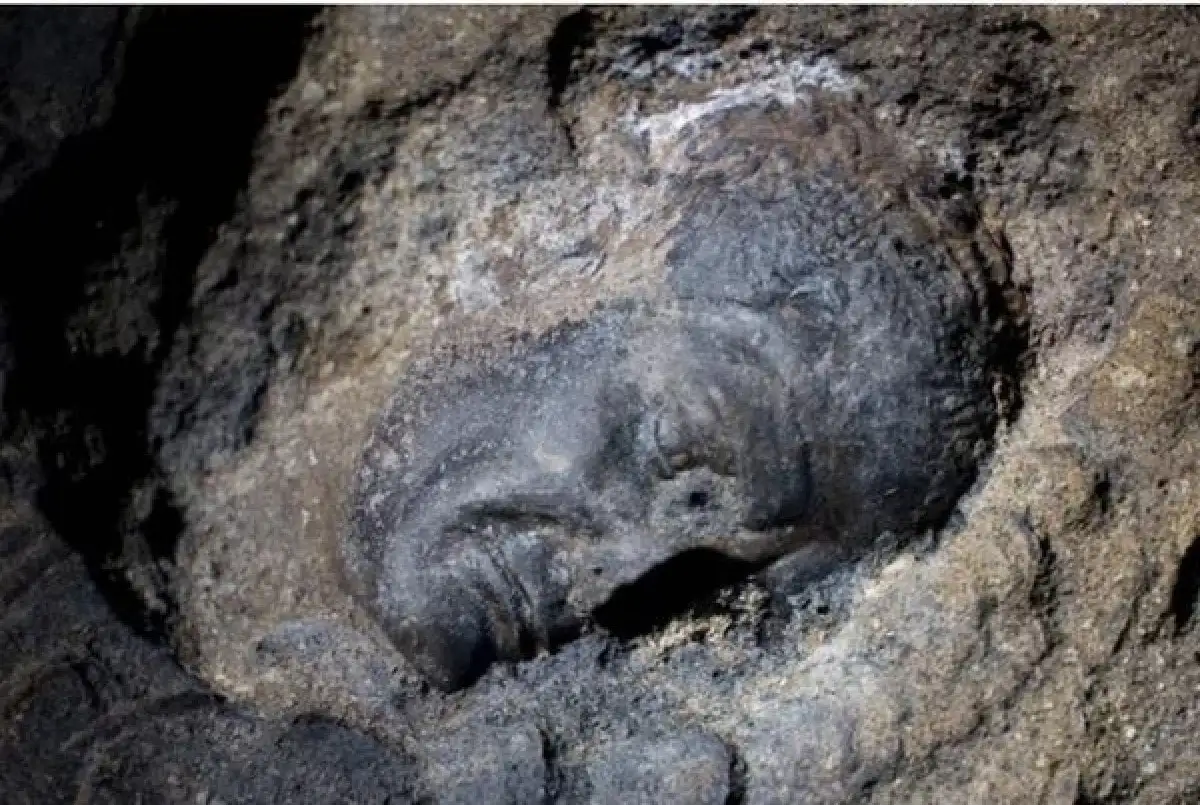
Among these figures, one particular imprint — the Face in the Ash — stands apart for its haunting realism. The lips seem slightly parted, the eyes gently closed. The features are calm, yet there is an undeniable tension in the expression — as if caught between agony and acceptance.
The Face in the Ash: A Natural Sculpture of Tragedy
Unlike the traditional plaster casts, some discoveries in Pompeii are natural impressions, formed when ash compacted around the human form, hardening into rock while the body decayed within. The Face in the Ash belongs to this category — a true fossil of emotion, molded directly by nature.
What makes it remarkable is not merely its form, but its expressive power. Every curve and hollow seems deliberate, as though sculpted by a master artist. Yet this “artwork” was born not from creation, but from destruction.
The molten material that enveloped Pompeii captured the finest details — the line of a jaw, the arch of an eyebrow, even the faint texture of skin. Over time, minerals replaced organic matter, turning vulnerability into permanence.
To gaze upon this face is to meet a moment suspended between life and oblivion — a whisper of a person whose story ended in fire, yet who continues to speak through stone.
Emotion in Archaeology: Humanity Beyond the Ruins
The archaeological value of Pompeii lies not only in its preserved architecture or artifacts, but in the emotional dimension it reveals. Nowhere else in the ancient world can we see, with such clarity, how ordinary people lived — and died.
The Face in the Ash bridges the gap between history and empathy. It reminds us that the citizens of Pompeii were not mythic figures from a distant age, but human beings who loved, feared, and hoped. Their final expressions transform the ruins from a site of tragedy into a mirror of shared humanity.
Historians and anthropologists have used these casts to study body positions, causes of death, and social dynamics, but beyond scientific data, each cast tells an intimate, silent story — one that transcends language and time.
The Art of Preservation: From Plaster to 3D Scans
Modern technology has given new life to Fiorelli’s 19th-century methods. Today, archaeologists use 3D scanning and digital modeling to preserve and study the fragile casts without further damaging them.
These technologies reveal microscopic details — pores, folds of clothing, even jewelry — helping to reconstruct not only the final moments but also the daily lives of Pompeii’s inhabitants. The Face in the Ash has been digitally recorded and displayed in museums and online archives, ensuring that this ancient whisper can reach global audiences.
Through such preservation, we safeguard not only history, but the emotional legacy of survival and remembrance that Pompeii embodies.
Pompeii and the Eternal Conversation with Nature
Pompeii stands as a paradox — a city destroyed by nature yet preserved because of it. The same volcanic forces that brought death also sealed its memory in the earth. The Face in the Ash symbolizes this paradox perfectly: an image born from catastrophe that now serves as a timeless work of natural art.
Each detail speaks of the fragile balance between creation and destruction. The volcanic ash, once an agent of obliteration, became a medium of preservation — as if nature herself paused to remember what she had undone.
Legacy: When the Earth Remembers Us in Stone
The Face in the Ash is not simply an archaeological find; it is a reflection on mortality, memory, and meaning. It forces us to ask profound questions:
When the earth records our passing, what of us will remain? Will it be our achievements, our monuments — or our emotions, our expressions, our humanity?
Through this silent visage, the people of Pompeii continue to remind us that memory can outlast time, and that even in destruction, beauty and truth endure.
Their tragedy has become our inheritance — a story carved in ash that still breathes, still mourns, and still whispers.
Conclusion: The Eternal Whisper of Pompeii
More than 1,900 years after Vesuvius erupted, the Face in the Ash remains one of the most haunting symbols of Pompeii. It is both a memorial and a mirror, inviting us to see ourselves reflected in the fragile humanity of the past.
Through its stillness, we hear an echo — not of terror, but of endurance. The earth, in remembering, has become an artist. And through this face, time itself seems to hesitate — honoring the moment when life, death, and eternity met in one breath.
When we stand before that ancient visage, we are reminded: history is not buried; it waits. And in the quiet of Pompeii’s ash, the human spirit still speaks.
ALSO READ: The Stepwell of the Pharaohs – Egypt’s Hidden Depths