The Terracotta Siren of Taranto: A Masterpiece of Ancient Greek Myth and Art
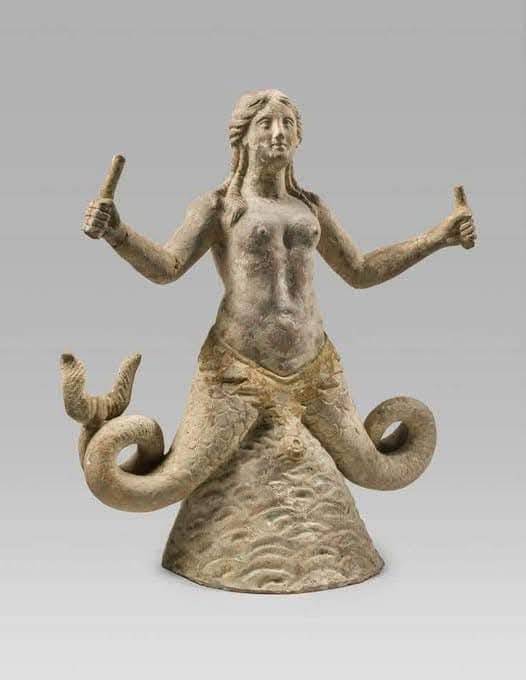
The ancient city of Taranto in southern Italy, once a thriving Greek colony known as Taras, holds an extraordinary legacy of Hellenic art and mythology. Among its most fascinating finds is a terracotta Siren dating back to the 4th century BC — a haunting creation that merges human grace with mythical enigma. This sculpture captures not only the artistic brilliance of classical artisans but also the timeless allure of the Siren myth, reflecting the fusion of culture, belief, and craftsmanship in Magna Graecia.
Unearthing the Terracotta Siren in Taranto
The terracotta Siren was discovered in the coastal city of Taranto, a site famed for its wealth of Greek artifacts. During the 4th century BC, Taras flourished as one of the principal centers of Greek civilization in southern Italy, its artisans blending local Italic traditions with Athenian and Corinthian influences.
>Terracotta, a preferred medium for votive figures, domestic ornaments, and funerary offerings, allowed artists to explore complex themes without the cost of marble or bronze. The Siren from Taranto exemplifies this tradition—its survival through centuries of burial a testament to both craftsmanship and cultural continuity.
The figure likely adorned a tomb or sanctuary, symbolizing protection, guidance, and the mystical voyage of the soul. Its blend of realism and fantasy marks it as more than a decorative object—it is a vessel of mythology shaped in clay.
Description and Craftsmanship
The Siren displays exceptional artistry characteristic of the late Classical period. Her upper body takes human form: delicate facial features, detailed curls of hair, and stylized jewelry emphasize femininity and seduction. Yet from the waist down, the sculpted lines merge into a serpentine or avian form, depending on the local mythic variation.
In Greek legend, Sirens were often described as hybrid beings—women with birdlike or serpentine bodies—symbolizing transformation, danger, and forbidden knowledge. The Taranto figure’s serpentine tail suggests an evolution of the myth, merging Greek imagery with Italic influences tied to the underworld and water symbolism.
The weathered surface of the terracotta tells its own story. Traces of pigment suggest that the sculpture may once have been vividly painted, its eyes, lips, and tail highlighted in natural hues. Though time has stripped away its colors, the figure’s expression and form still convey mystery—a silent echo of a long-lost belief system.
The Dual Nature of the Siren
In mythology, the Siren embodies both attraction and peril. Originating from ancient Greek epics, these creatures lured sailors with enchanting songs, leading them to shipwreck upon the rocks. The duality of their nature—beautiful yet deadly—mirrors humanity’s fascination with the unknown.
The Taranto Siren expresses this tension between beauty and danger in sculptural form. Her serene face contrasts with her otherworldly body, inviting reflection on the boundaries between mortal and divine, reality and illusion. In funerary contexts, such imagery offered both warning and comfort: a reminder of the temptations of life and the journey beyond death.
Perhaps this Siren was intended not merely as a mythic entity but as a spiritual guardian—a guide guiding the soul safely past the lures of earthly desire toward a peaceful afterlife.
The Symbolism of Terracotta in Greek Funerary Art
Terracotta was more than a practical material; it carried spiritual significance. In Greek funerary art, clay symbolized earth and renewal—the cycle of decay and rebirth. Figures like this Siren served as intermediaries between the living and the dead, embodying transformation through their hybrid forms.
Taranto’s artisans mastered the technique of mold-made terracotta, allowing replication of religious and mythological motifs. Each piece, however, was hand-finished, imbued with individuality and intent. The Siren’s detailing, posture, and expression were deliberate artistic choices intended to evoke emotion and reverence.
In its simplicity and fragility, terracotta mirrors human existence itself—temporary, yet capable of leaving a lasting mark on history and culture.
The Siren in Context: Greek Belief and Maritime Symbolism
The prominence of Sirens in Greek colonization sites such as Taranto is deeply tied to the sea. As a port city, Taras depended on maritime trade and naval power, and myths of the sea held strong influence over its inhabitants. The Siren became both a metaphor for the ocean’s beauty and its danger—a reflection of the unpredictable nature of life at sea.
Sailors and merchants would have recognized in the Siren both a warning and a charm. Her image invoked protection from the perilous waters while reminding the devout of the mythic balance between temptation and wisdom. In funerary use, she symbolized the journey across the waters of death, connecting the mortal world to the divine.
Artistic and Cultural Influences
The Taranto Siren reveals the hybridization of Greek and Italic art forms. While her mythic origin is distinctly Greek, the execution shows hints of local craftsmanship—particularly in the stylized tail and expressive face. This blend of traditions reflects the cultural exchange that characterized Magna Graecia, where Greek settlers interacted with native populations of southern Italy.
Comparisons can be drawn with similar figures found in Locri, Metapontum, and Campania, though Taranto’s version stands out for its refined modeling and emotional depth. Its influence extended beyond its time, shaping later Hellenistic and Roman depictions of mythological hybrids.
Preservation and Legacy
Today, the terracotta Siren of Taranto is more than an archaeological artifact; it is a bridge to ancient imagination. Its preservation offers insight into the aesthetics, rituals, and beliefs of a society that thrived over two millennia ago. Museums and research institutions continue to study such works to uncover details of ancient production methods, pigment analysis, and cultural function.
Through careful restoration and interpretation, archaeologists aim to reconnect modern audiences with the spiritual world of the ancient Greeks. Each curve of clay, each faded detail, tells a story of hands that molded meaning into matter—of artists who gave form to ideas of life, death, and transcendence.
The Enduring Allure of the Siren
Why does the Siren continue to fascinate us? Perhaps because she represents the eternal tension between desire and destruction, beauty and danger. The Taranto Siren captures this paradox physically and emotionally. Though mute and still, she seems to sing across the centuries. Reminding viewers of humanity’s deep connection to myth, art, and the forces of nature.
Visitors encountering her today—whether in museum display or digital archive. Feel the same silent pull that ancient sailors once feared. She invites reflection, not only on myth but on the fragility and resilience of human expression.
Conclusion: A Voice from the Ancient Sea
The 4th-century BC terracotta Siren from Taranto stands as a masterpiece of ancient creativity and symbolism. It embodies the fusion of Greek myth, Italic artistry, and spiritual philosophy that defined the classical world. Her sculpted form retains its haunting voice. A whisper from an age when art and myth were inseparable from everyday life.
In studying and preserving her, we rediscover a civilization’s understanding of the human condition. Forever caught between wonder and warning, between the mortal and the eternal.
ALSO READ: The Mursi Lip Plate: Symbolism, Identity, and Tradition in Ethiopia’s Omo Valley