The Terracotta Army of Qin Shi Huang: Ancient Innovation Beneath the Earth
A Timeless Discovery That Redefined Ancient Chinese Art
In 1974, farmers digging a well near Xi’an in Shaanxi Province stumbled upon one of the most important archaeological discoveries of the 20th century—the Terracotta Army of China’s first emperor, Qin Shi Huang (259–210 BC). What emerged from the soil was not just an ancient artistic marvel, but a window into the technological sophistication and military organization of a civilization over two millennia old.
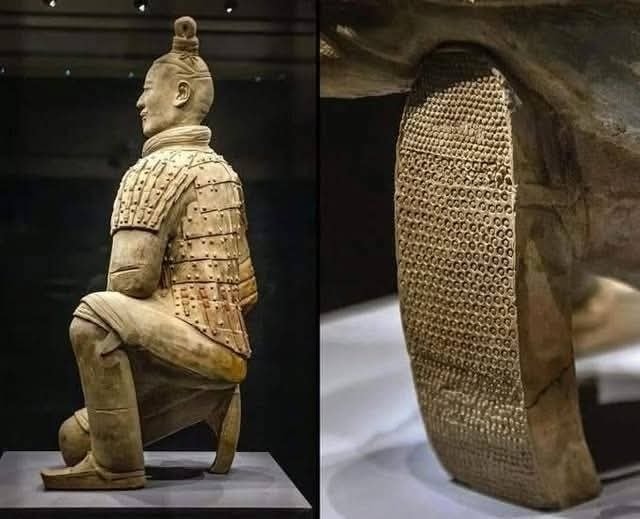
Among the 8,000 life-sized clay soldiers buried to guard the emperor in the afterlife, one warrior stood out due to a particularly remarkable feature: a pair of almost perfectly preserved shoes with carefully molded tread on the soles. This detail, though small, revealed the extraordinary attention given to realism, function, and precision by ancient artisans.
The Emperor Who United China
Qin Shi Huang, originally known as Ying Zheng, ascended the throne of the State of Qin at the age of 13. By 221 BC, he unified the warring states, establishing the Qin Dynasty and declaring himself the First Emperor of a unified China. His reign was marked by sweeping reforms that standardized currency, weights, measures, and even the written script, forming the backbone of Chinese identity for centuries.
However, his ambitions went beyond governance. Qin Shi Huang was obsessed with immortality and the afterlife. To secure his eternal reign, he ordered the construction of a vast underground mausoleum complex designed to mirror his earthly empire. At its heart stood the Terracotta Army—an eternal guard to protect him in the next world.
The Terracotta Warriors: Engineers and Artists in Harmony
The craftsmanship displayed in the Terracotta Army astonishes modern archaeologists. Each warrior stands approximately 1.8 meters tall and weighs up to 300 kilograms. Despite their similar posture and military attire, no two faces are identical—suggesting either individual modeling or advanced molding techniques designed for variation.
The soldiers were arranged in battle formations complete with officers, infantry, archers, chariots, and horses. The army served both a spiritual and symbolic role, representing military power and the emperor’s supreme control over China’s vast territories.
What sets them apart from other funerary art of the era is not only the individual realism but also the precision in military design—from armor plates to weapons, and even down to the footwear that allowed soldiers—real or sculpted—to stand firm in battle.
The Remarkable Discovery of the Intact Footwear
During excavations in Pit 1, archaeologists discovered one terracotta warrior whose shoes remained unusually well preserved. Unlike the smooth surfaces seen on most figures, these shoes featured patterned tread on the soles—clearly designed for grip.
This discovery sparked intrigue about the military technology and practical thought invested in the army’s creation. The tread pattern suggests that Qin artisans understood the importance of traction in combat, potentially reflecting authentic footwear designs used by the emperor’s soldiers during the Qin Dynasty.
The craftsmanship displayed in the detailing of these shoes underscored not only artistic skill but also empirical knowledge about terrain and movement, long before modern military footwear design evolved. Over 2,200 years later, this subtle detail highlighted the genius of early Chinese engineering.
The Lost Colors of the Terracotta Army
When first unearthed, the warriors were vividly painted in reds, greens, purples, and blues. These pigments, applied over lacquer, gave them lifelike realism. Unfortunately, exposure to air caused the delicate paint to flake away within minutes.
Today, researchers at the Museum of the Terracotta Warriors and Horses in Xi’an use advanced preservation techniques—including polymer sprays and controlled humidity—to preserve traces of these ancient colors. Ongoing excavations at nearby pits continue to use cutting-edge stabilization methods to retain pigment. Providing a glimpse of how dazzling the original army once looked.
The Unopened Tomb and the Mystery of Mercury Rivers
The central tomb of Qin Shi Huang—part of the vast 56-square-kilometer mausoleum complex—remains unopened. Ancient historical records from the Sima Qian’s Records of the Grand Historian describe the tomb as containing palaces, treasures, and rivers of mercury that mimic China’s geography.
Modern surveys with remote sensing and geophysical methods have revealed high levels of mercury in the soil surrounding the mound, lending credibility to these ancient accounts. However, concerns about preservation and potential contamination have kept archaeologists from opening the main burial chamber. It remains one of history’s greatest unopened mysteries.
The Human Cost Behind the Emperor’s Eternal Army
The creation of Qin Shi Huang’s mausoleum was an immense undertaking that reportedly employed more than 700,000 laborers, including craftsmen, soldiers, and prisoners. According to historical texts, secrecy was enforced so strictly that many workers. Were sealed within the tomb after its completion to prevent the disclosure of its secrets.
This grim detail reveals not only the emperor’s autocratic power. But also the tremendous social cost of his pursuit of immortality. What resulted, however, stands as one of the most awe-inspiring testaments to ancient craftsmanship and ambition ever created.
Modern Preservation Efforts and Global Legacy
Today, the Terracotta Army stands as a UNESCO World Heritage Site and one of China’s most visited archaeological attractions. Continuous restoration projects seek to stabilize deteriorating figures and uncover new sections of the site.
Recent studies have incorporated 3D scanning, digital modeling, and infrared imaging to recreate the warriors’ original colors and understand the production techniques behind each figure. Each pit continues to provide fresh insights into Qin engineering. Offering lessons on both technological innovation and the complex social organization of the empire.
The Terracotta Army has transcended its function as a funerary artifact. Becoming a universal symbol of human artistry, discipline, and the timeless pursuit of immortality.
The Footprint of Innovation
The unexpectedly detailed footwear of the Terracotta warrior—crafted with deliberate treads—might appear a minor curiosity at first glance. Yet, it embodies the very essence of the Qin Empire’s philosophy: precision, functionality, and mastery over material.
Such a subtle feature reveals that even in the afterlife, the emperor’s soldiers were equipped as if ready for real combat. Suggesting that artistic realism and military pragmatism merged seamlessly in ancient Chinese statecraft.
This discovery ensures that the Terracotta Army is remembered not only as an artistic wonder. But also as an enduring testament to early human innovation. Over two millennia later, the craftsmanship beneath the shoes of a clay soldier continues to leave its own unmistakable footprint in history.
ALSO READ: Iron Pillar of Delhi: Rust-Resistant Wonder of Ancient India