Syllipsimopodi bideni: The 296-Million-Year-Old Ancestor of Modern Octopuses 🐙🪨
A Fossil That Changed Cephalopod History
In 2022, paleontologists announced a discovery that sent ripples through the scientific community—the fossil of Syllipsimopodi bideni, unearthed in Montana, USA. Dating back 296 million years, this extraordinary find pushes the evolutionary timeline of octopuses and their relatives far deeper into Earth’s past than previously believed.
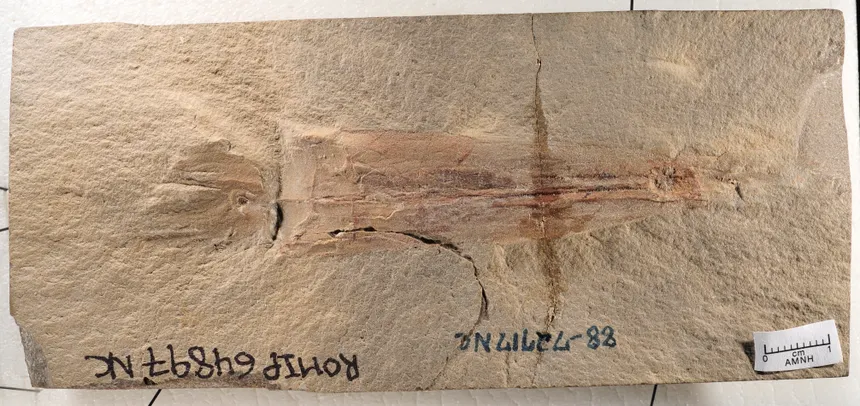
Soft-bodied animals rarely leave behind fossil evidence, making this discovery not just rare, but revolutionary. The fossil preserves ten arms, an ink sac, and delicate impressions of limbs, offering an unprecedented glimpse into a creature that lived nearly 300 million years before humans first appeared.
What Is Syllipsimopodi bideni?
A Window into Ancient Oceans
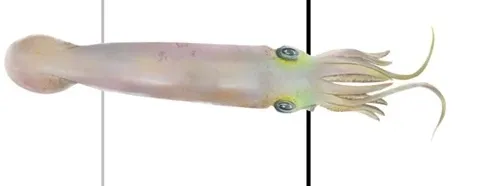
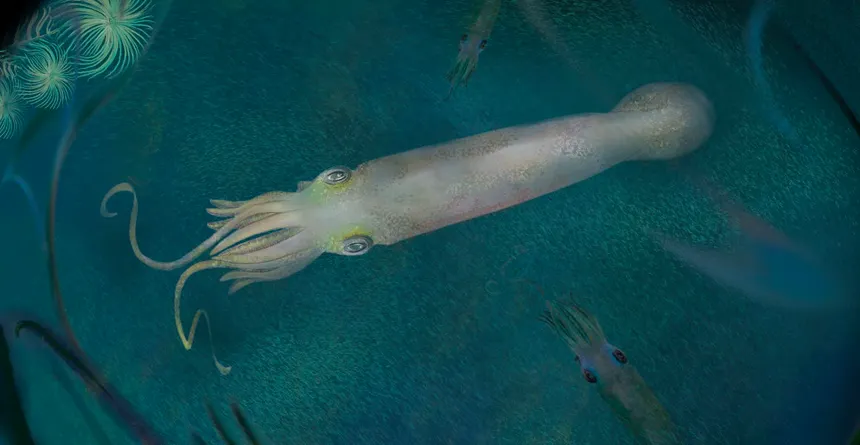
Syllipsimopodi bideni is an extinct species of vampyropod, the group that includes modern octopuses and vampire squid. Unlike today’s octopuses, which have eight limbs, this ancient cephalopod had ten arms, each lined with suckers for grasping prey.
Its anatomy shows that defensive strategies like ink expulsion were already present in these early animals, making them surprisingly advanced compared to other marine life of the time.
Naming the Species
The fossil was named Syllipsimopodi bideni in honor of U.S. President Joe Biden, reflecting a tradition of naming significant paleontological discoveries after contemporary figures.
The Fossil Discovery in Montana
A Rare Preservation
The fossil was discovered in Bear Gulch Limestone, a famous fossil bed in Montana known for preserving delicate soft-bodied organisms. This unique environment allowed even fragile tissues, such as arms and ink sacs, to fossilize—an event almost unheard of in paleontology.
Importance of the Find
This fossil is now the oldest known vampyropod, predating previous specimens by nearly 82 million years. For evolutionary biologists, this means octopus-like creatures were thriving in Earth’s oceans long before the dinosaurs walked the land.
Anatomy of Syllipsimopodi bideni
Ten Limbs Instead of Eight
Modern octopuses have eight arms, but Syllipsimopodi bideni had ten functional limbs. This discovery suggests that ancestral cephalopods originally had more appendages, and that the modern octopus lineage lost two arms over millions of years of evolution.
The Ink Sac: Ancient Defense
The fossil clearly shows the presence of an ink sac, proving that defensive strategies we see in today’s cephalopods were already established nearly 300 million years ago. This adaptation gave them a survival advantage in predator-rich environments.
Evidence of a Predator
With grasping arms and a streamlined body, Syllipsimopodi bideni was likely an active predator, feeding on smaller marine animals. Its morphology suggests it was already a sophisticated hunter in the ancient seas.
Evolutionary Significance
Pushing the Timeline Back
Before this discovery, scientists believed vampyropods evolved around 240 million years ago. The Syllipsimopodi bideni fossil now shows they existed 296 million years ago, during the Carboniferous–Permian period transition.
A Family Tree Update
This means cephalopods were diversifying far earlier than thought, reshaping the evolutionary tree of life. Octopuses, squids, and cuttlefish—modern cephalopod groups—can now trace their ancestry much further back.
Cephalopods: Masters of Survival
Ancient Survivors
Cephalopods are some of Earth’s most adaptable creatures. From Syllipsimopodi bideni nearly 300 million years ago to today’s octopuses and squids, they have endured mass extinctions, climate changes, and shifting ecosystems.
Intelligence and Adaptability
Modern octopuses are known for their intelligence, problem-solving skills, and remarkable adaptability. The evolutionary journey revealed by fossils like Syllipsimopodi bideni shows that cephalopods have always been innovators in survival.
Why Soft-Bodied Fossils Matter
Soft-bodied creatures rarely fossilize because their tissues decay quickly. Most fossils are of bones, shells, or teeth. The Syllipsimopodi bideni fossil is exceptional because it captures fine anatomical details like arms and an ink sac—features that are almost never preserved.
Such fossils give scientists rare opportunities to study evolutionary biology in detail, connecting the past with the living species we see today.
Implications for Science and Evolution
-
Rethinking Cephalopod Evolution
The fossil forces scientists to reconsider when and how octopuses evolved, showing that their lineage is far older than once believed. -
Insights into Marine Ecosystems
It reveals that ancient oceans were already home to sophisticated predators with complex adaptations. -
The Role of Chance in Fossilization
Without the rare conditions of the Bear Gulch Limestone, we might never have known about Syllipsimopodi bideni.
The Legacy of Syllipsimopodi bideni
This fossil is more than just a scientific curiosity—it’s a symbol of resilience and continuity. Cephalopods like Syllipsimopodi bideni survived Earth’s most dramatic upheavals, from volcanic eruptions to mass extinctions, and continue to thrive today in oceans around the globe.
The discovery is a reminder that life is both fragile and enduring. A creature that lived nearly 300 million years ago has left an imprint so vivid that it can still teach us about evolution, survival, and the deep history of our planet.
Conclusion: A Glimpse into Deep Time
The fossil of Syllipsimopodi bideni is a once-in-a-lifetime discovery that reshapes our understanding of cephalopod evolution. With its ten limbs, ink sac, and advanced anatomy, it demonstrates that octopus-like creatures were already thriving in ancient seas nearly 300 million years ago.
From the shadowy depths of Montana’s fossil beds to the vibrant oceans of today, cephalopods tell a story of adaptation, survival, and mystery. The silent stone impression of Syllipsimopodi bideni is not just a relic—it’s a living connection between past and present, showing us how life endures through time.
ALSO READ: Puma Punku: The Mysterious Megalithic Marvel of Tiwanaku 🗿✨