Sumerian Statues from Iraq, ca. 2700 BCE: A Glimpse into Ancient Devotion and Artistry
Sumerian statues from around 2700 BCE found in Iraq provide a fascinating window into the religious, cultural, and artistic life of one of the world’s earliest civilizations. These statues, discovered primarily in the ancient city of Eshnunna (modern Tell Asmar), represent mortals engaged in eternal prayer and devotion. They embody the spiritual beliefs, artistic conventions, and societal values of the Early Dynastic Sumerian period.
Historical Context of Sumerian Statues
The Sumerians, who inhabited southern Mesopotamia—the historical region of present-day Iraq—developed a complex society during the Chalcolithic and Early Bronze Age, around 3500 to 2300 BCE. By circa 2700 BCE, their cities like Uruk and Eshnunna thrived as centers of religion, administration, and culture.
The statues from this time were primarily votive offerings placed in temples. Excavated in 1933-1934 at the Square Temple in Eshnunna, these statues reveal the practice of dedicating representations of worshippers who could stand in perpetually to pray before the gods on behalf of the donors. This practice highlights the Sumerians’ religious devotion and their belief in supernatural guardianship and intercession.
Description and Artistic Features
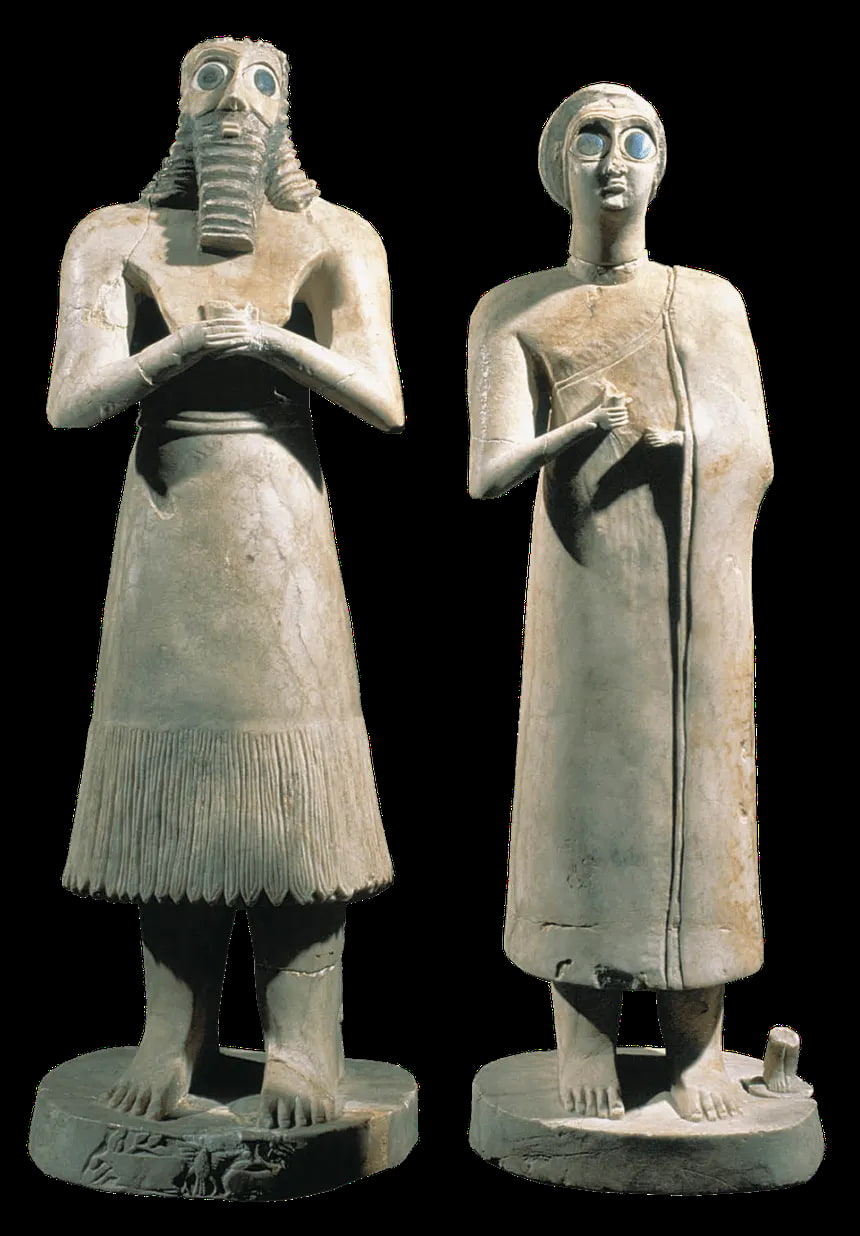
The famous Tell Asmar Hoard consists of twelve statues varying from 9 to 28 inches in height and made from materials such as gypsum, limestone, alabaster, and soft stone. They are notable for their abstract style characterized by enlargements of key features, especially the eyes, which symbolize “eternal wakefulness” and attentiveness to the gods.
The statues feature clasped hands held in front of the chest, a universal gesture of prayer and devotion. While they represent mortals and not deities. Each figure bears unique traits including variations in hair, facial expressions, and inlays of materials. Such as white shell, black limestone, and lapis lazuli. Some statues still retain traces of their original paint, reflecting their once vibrant appearance.
Among them, a particularly tall and elaborate figure is believed to embody an idealized heroic or divine archetype. Possibly inspired by mythic figures such as Gilgamesh. This figure features luxurious flowing hair and is adorned with symbolic elements on the pedestal. Underscoring its status and significance in Sumerian culture.
Religious and Cultural Significance
The statues’ primary function was religious. They were votive figures installed in temple sanctuaries as stand-ins for worshippers, tasked with constant prayer and attention to gods. Such as the god Abu worshipped in the Square Temple at Eshnunna. This religious context underlines the deeply theocratic nature of early Sumerian society, where religion permeated daily life and governance.
Moreover, the statues reflect gender distinctions with both male and female figures present in the collection. Each crafted with intentional differentiation by the artists. This aspect speaks to the social roles and religious participation of both genders in Sumerian mesopotamian culture.
Archaeological Discovery and Current Location
Discovered buried beneath the temple floors, the statues are among the most important artifacts illustrating Early Dynastic Sumerian art. They were excavated primarily by the Oriental Institute of the University of Chicago and are now dispersed between museums. Including The Metropolitan Museum of Art in New York, the National Museum of Iraq in Baghdad, and the Oriental Institute in Chicago.

These statues serve as pivotal evidence of early Mesopotamian urban religious practices and artistic conventions and continue to be studied for insights into ancient Near Eastern sculpture and spiritual life.
Conclusion
Sumerian statues from Iraq dating to circa 2700 BCE are invaluable cultural relics. That illuminate the intersection of art, religion, and society in ancient Mesopotamia. Their abstract style, symbolic features, and religious function offer a remarkable understanding of Sumerian devotion and craftsmanship. Preserved across notable museums worldwide, they remain a testament to the spiritual and artistic legacy of one of humanity’s earliest civilizations.
ALSO READ: Butler Wash Petroglyph Panel: Ancient Stories in Stone