Stupendemys Geographicus: The Giant Prehistoric Turtle That Ruled South America’s Ancient Rivers
Meet the Largest Turtle to Ever Live
Around 5 to 10 million years ago, during the Miocene epoch, the wetlands and rivers of northern South America were home to a colossal reptile unlike anything seen today — the Stupendemys geographicus.
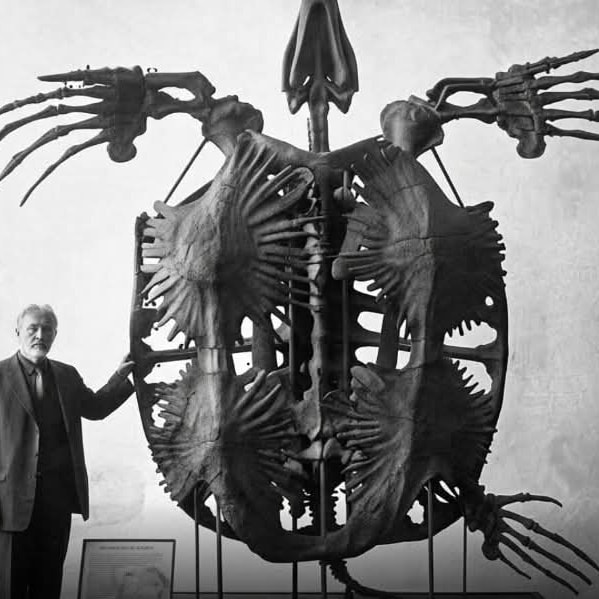
This enormous freshwater turtle dwarfed nearly all other turtles in Earth’s history. Measuring up to 13 feet (4 meters) in length and weighing nearly 2 tons (about 4,000 pounds), Stupendemys was a true titan of ancient waterways. Its name, which literally means “stupendous turtle,” perfectly captures the awe this creature inspires even millions of years after its extinction.
The Discovery: Unearthing a Prehistoric Giant
The first fossils of Stupendemys geographicus were discovered in the 1970s in Venezuela’s Urumaco Formation, a site famous for its rich record of Miocene-era fauna. Subsequent discoveries across Colombia, Brazil, and Peru have revealed a clearer picture of this massive turtle’s life.
In 2020, paleontologists announced the discovery of new, nearly complete shells, confirming just how gigantic these creatures were. Some of the carapaces measured over 3 meters (10 feet) long, making them the largest turtle shells ever found.
These fossils also revealed intriguing details about their anatomy — particularly the horn-like projections seen on some individuals. This feature led scientists to explore differences between males and females, unlocking secrets about their behavior and evolution.
Physical Characteristics: A True River Titan
Stupendemys geographicus was a freshwater turtle belonging to the Podocnemididae family, which still includes modern Amazon River turtles. However, Stupendemys was on an entirely different scale — a supersized version of its living relatives.
Size and Shell Structure
-
Length: Up to 13 feet (4 meters)
-
Weight: Approximately 2 tons (4,000 pounds)
-
Shell (Carapace): Thick, dome-shaped, and incredibly strong
Its massive shell served as both armor and fortress, protecting it from predators such as prehistoric crocodiles, including Purussaurus, one of the largest crocodilians ever known.
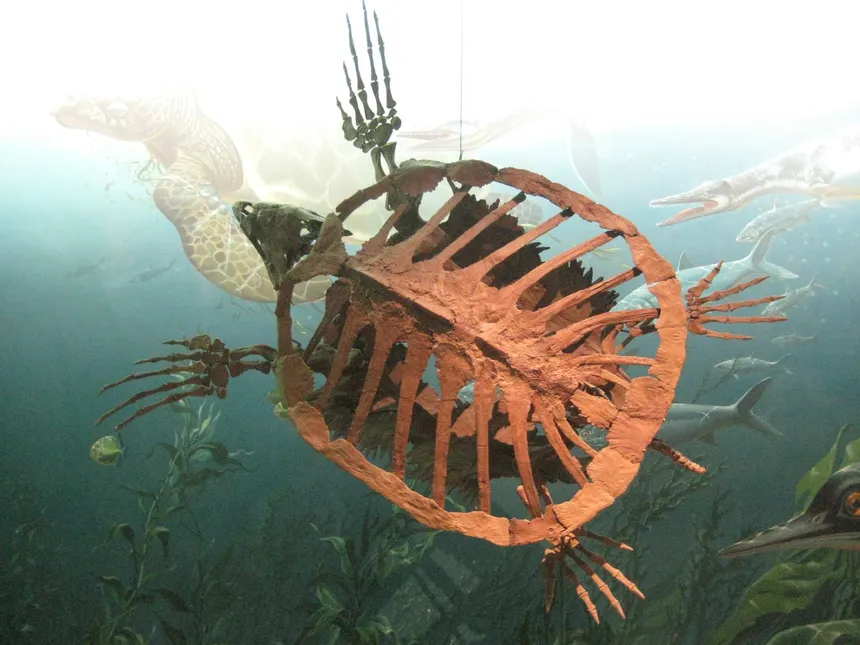
Interestingly, fossils suggest sexual dimorphism — a difference between males and females. Males had large, horn-like projections extending from the front of their shells, likely used for combat or mating displays, while females lacked these horns, having smoother shells for mobility and nesting.
A Gentle Giant: Diet and Behavior
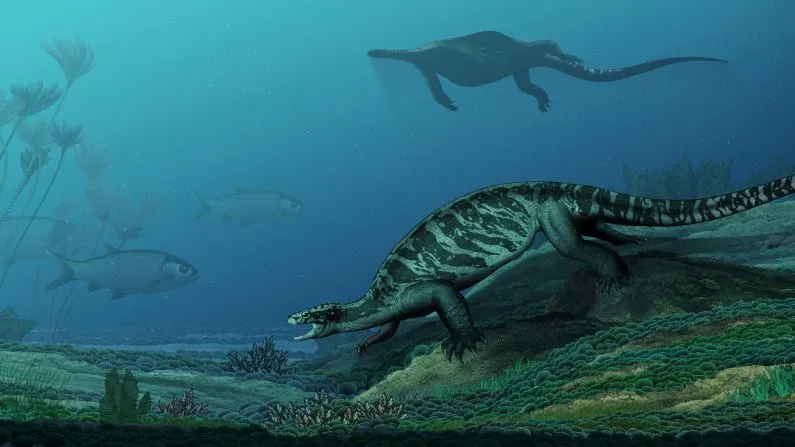
Despite its intimidating size, Stupendemys was not a carnivore. Fossilized jawbones reveal broad, crushing surfaces, suggesting it was herbivorous, feeding primarily on aquatic vegetation, fruits, and soft plants.
It likely spent most of its time gliding slowly through slow-moving rivers and wetlands, using its large flippers to navigate. Its immense size made it nearly immune to most predators — only the largest crocodilians of the time posed any real threat.
Role in the Ecosystem
Stupendemys played a vital ecological role as a mega-herbivore, helping to maintain vegetation balance in freshwater systems. Its feeding habits likely shaped the distribution of aquatic plants and contributed to nutrient cycling within these ancient river systems.
The Miocene World: An Age of Giants
The Miocene epoch (23 to 5.3 million years ago) was a period of remarkable biodiversity and transformation. South America, still isolated from other continents, was home to an extraordinary array of megafauna — from giant crocodiles and prehistoric rodents to early relatives of modern reptiles.
During this time, vast wetlands, swamps, and floodplains covered much of the continent’s northern region, creating ideal habitats for large aquatic animals like Stupendemys.
These environments provided abundant food resources, allowing such enormous species to thrive. The size of Stupendemys suggests that ancient South American waterways were rich ecosystems capable of supporting creatures of incredible scale and diversity.
Predators and Defense: Living Among Giants
Even for a turtle the size of a car, danger was never far away. The Miocene rivers were also home to Purussaurus brasiliensis, a crocodilian that could reach lengths of 40 feet (12 meters) — one of the largest predators ever to exist.
Stupendemys’ thick shell was its first and most important line of defense. The horned edges of the male’s carapace might have served not only for combat with rivals but also as a deterrent against attacks from crocodiles and other predators.
Some Stupendemys fossils even show tooth marks consistent with crocodilian bites, evidence of ancient struggles between these two titans of the river.
Sexual Dimorphism: Horns, Rivalry, and Mating Rituals
One of the most fascinating discoveries about Stupendemys is the difference between male and female shells. Male specimens exhibit large, forward-facing horns, while female shells are smooth.
Scientists believe these horns were used for male-to-male combat, similar to how modern animals like deer or bighorn sheep fight for dominance. These encounters may have determined mating rights or established territory.
This level of sexual dimorphism in a turtle species is rare and gives researchers a deeper understanding of behavioral evolution among prehistoric reptiles.
Extinction: The End of a Giant Era
As the Miocene epoch gave way to the Pliocene, climate changes gradually altered the vast wetland systems of northern South America. Drying conditions reduced suitable habitats, while shifts in river systems disrupted breeding and feeding grounds.
These environmental changes, combined with increasing competition from other species, likely led to the gradual decline and extinction of Stupendemys.
Though it disappeared millions of years ago, its fossils remain a powerful symbol of life’s adaptability — and the vulnerability of even the largest creatures to environmental shifts.
Scientific Importance: What Stupendemys Teaches Us
The discovery of Stupendemys geographicus provides scientists with invaluable insights into ancient ecosystems, climate, and evolutionary biology.
-
Its enormous size suggests that prehistoric rivers were nutrient-rich and capable of supporting massive herbivores.
-
The presence of sexual dimorphism indicates complex social behaviors previously unknown in turtle species.
-
Its coexistence with other megafauna paints a vivid picture of a thriving ecosystem filled with diversity and interaction.
Each new fossil discovery adds another piece to the puzzle of how these prehistoric giants lived, interacted, and adapted to their changing environments.
Legacy: The Heavyweight Champion of Turtles
Today, Stupendemys holds the title of the largest turtle to ever live — a true prehistoric marvel. While modern turtles, like the leatherback sea turtle, still impress with their size, none come close to the magnitude of this Miocene giant.
Its story continues to inspire scientists, artists, and enthusiasts alike. Reminding us of the extraordinary evolutionary experiments our planet has witnessed.
From the depths of ancient rivers to the display cases of modern museums, Stupendemys geographicus. Stands as a timeless emblem of nature’s boundless creativity and the enduring mysteries of Earth’s past.
ALSO READ: The Sleeping Guardian of the Desert – Nature’s Accidental Sculpture