The Stone Spheres of Costa Rica: Mysteries of the Diquís Culture
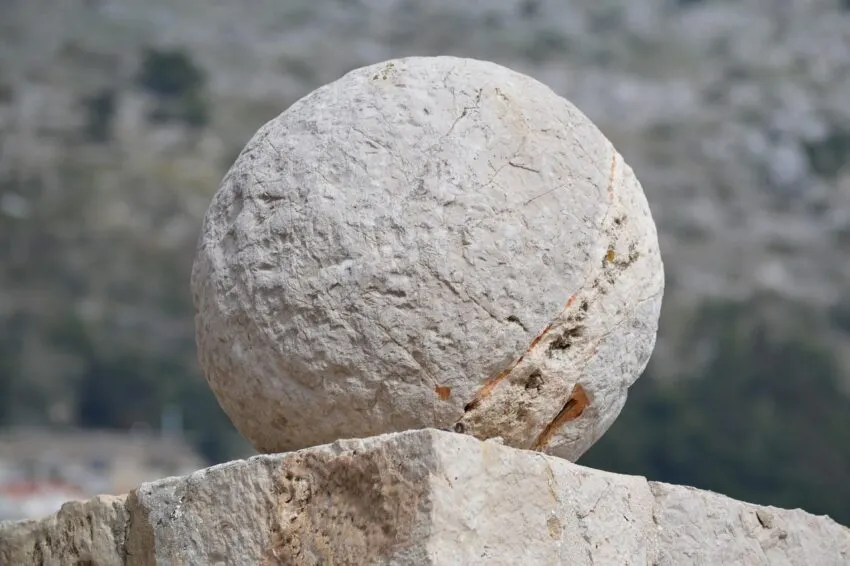
Scattered across the Diquís Delta and Isla del Caño in Costa Rica lies one of the most mysterious archaeological legacies of the ancient world: the stone spheres of Costa Rica, also known as the Diquís spheres. With more than 300 petrospheres discovered, these nearly perfect stone balls, ranging from just a few centimeters to over 2 meters in diameter, continue to fascinate archaeologists, historians, and travelers alike.
Declared a UNESCO World Heritage Site in 2014, the spheres are an enduring symbol of Costa Rica’s pre-Columbian heritage and represent one of the most intriguing cultural achievements of the Diquís culture. Their flawless craftsmanship, enigmatic purpose, and enduring mystery make them one of the most iconic archaeological treasures of the Americas.
Origins of the Diquís Spheres
The Diquís Culture
The stone spheres are attributed to the Diquís culture, which thrived in southern Costa Rica between 300 BCE and 1550 CE. This culture was known for its advanced social organization, metalworking, and stone craftsmanship, leaving behind monumental works that highlight their skill and symbolic traditions.
Timeline
-
Early Formation (300 BCE – 800 CE): Development of settled agricultural societies in the Diquís Delta.
-
Peak of Sphere Production (800–1500 CE): Creation of the majority of the stone spheres, possibly tied to the expansion of ceremonial centers.
-
Decline (Post-1500 CE): Disruption following European contact and colonization.
The spheres remain as silent witnesses to the sophistication and mystery of this pre-Columbian society.
Craftsmanship and Materials
Materials Used
The spheres are made from a variety of rocks, including:
-
Granodiorite – A hard, durable igneous rock found in the Talamanca Mountains.
-
Gabbro – Another tough igneous rock, often dark in color.
-
Limestone and Sandstone – Softer rocks used for smaller spheres.
Methods of Creation
Although no written records exist, archaeologists believe the spheres were crafted by:
-
Rough Shaping – Using stone hammers to chip away large chunks.
-
Grinding and Polishing – Employing sand and water to smooth surfaces.
-
Heating Techniques – Possibly applying fire and cooling methods to fracture rock.
What remains remarkable is the near-perfect roundness achieved without modern tools—a feat that underscores the ingenuity of the Diquís people.
Size and Scale
The spheres vary significantly in size:
-
Smallest: Only a few centimeters in diameter.
-
Largest: Over 2 meters (6.5 feet) across and weighing up to 16 tons.
Their consistent roundness, even in massive examples, has astonished researchers and sparked comparisons to modern engineering standards.
Purpose and Theories
The exact function of the stone spheres remains a subject of debate. Several theories have been proposed:
1. Astronomical Alignments
Some archaeologists believe the spheres were arranged in patterns reflecting celestial movements, such as solstices and constellations, suggesting the Diquís had advanced astronomical knowledge.
2. Ceremonial and Religious Significance
The spheres may have served as sacred symbols in rituals or represented deities connected to the sun, moon, or earth. Their placement near important settlements supports this theory.
3. Status Symbols
The spheres could have acted as markers of power and prestige, indicating the wealth and influence of elite households. Their size and difficulty of creation suggest they were reserved for society’s leaders.
4. Territorial Markers
Another theory proposes that the spheres marked boundaries or pathways, delineating ceremonial spaces or agricultural lands.
Despite extensive study, no single theory has been universally accepted, keeping the mystique of the spheres alive.
Discovery and Archaeological Study
Modern Rediscovery
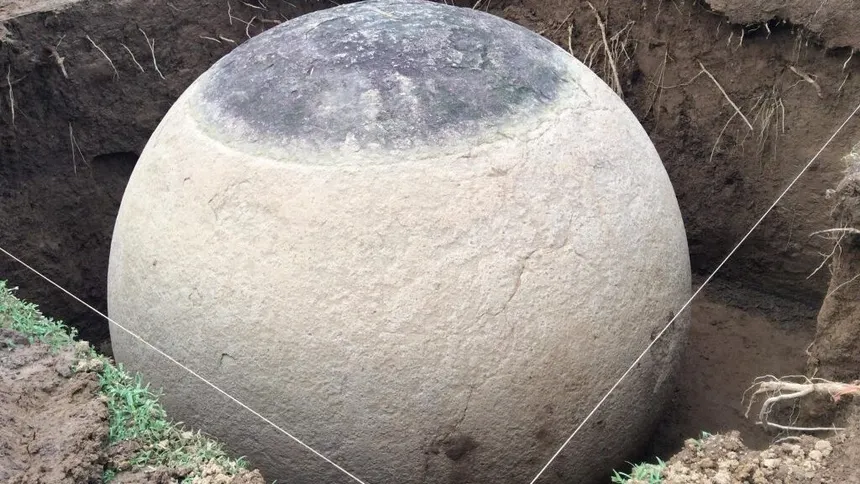
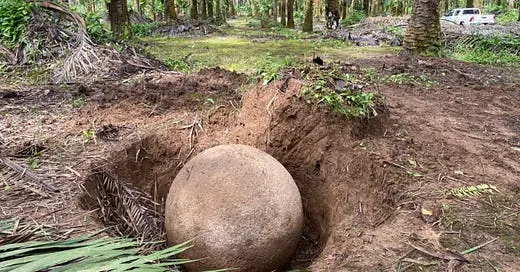
The spheres first came to international attention in the 1930s, when the United Fruit Company was clearing land in the Diquís Delta for banana plantations. Workers stumbled upon these massive stone orbs, sparking scientific interest.
Excavations and Research
Since then, archaeologists have documented and studied the spheres, though many were displaced from their original locations due to agricultural development, looting, and relocation for display.
Institutions like the National Museum of Costa Rica continue to study the spheres, piecing together their history while advocating for their protection.
UNESCO World Heritage Recognition
UNESCO inscribed the stone spheres and their associated archaeological sites as a World Heritage Site in 2014 under the title:
“Pre-Columbian Chiefdom Settlements with Stone Spheres of the Diquís.”
This recognition highlights:
-
Their unique craftsmanship and mysterious origins.
-
Their role in understanding pre-Columbian chiefdom societies.
-
Their cultural significance as part of Costa Rica’s heritage.
The designation also helps ensure their conservation and global recognition, protecting them for future generations.
Symbolism in Modern Costa Rica
Today, the stone spheres have become a national symbol of Costa Rica. They are featured in:
-
Museums and Exhibits – Many are displayed at the National Museum in San José.
-
Public Spaces – Replicas can be found in parks, gardens, and government buildings.
-
Cultural Identity – The spheres symbolize Costa Rica’s ancient roots and continuity of heritage.
Their presence in modern Costa Rica links the past with the present, celebrating both mystery and cultural pride.
Visiting the Stone Spheres
Travelers can experience the spheres at several locations:
-
Finca 6 Archaeological Site – A preserved settlement with spheres in their original context.
-
National Museum of Costa Rica (San José) – Displays spheres alongside other pre-Columbian artifacts.
-
Isla del Caño – Features spheres connected to ancient ceremonial use.
Visiting these sites offers a direct encounter with one of archaeology’s greatest enigmas.
Why the Stone Spheres Matter
The stone spheres of Costa Rica are significant for several reasons:
-
Engineering Mystery – Their perfect roundness challenges assumptions about ancient technology.
-
Cultural Heritage – They embody the legacy of the Diquís culture.
-
Symbolic Power – They reflect universal human concerns: power, spirituality, and connection to the cosmos.
-
Global Recognition – As a UNESCO site, they highlight Costa Rica’s role in world heritage.
These spheres are more than archaeological objects—they are symbols of human ingenuity and cultural identity.
Conclusion
The stone spheres of Costa Rica, or Diquís spheres, remain one of the world’s most captivating archaeological mysteries. Created by the Diquís culture over a thousand years ago, their flawless craftsmanship and enigmatic purpose continue to puzzle and inspire. Declared a UNESCO World Heritage Site, they represent not just the brilliance of a vanished civilization but also the enduring connection between past and present in Costa Rica.
Standing before these spheres, one cannot help but feel awe—at once humbled by the skill of their creators and intrigued by the mysteries they still guard. They remind us that history often whispers in enigmas, inviting us to look deeper into the human quest for meaning, order, and permanence.
ALSO READ: The Stone Spheres of Costa Rica: Mysteries of the Diquís Culture