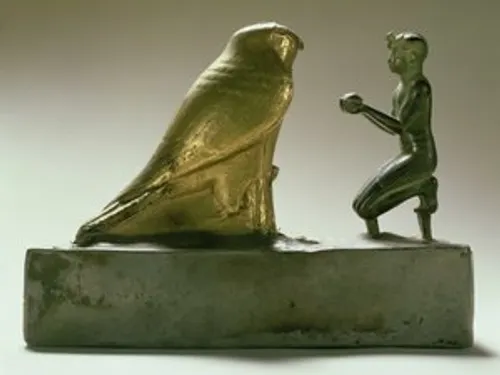
The Statue of Taharqa Making an Offering to the Falcon God Hemen
A Royal Offering to the Gods
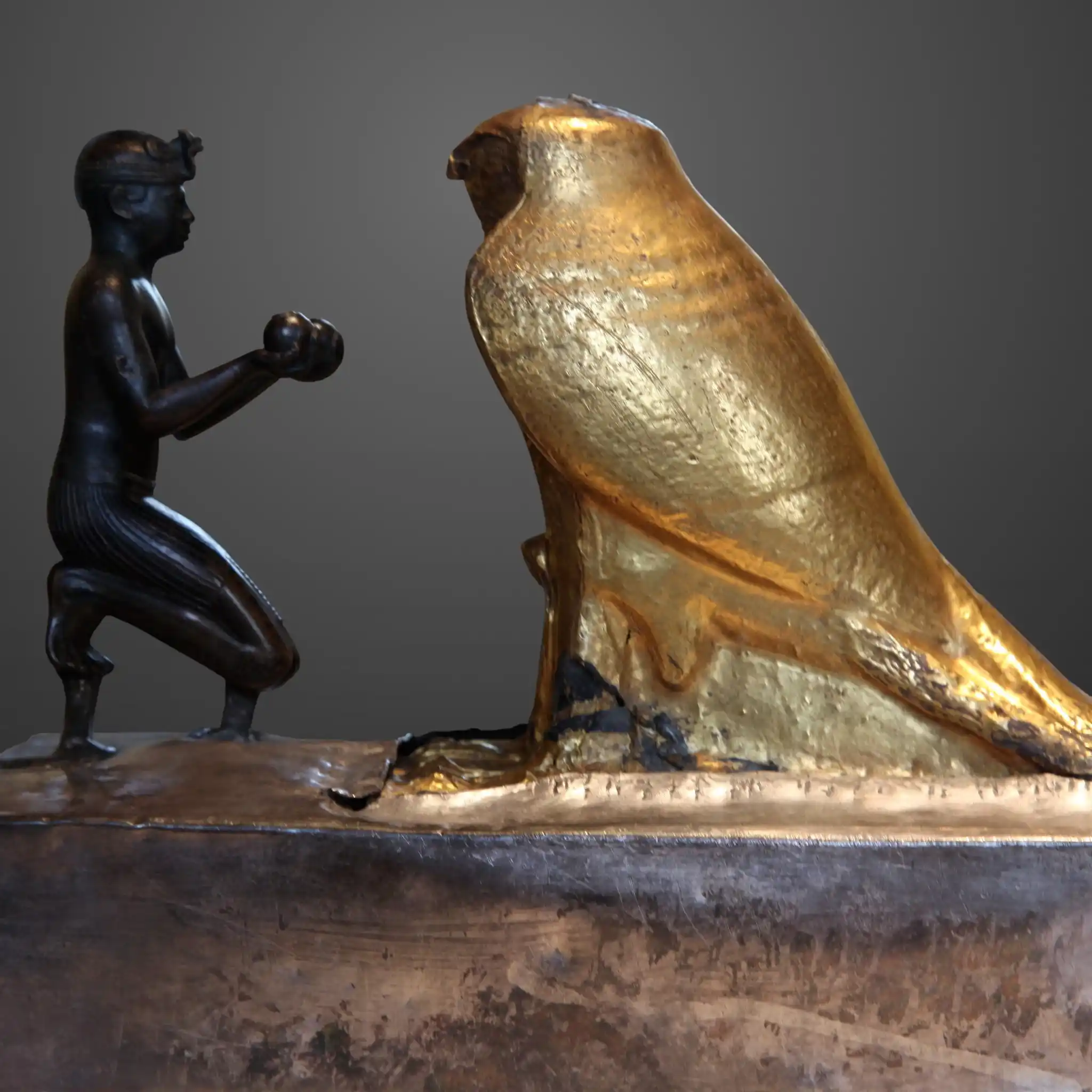
Among the treasures of ancient Egypt housed in the Louvre Museum in Paris stands a remarkable statue depicting King Taharqa, one of the most powerful rulers of the 25th Dynasty, making an offering to the falcon god Hemen. Carved during the Third Intermediate Period (ca. 690–664 BCE), this artifact reflects not only the piety of the Kushite pharaohs but also their efforts to integrate Nubian traditions with the deeply rooted religious life of Egypt.
The statue captures a moment of devotion: a king kneeling or standing with reverence, presenting an offering to the falcon-headed god, who symbolized protection, kingship, and divine legitimacy. More than a work of art, it embodies the relationship between ruler and deity, politics and religion, and Egypt and Nubia.
Who Was Taharqa? The Kushite Pharaoh of Egypt
Rise of the Kushite Dynasty
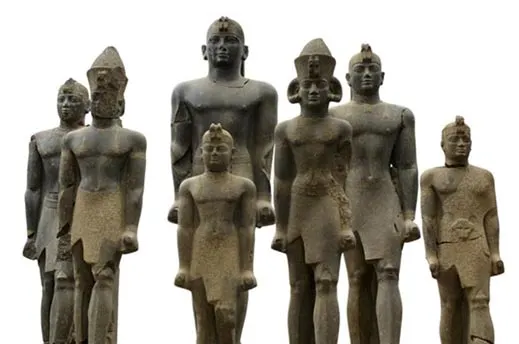
Taharqa was a member of the Kushite royal family from Nubia (modern Sudan). His dynasty, the 25th Dynasty of Egypt, is often called the Kushite or Nubian Dynasty. They seized control of Egypt around 747 BCE, uniting the Nile Valley under Kushite leadership.
Reign of Prosperity and Challenge
Taharqa’s reign (690–664 BCE) was marked by:
-
Extensive building projects, including temples, pyramids, and statues.
-
Renewed devotion to Egyptian religious traditions.
-
Military confrontations with the Assyrian Empire, which threatened Egypt’s stability.
Despite external pressures, Taharqa left a strong legacy of cultural revival, blending Nubian strength with Egyptian tradition.
Hemen: The Falcon God of Divine Kingship
Who Was Hemen?
Hemen was a relatively lesser-known falcon deity in ancient Egypt but carried profound symbolic significance. Associated with protection, divine kingship, and the royal cult, Hemen was often depicted as a falcon or falcon-headed man.
Symbolism of the Falcon
In Egyptian culture, falcons represented:
-
Sky and divine vision, soaring above earthly matters.
-
Strength and vigilance, watching over the king and people.
-
Royal authority, with connections to other gods like Horus and Montu.
By making an offering to Hemen, Taharqa symbolically reaffirmed his legitimacy and divine mandate as Egypt’s ruler.
The Statue: Artistic and Religious Significance
Materials and Craftsmanship
The statue is carved in durable stone, emphasizing permanence and divine reverence. Details of the king’s regalia—such as the royal kilt, headdress, and inscriptions—highlight his status as both a political and spiritual leader.
The Act of Offering
The gesture of offering reflects one of the most central acts in Egyptian kingship: the ruler as the bridge between gods and people. By presenting food, drink, or symbolic objects, the king maintained maat (cosmic order) and reaffirmed the gods’ blessings upon Egypt.
Religious Context
Such statues were likely placed in temples or shrines, where they served as perpetual reminders of the king’s piety. The presence of Hemen reinforces the idea of divine protection over Taharqa’s reign, especially during a time of political tension.
The Role of Statues in Egyptian Ritual Life
Statues like this one were not mere artistic expressions. In Egyptian thought, they served as living embodiments of the king’s eternal presence. Priests could perform rituals before them, and offerings made to the statues were spiritually transferred to the gods themselves.
By immortalizing Taharqa’s act of devotion, the statue ensured that he remained eternally bound to the divine realm, sustaining his authority even after death.
The Nubian Influence on Egyptian Religion and Art
The 25th Dynasty introduced a unique fusion of Nubian and Egyptian traditions. While Nubian kings adopted Egyptian religious forms, they also brought their own perspectives:
-
Strong emphasis on Amun worship, inherited from their homeland of Napata.
-
Revival of pyramid building in Nubia, reminiscent of earlier Egyptian traditions.
-
Distinctive artistic styles, blending Egyptian formality with Nubian features.
The Statue of Taharqa offering to Hemen embodies this cultural synthesis, standing as a testament to the cross-cultural exchange along the Nile.
Historical Context: Egypt in the Third Intermediate Period
The statue belongs to the Third Intermediate Period (c. 1069–664 BCE), a time of political fragmentation and foreign influence. Egypt was no longer the unified powerhouse of earlier centuries, and multiple dynasties vied for control.
The Kushite takeover, however, briefly restored unity. Under Taharqa, Egypt experienced a cultural renaissance, even as external threats loomed. Statues like this one reflect the dynasty’s effort to root their rule in traditional Egyptian religion, asserting continuity with the pharaohs of old.
From Antiquity to the Louvre: Journey of the Statue
The statue of Taharqa eventually made its way into the collections of the Louvre Museum in Paris, where it now stands as part of the museum’s renowned Egyptian antiquities section.
-
Rediscovery: Likely excavated during 19th-century explorations of Egyptian temples and Nubian sites.
-
Preservation: The Louvre has ensured its conservation, allowing modern audiences to appreciate its detail and symbolism.
-
Exhibition: Today, it draws scholars, students, and visitors alike, bridging ancient devotion with modern curiosity.
Why the Statue of Taharqa and Hemen Matters
The statue matters for several reasons:
-
Historical Insight: It illuminates the reign of Taharqa, a Kushite pharaoh who shaped both Egyptian and Nubian history.
-
Religious Symbolism: It highlights the importance of offering rituals and the role of falcon gods in divine kingship.
-
Artistic Achievement: It showcases the craftsmanship and spiritual depth of the 25th Dynasty.
-
Cultural Fusion: It represents the blending of Nubian and Egyptian traditions during a pivotal era.
-
Global Heritage: Preserved in the Louvre, it forms part of the world’s shared cultural patrimony.
Conclusion: A Legacy of Devotion and Power
The Statue of Taharqa making an offering to Hemen is more than stone—it is a timeless narrative of kingship, faith, and cultural identity. By presenting himself as the pious intermediary between gods and people, Taharqa asserted not only his legitimacy but also his enduring bond with divine protection.
Hemen, the falcon god of kingship and guardianship, reinforces this message of strength and resilience, qualities needed in a turbulent age. Today, as visitors gaze upon the statue in the Louvre, they encounter a story of devotion, power, and the blending of two great Nile cultures—Egyptian and Nubian—etched into eternity.
ALSO READ: Cemetery with Goat-Horn Bedecked Gravestones in Nokhur, Turkmenistan