Sivatherium giganteum: The Ice Age Giant That Blended Giraffe and Okapi 🦒❄️
A Lost Giant of the Ice Age 🌍
The Ice Age evokes images of mammoths, saber-toothed cats, and woolly rhinoceroses. Yet hidden among these iconic creatures is another colossal beast—Sivatherium giganteum. This massive giraffid, a close relative of giraffes and okapis, lived across Africa and South Asia from the Pliocene to the late Pleistocene (5 million–8,000 years ago).
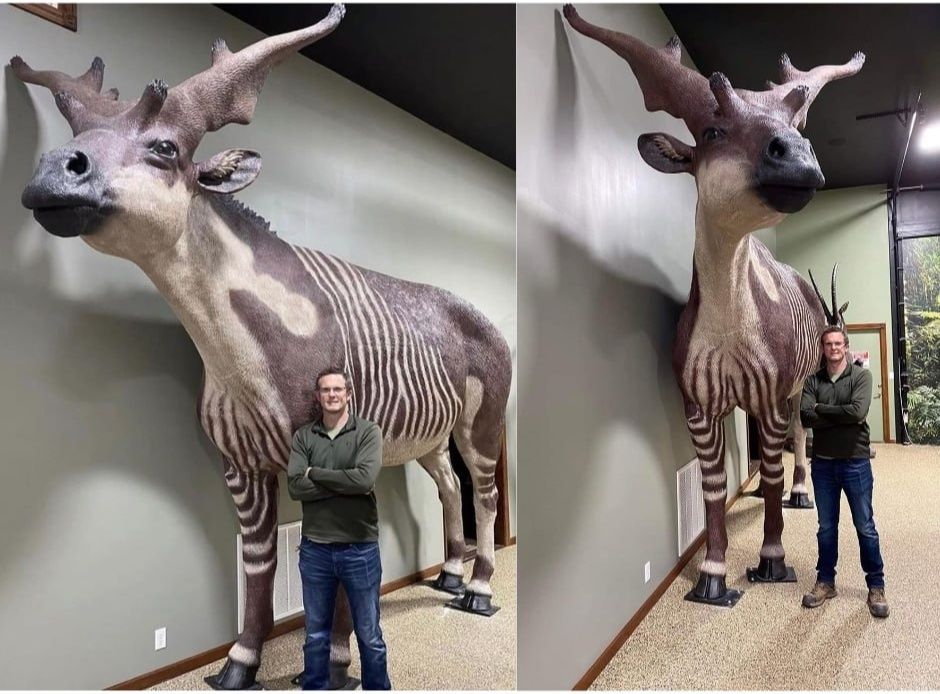
Standing up to 2.2 meters (7 feet) tall at the shoulder, weighing nearly 1,200 kg (2,650 lbs), and crowned with four impressive ossicones (horn-like structures), Sivatherium was one of the largest ruminants ever to walk the Earth. Its body was more robust than a giraffe’s, with a shorter neck but powerful build, blending giraffe elegance with ox-like strength.
Today, Sivatherium giganteum remains a fascinating symbol of Ice Age megafauna—an extinct cousin of giraffes that likely walked beside early humans.
The Discovery of Sivatherium giganteum 🔎🦴
Fossils in the Himalayan Foothills
The first fossils of Sivatherium were uncovered in the 1830s in the Siwalik Hills, part of the Himalayan foothills in India and Pakistan. These rich fossil beds have revealed countless Pliocene and Pleistocene species.
Described by Hugh Falconer
Scottish paleontologist Hugh Falconer formally described the species. He named it Sivatherium giganteum—“Shiva’s beast,” after the Hindu god Shiva, and “giganteum” for its imposing size.
This discovery in colonial India was part of a surge in fossil exploration during the 19th century, when naturalists sought to catalog Earth’s deep past.
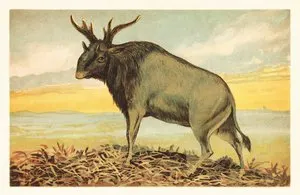
Anatomy and Appearance 🦒
Size and Build
-
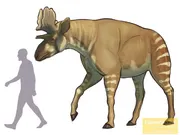
Height: ~2.2 meters (7 feet) at the shoulder.
-
Weight: 1,000–1,200 kg (2,200–2,650 lbs).
-
Frame: Shorter neck than giraffes, but a massive torso and sturdy legs.
-
Overall appearance: Resembled a giant cross between a giraffe and an okapi.
Distinctive Horns (Ossicones)
The most striking feature of Sivatherium was its four ossicones:
-
A large, branching pair on top of its head.
-
Two smaller, sharp ossicones above the eyes.
Males likely used these horns in combat for dominance, much like modern giraffes, or for display to attract mates.
Head and Neck
-
Short neck compared to giraffes, indicating different feeding habits.
-
Broad skull, giving it a formidable appearance.
-
Large, mobile lips may have helped it browse vegetation.
Habitat and Distribution 🌿🌍
Range
Sivatherium fossils have been found across:
-
South Asia: India, Pakistan, Nepal.
-
Africa: Widespread evidence suggests it thrived in open grasslands and woodland savannas.
Environment
During the Pliocene and Pleistocene, Sivatherium roamed environments that shifted between dense forests, open grasslands, and semi-arid savannas, depending on climate cycles.
Its adaptability to different habitats made it one of the longest-surviving members of Ice Age megafauna.
Diet and Lifestyle 🌱
As a ruminant herbivore, Sivatherium had a diet similar to modern giraffes and antelopes. Its shorter neck suggests it browsed on low to medium vegetation, unlike giraffes which specialize in high tree foliage.
Likely food sources included:
-
Leaves from shrubs and low trees.
-
Grass and ground plants.
-
Fruits and softer vegetation when available.
Its large size meant it required vast amounts of food daily, shaping its role in prehistoric ecosystems as a mega-herbivore.
Coexistence with Early Humans 🧑🤝🧑
One of the most exciting aspects of Sivatherium is that it likely lived alongside early humans. Evidence suggests it survived until at least 8,000 years ago, meaning it may have encountered Neolithic people in Africa.
Rock Art Depictions
Prehistoric rock paintings in the Sahara appear to show animals resembling Sivatherium. These images depict large, horned creatures unlike modern giraffes, hinting that humans may have witnessed and recorded these giants before their extinction.
This overlap makes Sivatherium not only a paleontological marvel but also a creature etched into human cultural memory.
Evolutionary Significance 🧬
A Branch of the Giraffe Family
Sivatherium belonged to the family Giraffidae, which today includes only two living members:
-
The giraffe, with its towering neck.
-
The okapi, a shorter, forest-dwelling cousin.
Sivatherium demonstrates the diversity of giraffids in the past. Unlike modern giraffes, its stocky build and horn arrangement reveal a branch of evolution that experimented with different adaptations.
Gigantism in Ruminants
At nearly 1,200 kg, Sivatherium was among the largest ruminants ever. Its size provided protection against predators but also made it vulnerable to habitat loss and human hunting.
Why Did Sivatherium Go Extinct? ⚰️
The extinction of Sivatherium remains debated, but possible factors include:
-
Climate Change 🌡️
-
Shifting climates at the end of the Ice Age reduced suitable habitats.
-
Expanding deserts and shrinking forests may have cut off food sources.
-
-
Human Pressure 🏹
-
Early humans may have hunted Sivatherium for food, horns, and hide.
-
Rock art evidence supports human interaction, possibly conflict.
-
-
Competition 🐘🦏
-
Other large herbivores like elephants, rhinoceroses, and antelopes may have outcompeted it for resources.
-
Like many megafauna, Sivatherium likely succumbed to a combination of environmental shifts and human activity.
Fun Facts About Sivatherium giganteum 🎉
-
Its name means “Shiva’s beast”, linking it to the Hindu god of destruction and power.
-
It had four horns, unlike modern giraffes which only have two ossicones.
-
At 1,200 kg, it was heavier than modern giraffes, which average ~1,000 kg.
-
It may be depicted in ancient Saharan rock art, showing humans may have seen it alive.
-
Sivatherium represents a diverse giraffid lineage, once far richer than today’s.
Legacy and Importance 🏛️
In Paleontology
The discovery of Sivatherium giganteum helped scientists understand the evolutionary pathways of giraffes and okapis. It revealed that giraffids once occupied a much wider range of ecological niches than today.
In Human Imagination
Its possible connection to ancient rock art elevates Sivatherium beyond fossil evidence, suggesting it may have influenced early human mythology or folklore.
Conclusion: A Forgotten Giant of Prehistory
Sivatherium giganteum was one of the most impressive mammals of the Ice Age, a massive giraffid blending the traits of giraffes, okapis, and oxen. With its towering frame, spectacular horns, and resilience across two continents, it stood as a true giant of its time.
Discovered nearly 200 years ago in the Himalayas, it continues to inspire awe as both a scientific marvel and a symbol of lost megafauna. Its extinction reminds us of the fragility of even the mightiest creatures in the face of climate shifts and human expansion.
Though it no longer walks the savannas, Sivatherium lives on in fossils, rock art, and human curiosity—an enduring testament to the diversity of life during the Ice Age and the evolutionary journey of giraffes.
ALSO READ: Cave of Crystals: Home to the World’s Largest Selenite Crystals in Mexico 💎🌡️