Sigiriya: The Majestic Rock Fortress of Sri Lanka 🌄
A Jewel of Sri Lanka’s Past 🌿
Nestled in the heart of Sri Lanka’s Cultural Triangle, the ancient city of Sigiriya stands as one of the island’s most breathtaking monuments of history, culture, and artistry. Often referred to as the “Lion Rock”, this massive granite outcrop rises nearly 200 meters (660 feet) above the surrounding plains, commanding both reverence and admiration.
Dating back to the 5th century CE, Sigiriya was transformed into a royal citadel by King Kashyapa (477–495 CE), who sought to build a fortress-palace unlike any the world had seen. With its intricate water gardens, defensive moats, painted frescoes, and summit palace ruins, Sigiriya remains an enduring testament to the ingenuity of ancient Sri Lankan civilization.
Recognized as a UNESCO World Heritage Site in 1982, the fortress is both a cultural treasure and an architectural marvel—drawing travelers, historians, and archaeologists alike to uncover its mysteries.
The Origins of Sigiriya 🏰
From Monastery to Royal Citadel
Before becoming a royal stronghold, Sigiriya was used as a Buddhist monastery as early as the 3rd century BCE. Its remote and elevated location made it a perfect retreat for monks seeking solitude and spiritual focus.
The site’s transformation occurred under King Kashyapa, who seized the throne through a dramatic coup, overthrowing his father, King Dhatusena. Fearing revenge from his half-brother, Moggallana—the rightful heir—Kashyapa relocated the capital from Anuradhapura to Sigiriya, where he built a fortified palace atop the massive rock for both protection and splendor.
The Fall of Kashyapa
Though Kashyapa ruled from Sigiriya for nearly two decades, his reign ended in tragedy. In 495 CE, Moggallana returned with an army from India. Abandoned by his troops in battle, Kashyapa took his own life. After his death, Sigiriya was once again converted into a Buddhist monastery until the 14th century, after which it gradually fell into ruin.
Architectural Brilliance of Sigiriya 🏗️
Sigiriya’s design showcases a harmonious blend of natural and man-made features. It is often considered one of the most remarkable examples of urban planning in the ancient world.
The Water Gardens
At the base of the rock lie the symmetrical water gardens, among the oldest landscaped gardens in South Asia. These included:
-
Moats and defensive walls to protect the fortress.
-
Geometrically arranged pools and fountains, some still functioning during the rainy season.
-
Pathways lined with trees, guiding visitors toward the monumental rock.
The Lion Gate 🦁
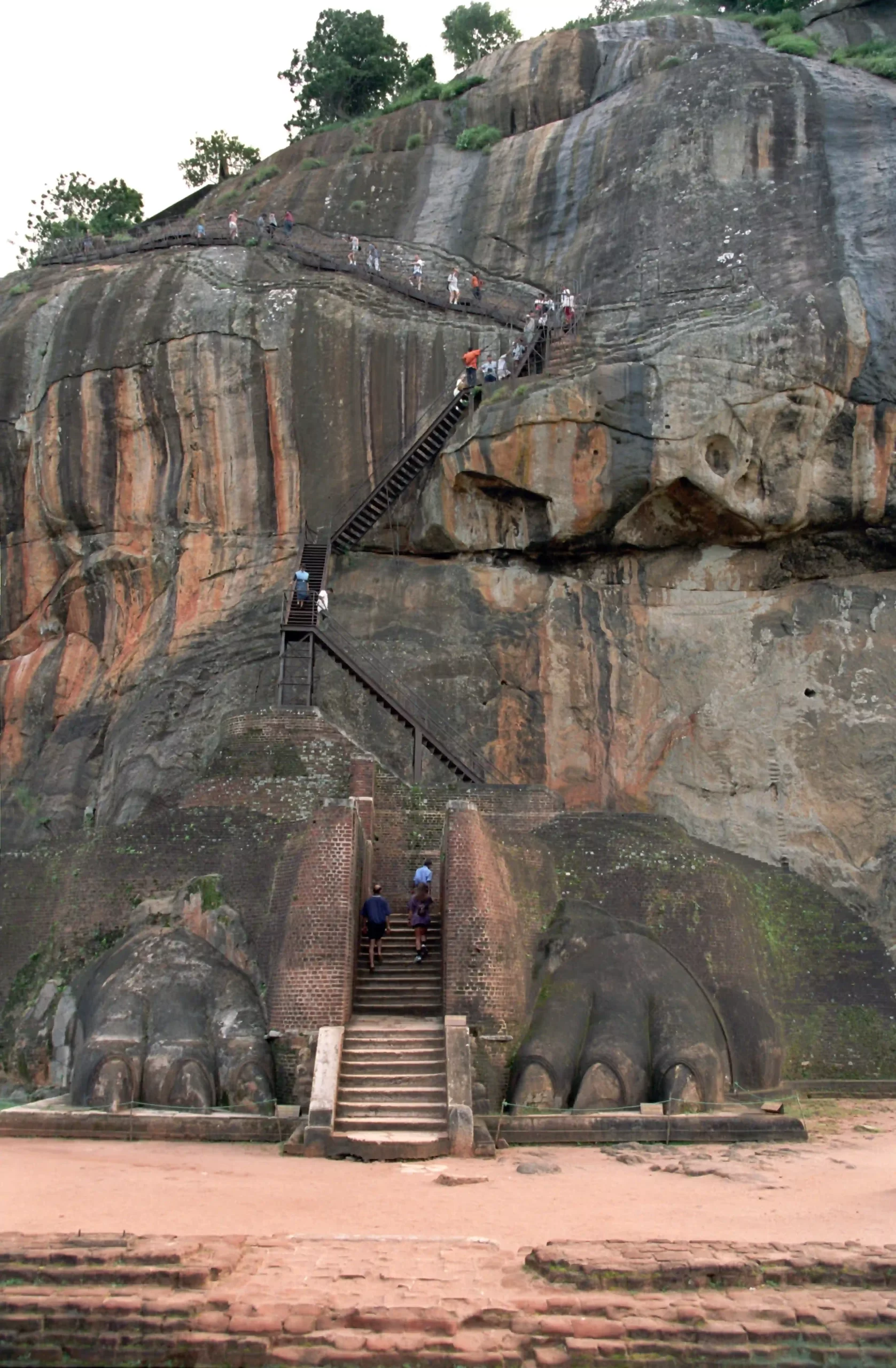
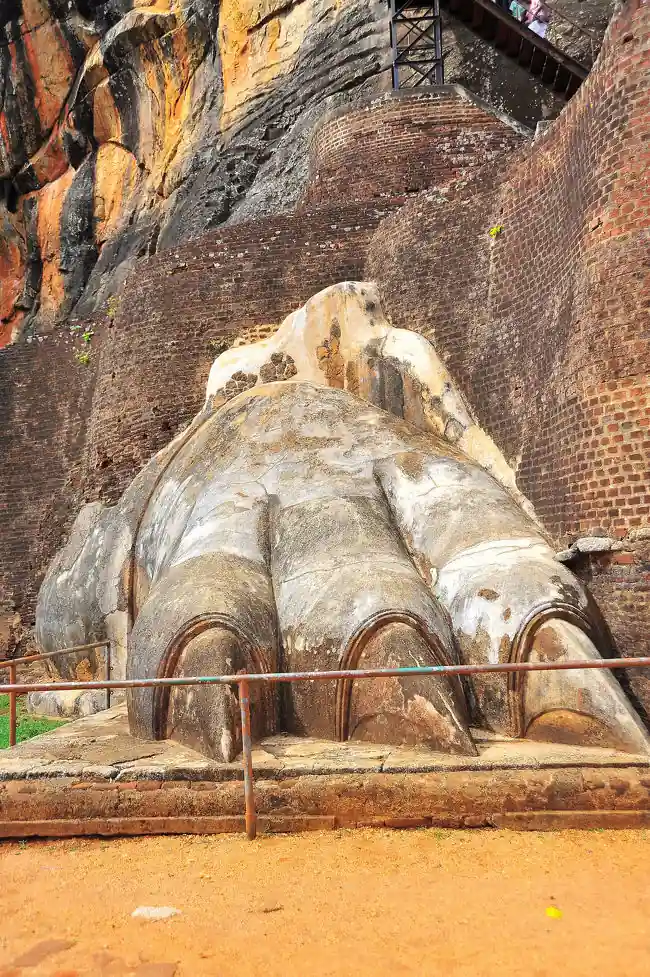
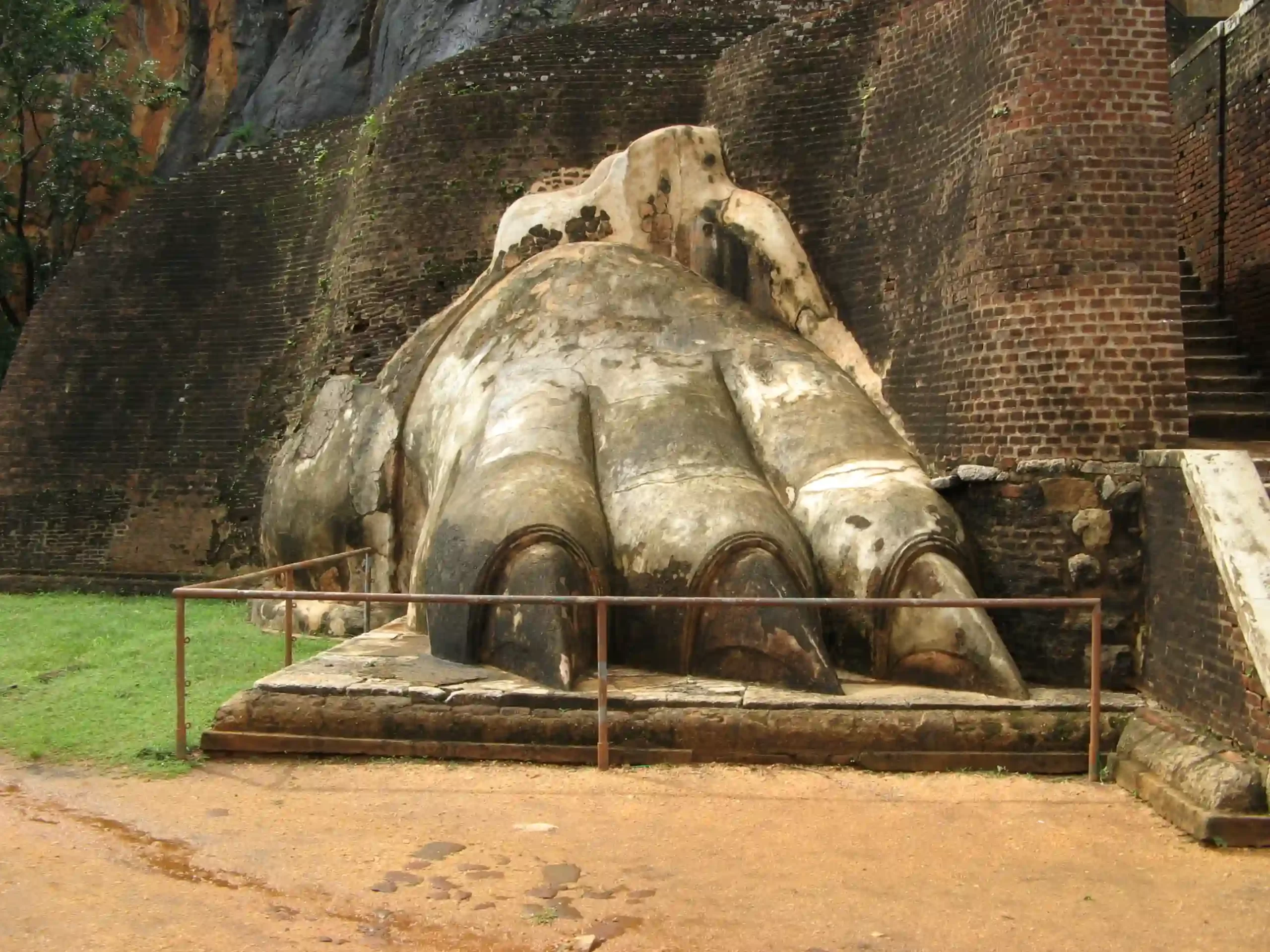
One of Sigiriya’s most iconic features is the Lion Gate, a massive entrance that once displayed a colossal lion sculpture carved into the rock. Today, only the lion’s gigantic paws remain, but they still inspire awe as guardians of the ascent to the summit.
The Frescoes 🎨
Sigiriya’s western face was once covered in dazzling frescoes, showcasing celestial maidens often referred to as “Apsaras”. Painted with vibrant natural pigments, these figures are believed to represent goddesses, queens, or attendants, though their exact meaning remains debated.
Of the estimated 500 original frescoes, only about 20 remain preserved, offering a glimpse of the artistry of ancient Sri Lankan painters.
The Mirror Wall
Originally polished to a brilliant shine, the Mirror Wall allowed the king to see his reflection as he passed. Over the centuries, visitors carved poems and inscriptions into the wall—creating a form of ancient graffiti that offers invaluable insight into medieval Sri Lankan culture.
The Summit Palace
At the very top of the rock, Kashyapa built his royal palace, complete with terraces, pools, and living quarters. Though only foundations remain today, the elevated vantage point offers panoramic views of the surrounding plains—a breathtaking reminder of the site’s grandeur.
Cultural and Symbolic Significance 🌺
Sigiriya is more than just a fortress—it is a symbol of power, spirituality, and artistic expression. Scholars debate whether the site was primarily a military stronghold, a royal pleasure palace, or a cosmic symbol of divine kingship.
For Buddhists, Sigiriya later became a site of religious importance, with caves around the rock serving as monastic retreats. Its legacy bridges both secular and spiritual traditions, making it a rare cultural fusion.
Sigiriya in the Modern World 🌍
UNESCO World Heritage Site
In 1982, Sigiriya was declared a UNESCO World Heritage Site, recognizing its universal cultural value. It is now one of Sri Lanka’s most visited landmarks, drawing historians, archaeologists, and travelers from across the globe.
Tourism and Preservation
While Sigiriya is a major tourist attraction, conservation efforts are critical. Ongoing restoration and archaeological research aim to preserve its frescoes, gardens, and architectural remains from natural decay and human impact.
A Global Inspiration
Sigiriya is often compared to other ancient wonders, such as Machu Picchu in Peru or Petra in Jordan. Its combination of art, engineering, and symbolism cements its place among the world’s greatest cultural achievements.
Visiting Sigiriya: A Traveler’s Guide ✈️
For those eager to experience Sigiriya firsthand, here are a few essentials:
-
Location: Central Matale District, Sri Lanka.
-
Best Time to Visit: November to April, during the dry season.
-
Climbing the Rock: The ascent takes about 1.5–2 hours, involving steep staircases and narrow pathways.
-
Highlights: Lion’s Paws entrance, frescoes, Mirror Wall, and summit palace ruins.
-
Nearby Attractions: Dambulla Cave Temple, Polonnaruwa, and Anuradhapura—completing the Cultural Triangle experience.
Fun Facts About Sigiriya 🎉
-
Sigiriya is sometimes called the “Eighth Wonder of the World” due to its unique design.
-
The site’s frescoes inspired Sri Lankan art for centuries.
-
Its hydraulic systems—moats, canals, and fountains—were far ahead of their time.
-
Over 1,000 ancient poems and inscriptions have been found on the Mirror Wall.
-
Sigiriya’s summit palace may have symbolized Mount Meru, the mythical center of the universe in Buddhist and Hindu cosmology.
Why Sigiriya Still Matters Today 🌟
Sigiriya is not only an archaeological marvel but also a living heritage site that continues to inspire modern architecture, art, and culture. It embodies the vision of a king, the devotion of monks, and the artistry of an ancient civilization.
For Sri Lanka, it stands as a national icon, proudly displayed in tourism campaigns and celebrated as part of the country’s rich identity. For the world, it remains a monument of human creativity and resilience, reminding us of the enduring power of history.
Conclusion: A Timeless Fortress in Stone
Sigiriya Rock Fortress is more than just an ancient ruin—it is a testament to human ambition, creativity, and spirituality. Rising majestically above the Sri Lankan plains, it continues to captivate with its frescoes, gardens, and royal palace remains.
As travelers climb its steps, pass through its lion’s paws, and gaze across the horizon from its summit, they are not only exploring a fortress but also walking through 1,500 years of history. Sigiriya endures as a symbol of the ancient world’s brilliance—and as one of the greatest cultural treasures of Sri Lanka.
ASLO READ: Eryops megacephalus: The “Drawn-Out Face” of the Permian Swamps 🌊🐊