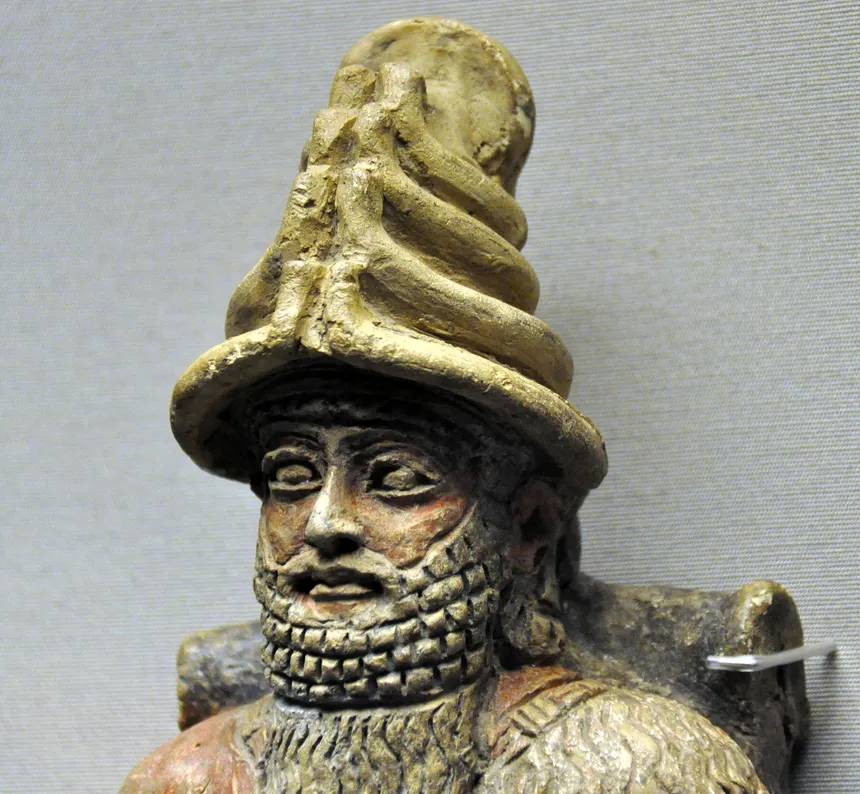
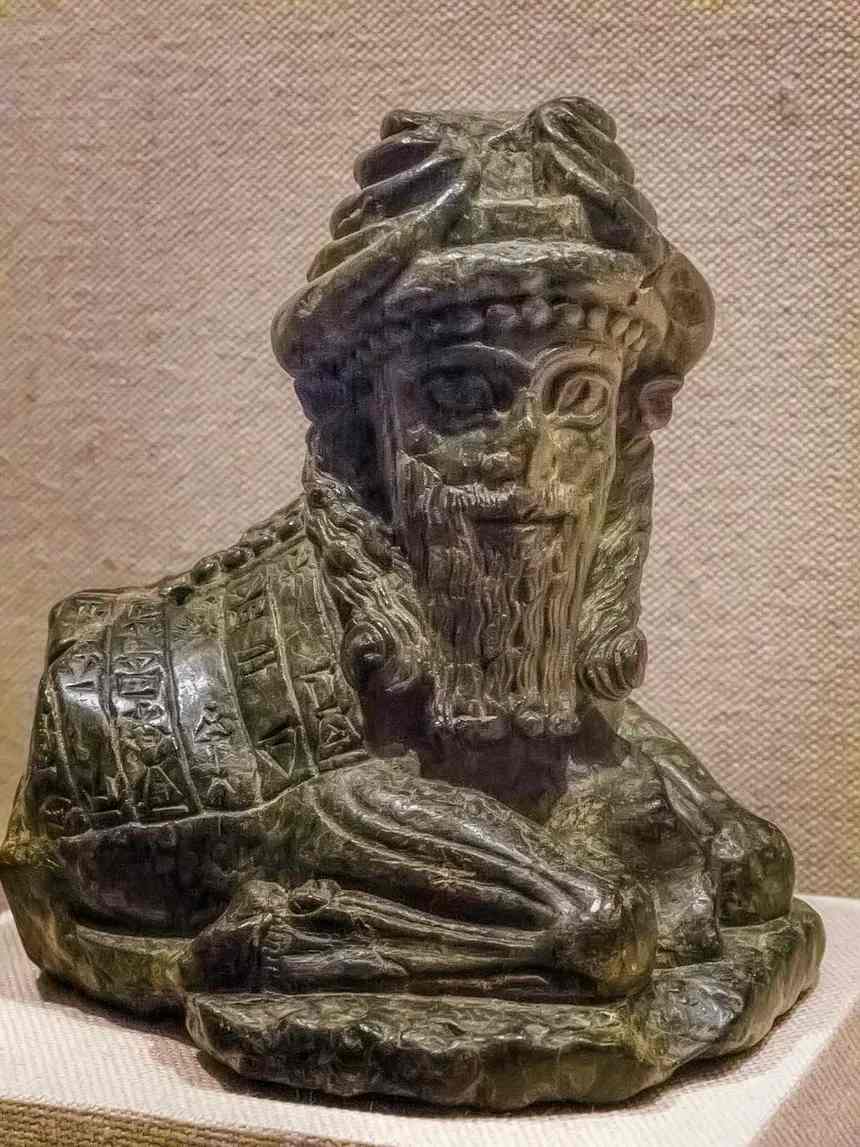
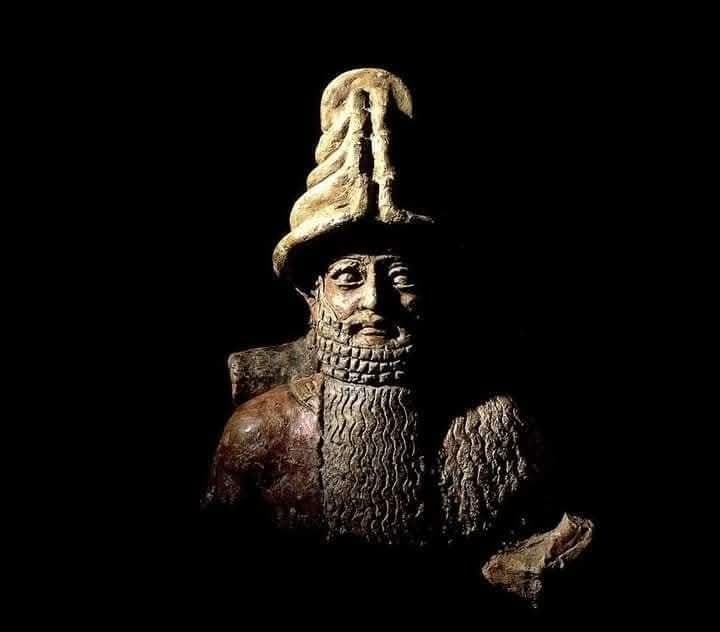
Shamash, Judge of Heaven and Earth: Ancient Fired Clay Statue from Ur (2000–1750 BC)
Among the pantheon of ancient Mesopotamian deities, Shamash holds a particularly prominent place. Known as the judge of heaven and earth, Shamash presided over justice, law, and truth, ensuring that human societies maintained moral and legal order. His influence is evident not only in cuneiform texts and mythological narratives but also in surviving artifacts, such as a remarkable fired clay statue from Ur, dated between 2000 and 1750 BC.
This statue offers an extraordinary lens into the religious, cultural, and artistic practices of early Mesopotamian civilizations, illustrating how they visualized divinity, justice, and cosmic order.
Historical Context: Ur and the Worship of Shamash
The Ancient City of Ur
The statue originates from Ur, one of the most significant city-states of ancient Mesopotamia, located in modern-day southern Iraq. Ur flourished as a political, religious, and economic hub during the third and second millennia BC, playing a central role in Sumerian and later Babylonian culture.
Shamash was widely worshiped across Mesopotamia, and his cult was particularly strong in cities like Sippar and Larsa. In Ur, temples and shrines dedicated to Shamash highlight his role as a divine arbiter, overseeing fairness and societal order.
Shamash in Mesopotamian Religion
Shamash, also known by the Sumerian name Utu, was associated with the sun, symbolizing illumination, clarity, and justice. Ancient texts describe him as:
-
Overseeing the moral conduct of humans
-
Punishing wrongdoers and rewarding the righteous
-
Mediating disputes and ensuring fairness in both earthly and divine matters
The fired clay statue embodies these qualities, serving both as a ritual object and a symbolic representation of divine authority.
The Statue: Artistic Features and Craftsmanship
Material and Technique
The statue is made of fired clay, a common medium in Mesopotamia for creating durable yet accessible religious artifacts. Firing the clay increased its resilience, allowing the piece to endure for millennia.
The craftsmanship reflects highly skilled artisanship. Despite the modesty of the material, details such as facial features, clothing, and symbolic attributes were rendered with precision, indicating a sophisticated understanding of form and proportion.
Depiction of Shamash
The statue typically portrays Shamash seated or standing in a position of authority, often holding symbols of justice or divine power, such as:
-
A rod or staff, representing authority and governance
-
A solar disc, signifying his connection to the sun and illumination of truth
-
Stylized robes or garments, demonstrating status and divine dignity
These features communicate both spiritual power and societal importance, reinforcing Shamash’s role as the ultimate arbiter of justice.
Symbolism: Justice, Order, and Cosmic Balance
Shamash as Judge
The statue reflects Shamash’s primary function as judge of heaven and earth. By representing him in human form, artisans conveyed the idea that justice was both divine and accessible, observable in human society.
Shamash’s depiction reminds worshippers that:
-
Divine oversight governs earthly actions
-
Truth and righteousness are valued above deception and corruption
-
Moral order is reinforced through ritual and devotion
This iconography underscores how Mesopotamian society intertwined religion and governance, using divine symbolism to support law, ethics, and social cohesion.
The Solar Connection
Shamash’s association with the sun is central to the statue’s meaning. Light, clarity, and illumination were metaphors for justice: truth is revealed as the sun rises, and wrongdoing is exposed under divine scrutiny. The solar aspect emphasizes the cosmic dimension of justice, linking human behavior to a universal moral framework.
Religious and Cultural Significance
Ritual Use
Statues of Shamash were likely placed in temples or shrines where devotees could offer prayers, sacrifices, or petitions for justice. The presence of a physical representation of the god allowed worshippers to:
-
Meditate on moral conduct
-
Seek divine guidance in legal or personal disputes
-
Express devotion and reverence through offerings
The statue served as both symbolic focus and conduit for divine presence, embodying the spiritual authority of Shamash in a tangible form.
Educational and Political Functions
Beyond religious worship, such statues also played a civic role. By situating Shamash in temples or public spaces, rulers and priests reinforced the legitimacy of laws, governance, and societal norms. The statue visually communicated that divine justice sanctioned human authority, linking spiritual and secular power.
Preservation and Archaeological Discovery
Excavation at Ur
Archaeologists uncovered the statue during systematic excavations of Ur’s temple complexes and residential zones. The careful recovery of such artifacts allows researchers to reconstruct aspects of daily life, worship practices, and artistic conventions in ancient Mesopotamia.
State of Preservation
Despite its age of nearly 4,000 years, the fired clay statue remains remarkably well-preserved, retaining distinctive features, inscriptions, and surface textures. Its durability provides invaluable insight into the materials, techniques, and aesthetic choices of Mesopotamian artisans.
Legacy: Shamash and Modern Understanding
Influence on Later Civilizations
Shamash’s representation influenced subsequent Mesopotamian and Near Eastern cultures, including Babylonian, Assyrian, and even early Hittite societies. His iconography, symbolic attributes, and judicial associations persisted for centuries, reflecting the enduring importance of law, order, and divine oversight in human societies.
Modern Significance
Today, the statue serves as a key artifact in Mesopotamian studies, illustrating how religion, art, and governance intertwined in ancient societies. Scholars study it to:
-
Understand Mesopotamian religious practice
-
Explore symbolic representations of justice and cosmic order
-
Analyze artistic techniques and cultural values of the period
As an artifact displayed in museums or studied in research contexts, the Shamash statue continues to educate and inspire, bridging the gap between ancient civilizations and contemporary audiences.
Conclusion: A Timeless Testament to Justice and Devotion
The fired clay statue of Shamash from Ur (2000–1750 BC) is more than a work of art — it is a manifestation of the Mesopotamian worldview, reflecting divine justice, societal order, and human devotion.
Through its careful craftsmanship, symbolic imagery, and spiritual significance, the statue provides a rare insight into how early civilizations visualized morality, governance, and cosmic balance.
As modern observers study and preserve this artifact, Shamash continues to judge, guide, and inspire, reminding us that the pursuit of justice and reverence for higher principles are enduring aspects of human culture.
ALSO READ: Human Sacrificial Burial Found Beneath the Feathered Serpent Pyramid in Teotihuacan, Mexico