The Mystery of the Schwarzhorag Glacier: A Bamboo Cart Frozen in Time
A Discovery Beneath the Ice
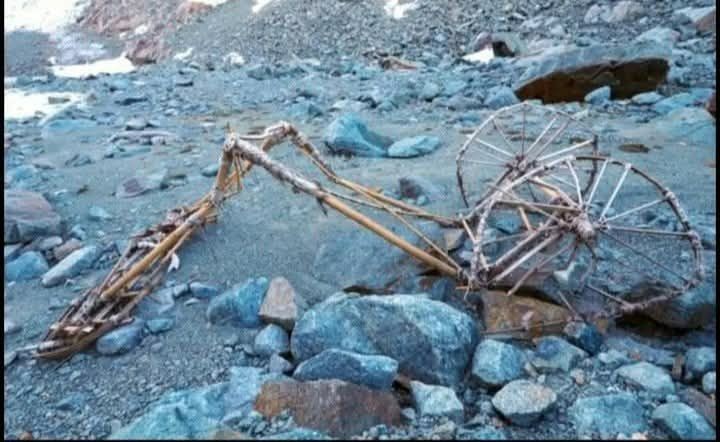
In November 2024, melting ice in the remote Schwarzhorag Glacier of the Swiss Alps revealed an astonishing find — a two-wheeled bamboo cart emerging from layers of ice estimated to be centuries old. The object, delicately preserved and partially frozen, appeared completely out of place in the alpine environment where only fir, pine, and larch trees dominate the landscape.
Switzerland has yielded its share of glacial artifacts — from the famed Ötzi the Iceman in the nearby Tyrolean Alps to ancient hunting tools and textiles — but never something made from bamboo. The discovery challenges long-held assumptions about Europe’s isolation from East and South Asian materials before the modern trade era.
Why the Cart is a Puzzling Artifact
Bamboo was not known to exist naturally in Europe, and historical records suggest that it only began appearing through trade routes in the late 18th or early 19th century. The Schwarzhorag Glacier cart, however, seems much older. Radiocarbon testing of organic materials from the surrounding ice indicates that the object could have been deposited between the 14th and 16th centuries — long before bamboo or Asian-style vehicles became known in the region.
This timeline raises several questions:
-
How did bamboo reach the high Alps centuries before European contact with Asia’s interior?
-
Who brought it there, and why?
-
Was it part of a forgotten trade attempt, an isolated experiment, or evidence of an undocumented expedition across Europe?
Archaeologists working on-site are cautious. Without a clear provenance or associated artifacts such as tools, inscriptions, or personal items, dating and interpreting the cart remains speculative.
The Site: Schwarzhorag Glacier’s Shrinking Ice
Located along Switzerland’s high ridges near the Bernese Oberland, the Schwarzhorag Glacier has receded dramatically over the past two decades due to rising global temperatures. As the ice pulls back, it reveals a hidden archive of organic matter, soil, and lost objects.
Glaciers are unique time capsules: once snow falls, it compresses into ice, sealing anything on its surface in layers that preserve it for centuries. Melting exposes these preserved materials suddenly, allowing archaeologists to recover historical remnants almost unchanged by decay.
The bamboo cart was found half-embedded in ice about two meters deep. Its position suggests that it may have slid into a crevasse or been caught in an avalanche before being encapsulated. Nearby, fragments of rope and what appear to be textile fibers were also found.
Anatomy of the Bamboo Cart
Preliminary analysis shows that the cart consists of a bamboo frame fastened with what looks like a natural plant resin or shellac. The two wheels are circular sections reinforced with thin metal rims — an unusual blend of Asian and European craftsmanship. Bamboo species identification through DNA analysis hints at a possible Himalayan or South Chinese origin.
Several features drew particular attention:
-
The wheel design is similar to handcarts used in Ming-dynasty China.
-
The use of resin instead of nails or glue mirrors construction techniques seen in Southeast Asia.
-
Stylistic elements, including the curvature of the handles, point toward design concepts unknown in medieval Europe.
If confirmed, the artifact might indicate early cross-continental movement of technology — or an unusual cultural exchange that historians have not documented.
Theories Behind the Discovery
1. A Lost Expedition
One hypothesis suggests that the cart belonged to an expedition venturing into the Alps that carried Asian artifacts or technology. During the Age of Exploration, contacts between Europe and Asia slowly expanded through trade posts, religious missions, and diplomatic journeys. Still, no known route crossed through the glaciers where the cart was found. Could an early explorer, perhaps a missionary returning from the East, have carried such an object as a curiosity?
2. A Transplant from Later Centuries
Another possibility is that the cart is not ancient at all — that it dates to the late 18th or early 19th century, when bamboo became fashionable in Europe. During this era, bamboo furniture, tools, and novelty carts appeared among travelers and collectors. However, questions remain about how such an object found its way into remote alpine terrain with no recorded settlements or routes nearby.
3. A Hoax or Secondary Deposition
Skeptical voices propose that the object could have been introduced into the glacier more recently, perhaps carried there during early mountaineering activities in the late 19th century when the region’s glaciers were first being explored. Thermal ice cores and stratigraphic studies, however, contradict this theory — layers surrounding the cart predate industrial activity in the Alps.
4. Climate Change and the “Memory of Ice”
As glaciers shrink, they reveal remnants of both ancient and modern human activity — from Roman sandals and Iron Age tools to contemporary hiking gear. The bamboo cart could represent a similar reemergence: an artifact that slipped into a natural archive, frozen in time until climate change exposed it centuries later.
The Broader Implications
If authenticated as premodern, the Schwarzhorag bamboo cart could reshape our understanding of Eurasian connectivity before industrial globalization. It might imply:
-
Earlier exchanges of materials and design knowledge across continents.
-
Undocumented travel through mountain passes now buried under ice.
-
The possibility of lost trade or missionary missions connecting East and West.
Such a find also underscores how sensitive and revealing glacier archaeology has become. The ice is not only melting — it is speaking, uncovering the traces of forgotten human movement across Earth’s coldest frontiers.
Glacial Archaeology: Rediscovering the Past Through Ice
The Schwarzhorag discovery joins a growing list of unexpected revelations from Europe’s retreating glaciers. In recent years:
-
Norway’s Lendbreen Ice Patch yielded Viking-era skis and textiles.
-
Switzerland’s Lötschberg region produced Roman coins and Iron Age tools.
-
The Tyrolean Alps gave up Ötzi, who lived more than 5,000 years ago.
Each find offers a powerful reminder that glaciers are not only environmental markers but historical archives documenting how humans once interacted with mountain landscapes.
Future Research and Preservation
Swiss archaeologists plan controlled extraction of the bamboo cart in 2025, followed by conservation at the Swiss National Museum’s specialized labs. Ice residue samples around the object are being tested for pollen, dust, and isotopic signatures that can reconstruct environmental conditions at the time of burial.
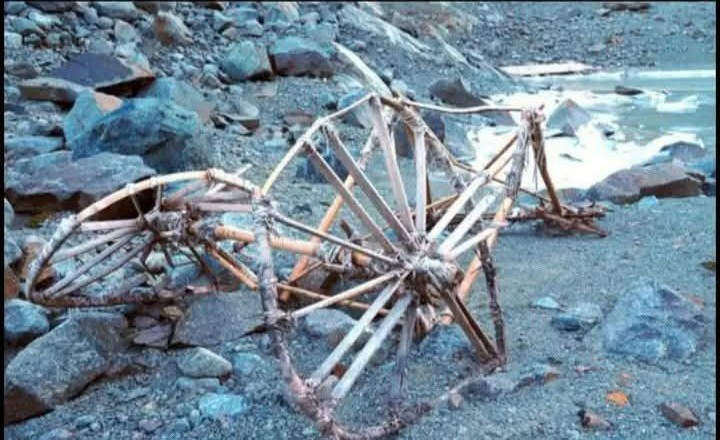
Moreover, digital 3D scanning will preserve a complete record before melting accelerates further. Once stabilized, the artifact will be compared with Asian examples to assess its cultural and chronological context.
A Frozen Puzzle Waiting for Answers
Whether the Schwarzhorag Glacier bamboo cart proves to be an authentic medieval enigma or a misplaced relic from later centuries, it has already captured attention as a symbol of the intersection between climate change and historical revelation. Every melting glacier now holds the potential to rewrite a fragment of history — one artifact at a time.
The cart’s presence high above the valleys of Switzerland may never be fully explained, but its emergence is a poignant reminder that the past, even when buried beneath centuries of ice, never truly disappears.
ALSO READ: Strike It Lucky! Amateur Detectorist Unearths 10,000 Roman Coins on First Hunt