Sasha the 39,000-Year-Old Woolly Rhinoceros: A Remarkable Ice Age Discovery Frozen in Time
Unearthing a Prehistoric Treasure
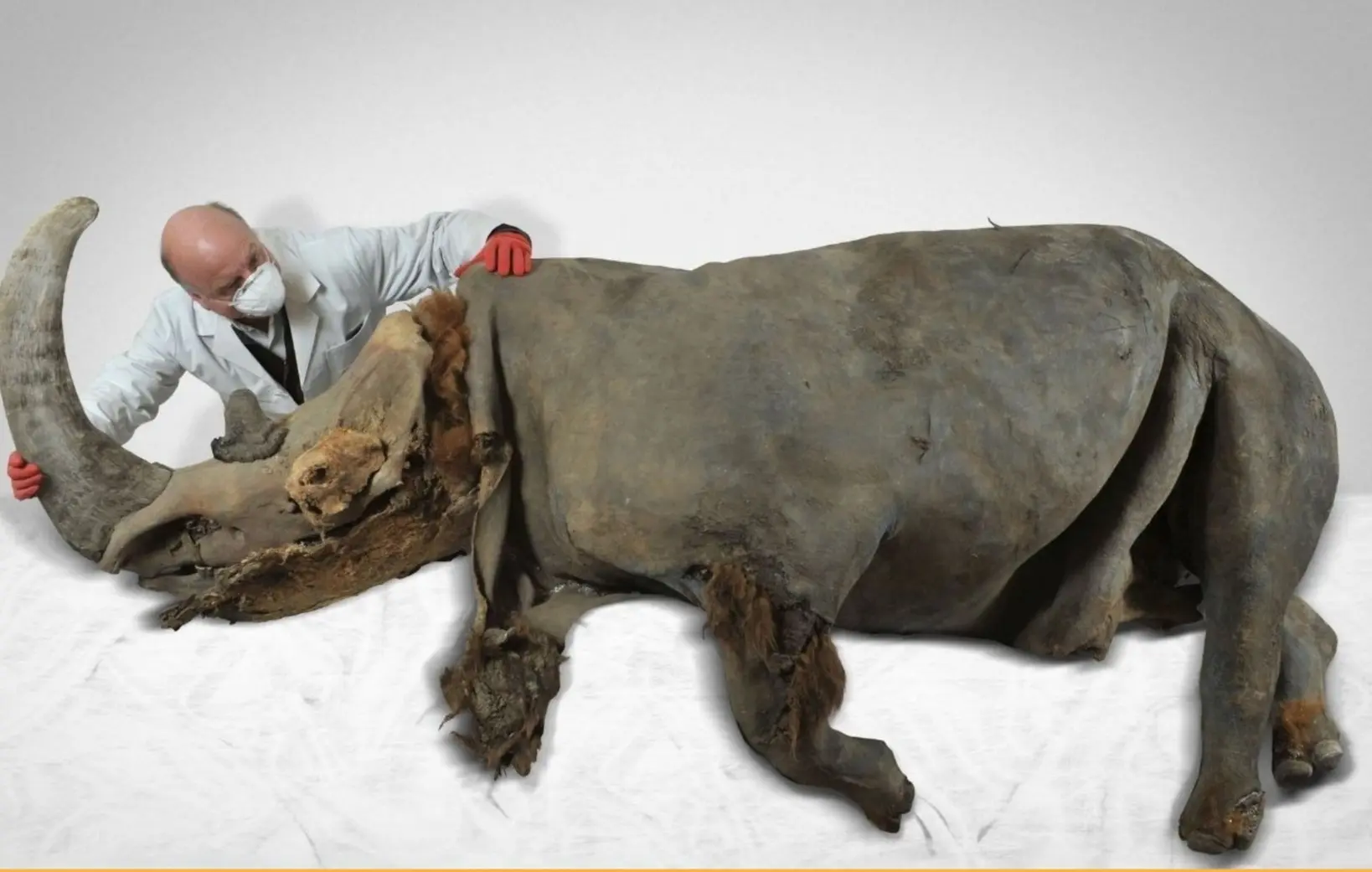
In 2007, gold miners in the Siberian permafrost made a discovery that stunned the scientific world — the nearly intact remains of a 39,000-year-old Woolly Rhinoceros, affectionately named “Sasha.” Unlike most fossilized finds, Sasha’s body was astonishingly well-preserved, complete with fur, skin, and internal organs.
>This Ice Age marvel offered researchers an unprecedented window into the Pleistocene epoch — a frozen chapter of Earth’s history when colossal creatures roamed vast, glacial landscapes.
The discovery of Sasha not only advanced paleontological research but also deepened our understanding of how these magnificent beasts adapted, survived, and eventually vanished from our planet.
The Discovery of Sasha: A Window into the Ice Age
Sasha was discovered near the Sakha Republic (Yakutia), a region in northeastern Siberia known for yielding some of the best-preserved Ice Age specimens.
>Miners stumbled upon the carcass in the permafrost layer — a natural freezer that has preserved biological materials for tens of thousands of years. The young woolly rhinoceros, estimated to be around 18 months old at death, offered scientists something they had never seen before: a complete, mummified body of this extinct species.
The frigid conditions prevented decomposition, allowing scientists to examine not just skeletal remains but the texture of the animal’s fur, the composition of its tissues, and even traces of its last meal. For paleontologists, this was like finding a time capsule sealed since the Ice Age.
Appearance and Adaptation: A Coat Built for the Cold
One of the most striking revelations from Sasha was the color and composition of its fur. Contrary to the grey or white hues often imagined in reconstructions, Sasha’s coat was a reddish-brown, similar to that of a modern bison.
>This dense, woolly fur was perfectly suited to the extreme cold of the Pleistocene steppe, where temperatures often plunged far below zero.
The thick undercoat provided insulation, while longer guard hairs helped repel snow and moisture.
>Scientists believe that Sasha’s reddish-brown fur also helped with camouflage in the tundra environment — blending in with the frost-tinted grasslands that dominated Ice Age Siberia.
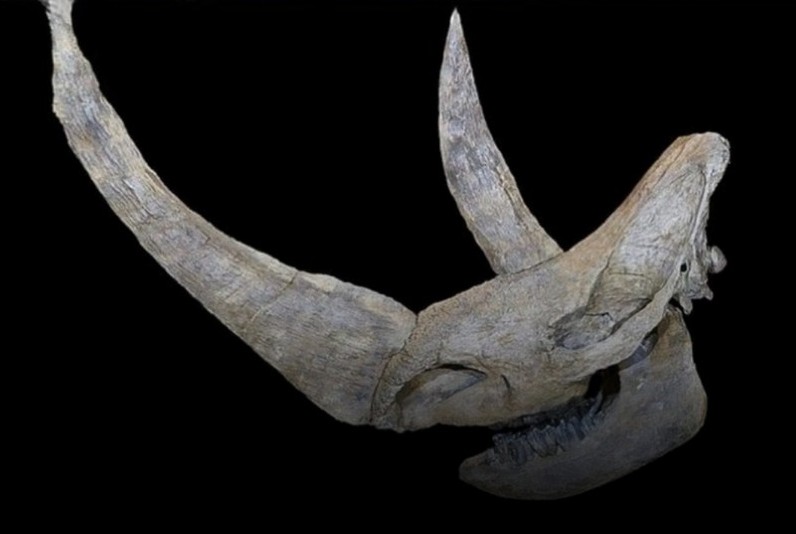
Anatomy of Power: The Legendary Horns of the Woolly Rhinoceros
Perhaps the most iconic feature of the Woolly Rhinoceros was its massive front horn, measuring up to three feet (one meter) in length. Sasha’s horn, though smaller due to its young age, still offered vital clues.
Microscopic analysis revealed growth patterns that reflected seasonal changes in diet and activity, much like the growth rings of trees.
Scientists believe these horns served multiple purposes:
-
Defense against predators such as cave lions and hyenas.
-
Clearing snow to uncover buried vegetation during harsh winters.
-
Fighting for mates and territory, a behavior observed in modern rhinoceroses.
The horn’s worn surface and strong keratin structure tell a story of endurance in one of Earth’s most challenging environments.
Inside Sasha’s Stomach: A Glimpse into an Ancient Diet
The preserved stomach contents of Sasha provided rare insights into what Ice Age herbivores ate.
>Analysis showed remnants of grasses, sedges, and herbs, confirming that the Woolly Rhinoceros was primarily a grazer.
>These findings aligned with the “mammoth steppe” ecosystem — a vast, treeless plain stretching from Western Europe to North America, rich in grasses but poor in woody plants.
The animal’s teeth and jaw structure were also perfectly adapted for grinding tough vegetation, demonstrating an evolutionary specialization that allowed it to thrive in the frozen tundra.
DNA Insights: Linking Sasha to Modern Rhinos
Thanks to advances in genetic analysis, scientists were able to extract DNA from Sasha’s tissue samples.
>Comparative studies revealed that the Woolly Rhinoceros is most closely related to the Sumatran rhinoceros, the smallest and most endangered of modern rhino species.
>This genetic link helps trace the evolutionary lineage of rhinoceroses and offers clues about how species adapted — or failed to adapt — to drastic climatic shifts.
The preservation of DNA from a 39,000-year-old specimen like Sasha is an extraordinary achievement in paleogenetics, paving the way for more accurate reconstructions of extinct Ice Age fauna.
The World Sasha Lived In: The Pleistocene Steppe
During Sasha’s lifetime, roughly 39,000 years ago, the Earth was gripped by the last Ice Age.
>The Pleistocene epoch was a time of vast glaciers, cold winds, and resilient wildlife.
>Mammoths, cave lions, steppe bison, and woolly rhinos dominated the icy plains. Forming an ecosystem often referred to as the “Mammoth Steppe.”
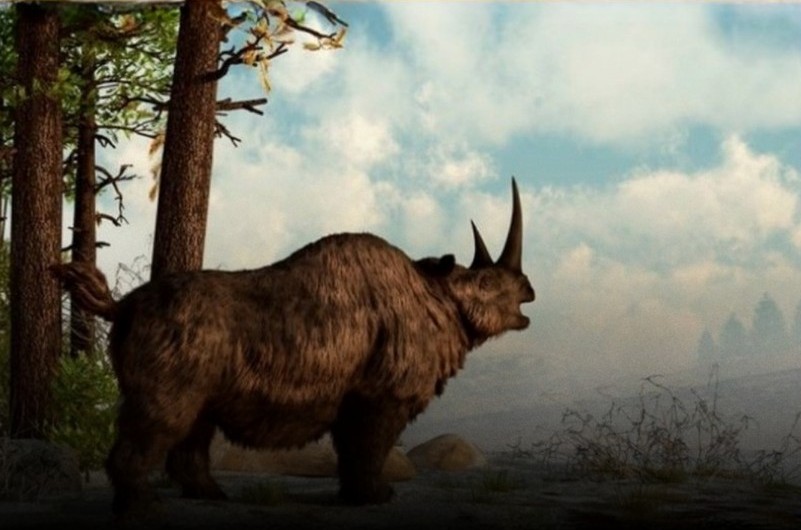
This harsh landscape demanded extraordinary adaptations: thick fur, fat reserves, and specialized diets. Yet, despite the cold, the environment teemed with life. Supported by grasses and herbs that thrived in the nutrient-rich soils beneath the frost.
Sasha’s discovery paints a vivid picture of this lost world. Helping scientists understand the ecological networks that supported Ice Age giants.
The Mystery of Extinction: Why the Woolly Rhinoceros Vanished
Like many Ice Age megafauna, the Woolly Rhinoceros eventually disappeared around 10,000 years ago.
>Scientists attribute its extinction to a combination of climate change and human activity.
>As global temperatures rose at the end of the Ice Age. The tundra habitat that woolly rhinos depended on gradually gave way to forests.
This habitat loss, combined with hunting pressures from expanding human populations, likely sealed their fate.
Sasha’s remains remind us how even the most powerful creatures can succumb to environmental change. A poignant warning as modern species face similar threats from a rapidly warming planet.
Scientific Significance: Why Sasha Matters
The discovery of Sasha is not just a fascinating glimpse into prehistory — it’s a scientific milestone.
Through Sasha, researchers have:
-
Reconstructed the appearance and physiology of the Woolly Rhinoceros with greater accuracy.
-
Uncovered dietary habits and ecological roles within Ice Age ecosystems.
-
Analyzed ancient DNA to understand genetic diversity and evolutionary relationships.
-
Gained insight into climate-driven extinctions, offering lessons for today’s conservation efforts.
Sasha bridges the gap between the past and present, transforming frozen remains into living knowledge.
Conclusion: A Messenger from the Frozen Past
“Sasha,” the 39,000-year-old Woolly Rhinoceros. Is more than a fossil — it’s a story frozen in time.
>From its rich reddish coat to the traces of grass in its stomach. Every detail tells us how life once flourished amid the Ice Age’s brutal cold.
Sasha’s preservation in Siberia’s permafrost is a rare gift, illuminating the resilience of nature and the fragility of existence.
As we study Sasha and her Ice Age companions. We’re reminded that the past continually shapes our understanding of the future. A future that depends on how we protect the diversity of life that remains today.
ALSO READ: The Precision of Priene: Ancient Greek Stonework That Defies Time and Tools