The Impeccable Stonework of Sacsayhuamán — The Puzzle of the Inca Masters
The Fortress That Defies Time
Rising high above the city of Cusco, the ancient capital of the Inca Empire, stands one of the world’s most extraordinary architectural achievements — Sacsayhuamán. Massive, seamless, and timeless, its walls seem almost alive, each stone breathing history into the Andes.
Constructed in the 15th century CE under the reign of Inca Pachacuti and his successors, Sacsayhuamán (pronounced Sak-say-wah-man) remains one of the greatest enigmas of pre-Columbian engineering. The fortress was not just a military stronghold — it was a ceremonial complex, a symbol of imperial power, and a demonstration of the Inca mastery over stone.
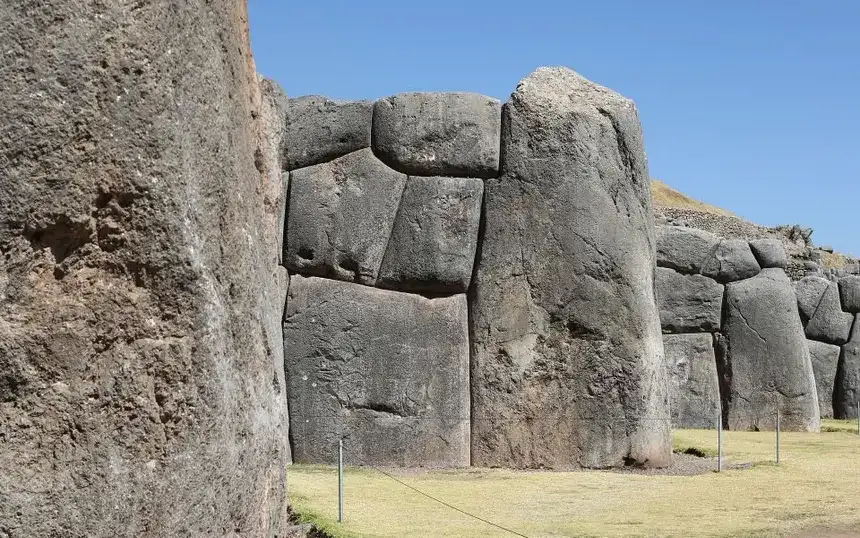
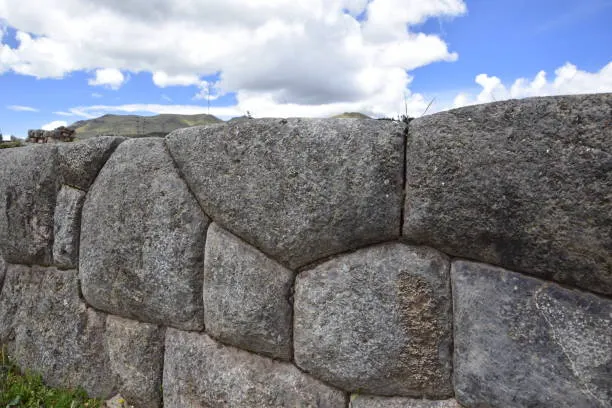
Each megalithic block — some weighing over 100 tons — fits with astonishing precision. No mortar holds them together, yet their joints are so tight that not even a human hair can pass between them. After more than 500 years of earthquakes, rains, and erosion, these stones still stand firm — defying logic, gravity, and time itself.
🧱 The Architectural Marvel of Sacsayhuamán
A Fortress or a Temple?
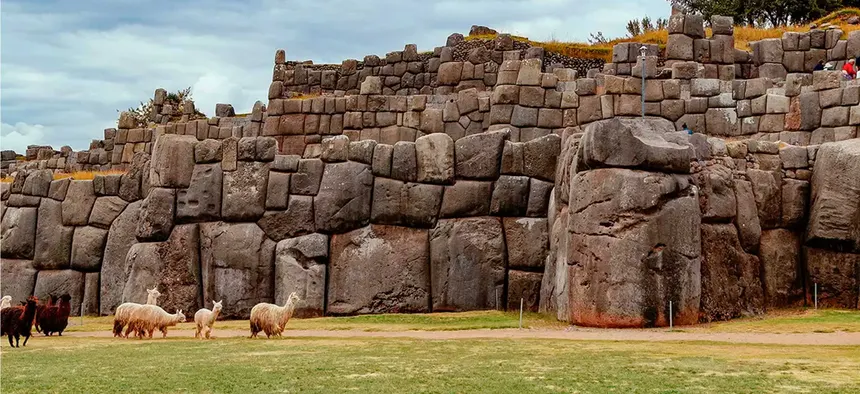
Sacsayhuamán overlooks Cusco from an elevation of 3,700 meters (12,000 feet). Its zigzagging walls form a massive complex covering more than 3,000 hectares, with three main terraces made of colossal polygonal blocks.
While early Spanish chroniclers described it as a military fortress, archaeological evidence suggests it was also a ceremonial center, possibly dedicated to Inti, the Sun God — the highest deity in the Inca pantheon. During the Inti Raymi Festival, the most important celebration of the Inca calendar, thousands would gather at Sacsayhuamán to honor the sun and the empire’s divine ruler, the Sapa Inca.
The Stone Giants
The stones of Sacsayhuamán are truly monumental. Some measure over 8 meters (26 feet) in height and weigh 100 to 300 tons. The largest, known as the “Stone of Twelve Angles”, fits seamlessly into its neighboring blocks with multiple sides — an intricate puzzle of geometry and craftsmanship.
Each stone’s unique shape contributes to the overall interlocking structure, ensuring that no two pieces are alike. This organic approach to construction was both artistic and functional — allowing the walls to flex and shift during earthquakes without collapsing.
🔨 The Mystery of the Craftsmanship
How Were These Stones Carved and Moved?
One of the greatest unanswered questions about Sacsayhuamán concerns how the Incas shaped and transported these immense stones. They had no iron tools, no wheels, and no beasts of burden strong enough to move such weight.
Archaeological studies suggest that Inca engineers likely used:
-
Hammer stones made of harder rocks (like diorite) to chip and shape softer andesite or limestone.
-
Sand abrasion and polishing to smooth the surfaces.
-
Heating and cooling techniques, where fire and cold water were used to fracture the rock precisely.
-
Log rollers and ramps, possibly lubricated with wet clay, to move stones into place.
Yet, even with these plausible methods, the precision of the joins remains astonishing. Each block fits not just horizontally but three-dimensionally, locking into its neighbors like a living jigsaw puzzle.
Precision Without Mortar
Unlike most ancient masonry, the Inca technique at Sacsayhuamán used no cement or binding material. Instead, they achieved structural stability through perfectly matched surfaces and interlocking joints.
The stones were meticulously carved to mirror each other’s contours. The builders likely used repeated testing — placing, marking, removing, and reshaping — until the stones fit perfectly. The result is an architecture of incredible elasticity, capable of withstanding centuries of seismic activity.
🌋 The Engineering Genius of the Incas
Built to Withstand Earthquakes
The Andes Mountains are among the most seismically active regions on Earth. Yet Sacsayhuamán, Machu Picchu, and other Inca sites have survived countless earthquakes that have leveled modern structures.
The secret lies in the Inca understanding of seismic engineering:
-
Trapezoidal Doorways and Windows: Wider at the base, they distribute stress evenly.
-
Inclined Walls: Sloping slightly inward for balance and stability.
-
Irregular Stone Shapes: Prevent uniform fault lines and absorb shock waves.
This natural earthquake resistance wasn’t accidental — it reflected an intuitive grasp of physics and geology, centuries before such concepts were formally studied.
Harmony with the Landscape
The Incas believed that mountains, rivers, and rocks were sacred beings — apus — imbued with spiritual energy. Sacsayhuamán’s design integrates this belief: its massive walls appear to follow the contours of the surrounding hills, blending with nature rather than dominating it.
Some scholars suggest that the fortress’s zigzag shape represents the teeth of a puma, a sacred animal in Andean cosmology and a symbol of strength and protection. In fact, the ancient layout of Cusco itself was designed in the shape of a puma — with Sacsayhuamán as its head.
🪶 Cultural and Spiritual Significance
More Than Architecture
To the Inca, building was not merely a technical act — it was a spiritual practice. Each stone was considered alive, chosen and shaped with reverence. The construction of Sacsayhuamán was therefore a ritual collaboration between humans and nature.
The precision of the masonry symbolized harmony, unity, and divine order. The Incas believed that by fitting the stones together so flawlessly, they were mirroring the perfection of the cosmos itself.
The Spanish Conquest and Destruction
When Spanish conquistadors arrived in the 16th century, they were awestruck by the scale of Sacsayhuamán. Believing it to be the work of giants or demons, they later dismantled much of it to build colonial Cusco.
Only the massive foundation stones remain — too heavy to move — standing as silent witnesses to the power and pride of the Inca Empire.
🧭 Modern Studies and Theories
Archaeology Meets Engineering
Today, Sacsayhuamán continues to fascinate archaeologists, engineers, and architects from around the world. Using 3D scanning and drone mapping, researchers are uncovering new insights into how the Incas achieved such precision without metal tools or machinery.
Engineering analyses confirm that Sacsayhuamán’s polygonal construction absorbs seismic energy far better than straight-edged masonry — a technique modern architects are now studying for earthquake-resistant design.
Myths and Mysteries
Some fringe theories propose that the Incas inherited advanced techniques from an even older civilization, or that they possessed lost knowledge of acoustic levitation or energy manipulation. While such ideas remain speculative, they highlight the sense of wonder these walls still inspire.
Whether through science or spirituality, Sacsayhuamán remains an enduring riddle — one that continues to challenge our understanding of ancient technology.
✨ Conclusion: The Stones That Speak
Standing before the massive walls of Sacsayhuamán, it’s impossible not to feel humbled. Every curve, every seam, every interlocking joint tells a story — not just of labor and engineering, but of connection between people, place, and spirit.
The fortress remains a living testament to the genius of the Inca civilization — a masterpiece carved not merely from stone, but from faith, patience, and cosmic vision.
More than 500 years later, the stones still whisper their silent truth: perfection does not always come from machines or mathematics, but from the enduring dialogue between human hands and the heart of the earth.
ALSO READ: Hanging Lighthouse on the Sea Rock: Iceland’s Most Isolated Beacon of Courage