The Roman Dracon: Wind, Warfare, and the Dragon Standard🐉
The Legendary Roman Dracon
Among the iconic symbols of the Roman army, few are as visually striking and technically fascinating as the dracon (or draco) standard. The only surviving example was discovered at the Roman fortress of Niederbieber in Germany and is currently on display at the Koblenz State Museum.
Used primarily by Sarmatian cavalry units attached to the Roman legions in the 2nd century AD, the dracon was both a practical military instrument and a symbol of power, blending artistry with battlefield functionality.
1. Origins and Cultural Influences
The dracon first appeared in the Roman army during the 2nd century AD, coinciding with the creation of auxiliary Sarmatian cavalry units within the Roman cavalry.
Originally, this type of standard was used by steppe peoples such as the Sarmatians, Alans, and Parthians, and their neighbors and allies, including the Dacians. The Romans adopted this standard due to its practical applications in mounted warfare and the prestige associated with these foreign cavalry units.
By incorporating the dracon into the Roman army, commanders were able to enhance unit identity, discipline, and battlefield communication, while also demonstrating the empire’s ability to integrate allied warrior cultures.
2. Design of the Dracon Standard
The dracon was mounted on a long pole and topped with a bronze dragon’s head featuring a wide-open mouth. Attached to the back of the head was a long cloth shaped like a stocking, resembling a snake in form.
When the wind passed through the dragon’s mouth, the cloth would flutter dramatically, producing both a visual and auditory signal. The movement of the dracon not only created a fearsome image on the battlefield but also allowed cavalry commanders to gauge wind direction and strength, which was critical for mounted archers adjusting their aim.
The combination of bronze craftsmanship and flexible textile design made the dracon a durable and functional tool, capable of withstanding harsh battlefield conditions.
3. Military Function: Communication and Wind Measurement
The primary purpose of the dracon was practical rather than purely decorative. Mounted archers relied on the wind to adjust the trajectory of their arrows, particularly during charges or flanking maneuvers.
By observing the flutter of the dracon’s cloth, soldiers could determine:
-
Wind direction — helping align volleys of arrows for maximum accuracy.
-
Wind strength — allowing archers to modify aim and shot power accordingly.
This practical function illustrates the Romans’ attention to detail and battlefield innovation, ensuring that auxiliary cavalry units could maintain precision in combat situations.
4. Symbolism and Psychological Impact
Beyond its functional use, the dracon served as a symbol of power and intimidation. The bronze dragon head and its undulating cloth created a snake-like effect, evoking fear and awe among enemies unfamiliar with such displays.
The dracon also reinforced unit identity and cohesion within Sarmatian cavalry units. Soldiers could quickly locate their standard in the chaos of battle, maintaining formation and coordination.
This dual purpose — practical and psychological — made the dracon a uniquely effective military tool in ancient warfare.
5. Historical Context: Sarmatians in the Roman Army
The Sarmatians, a nomadic steppe people from the Eurasian plains, were renowned for their mounted archery skills. The Roman army recruited Sarmatian cavalry as auxiliaries, integrating them into legions stationed across Europe, including England and Germania.
It is likely that the Niederbieber dracon was used by Sarmatians stationed in Roman Britain, demonstrating the empire’s ability to deploy specialized troops across distant provinces. These cavalry units played crucial roles in reconnaissance, flanking, and skirmishing, with the dracon providing both guidance and morale.
6. Archaeological Discovery: The Niederbieber Dracon
The only surviving Roman dracon was excavated at Niederbieber, a Roman fortification near modern-day Koblenz, Germany. This fortress, part of the Limes Germanicus, protected the Roman frontier along the Rhine River.
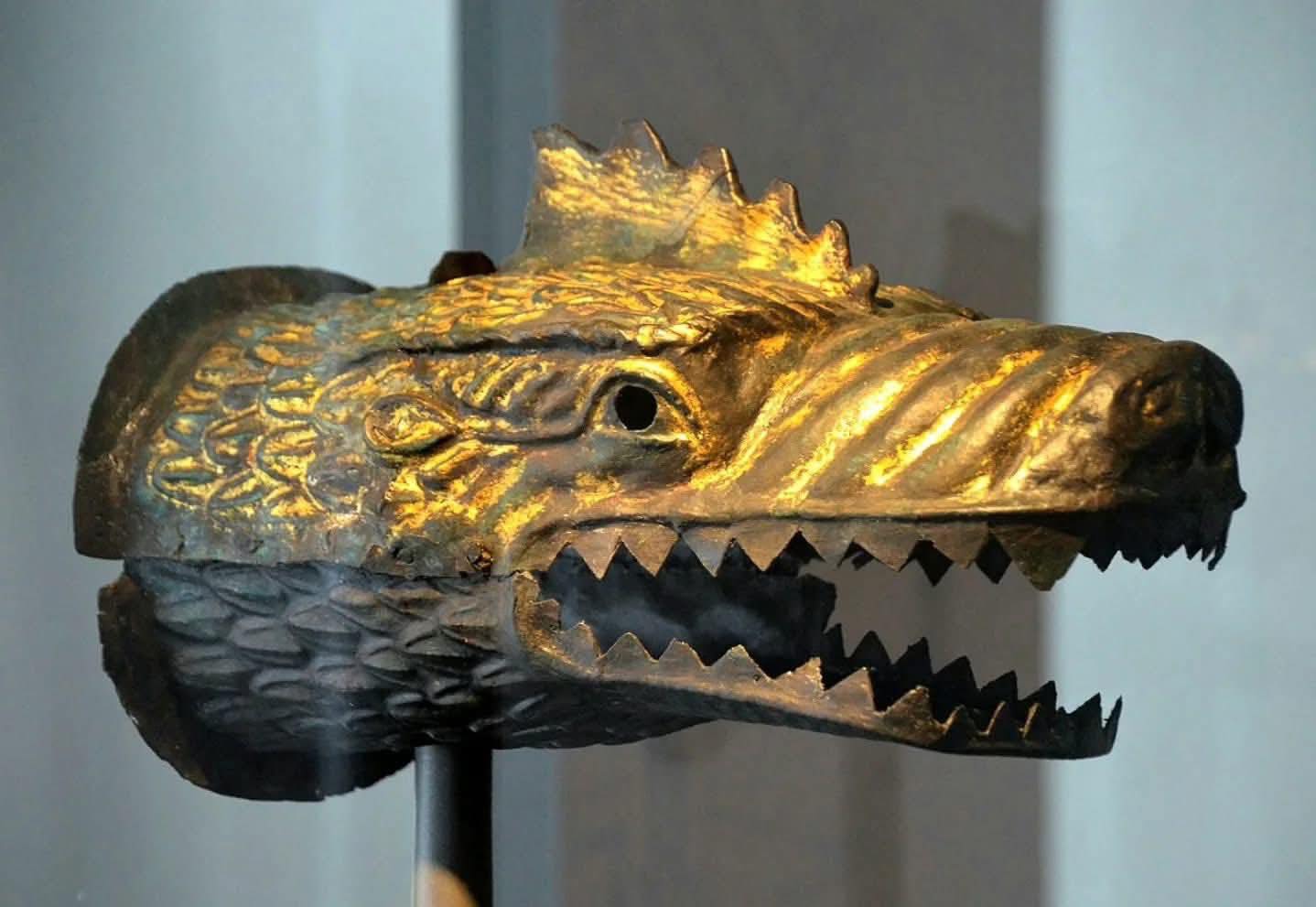
The artifact’s survival is extraordinary, as most dracons were made of perishable materials, with only the bronze dragon head typically enduring over time. Today, the piece is preserved and displayed at the Koblenz State Museum, offering scholars and the public a rare glimpse into Roman cavalry technology and cultural integration.
7. Spread and Influence of the Draco Standard
After its introduction in the 2nd century AD, the dracon spread throughout Roman cavalry units, especially among auxiliary regiments recruited from steppe cultures. The Romans appreciated the standard’s combination of visual impact and tactical utility, and it became a recognizable symbol of mounted warfare.
Even beyond the Roman Empire, the dracon influenced medieval banners and military standards, with dragon motifs continuing to evoke power, ferocity, and vigilance.
8. Technical Innovation: Combining Art and Utility
The dracon represents a rare example of ancient military innovation that blends artistry with tactical function:
-
The bronze dragon head required metalworking expertise.
-
The textile tail had to be durable yet flexible to flutter effectively.
-
The long pole allowed the standard to be visible across distances.
This integration of engineering, art, and strategy demonstrates the sophistication of Roman auxiliary forces and their allies.
9. The Legacy of the Dracon
The Roman dracon is more than a military artifact; it is a testament to cultural exchange, technological ingenuity, and battlefield adaptation. Through the dracon, we can understand how the Romans incorporated the skills of allied peoples. Adapting foreign traditions to improve military efficiency.
Its presence in museums today allows modern audiences to visualize the Roman cavalry’s appearance and operations. Bridging the gap between history and imagination.
Conclusion: The Dracon as Symbol and Tool
The Roman dracon (draco) standard stands as a remarkable combination of functionality and symbolism. From its practical use in measuring wind for mounted archers to its psychological impact on the battlefield. It exemplifies the ingenuity of Roman military engineering and the influence of allied steppe cultures.
The surviving example at the Koblenz State Museum reminds us. That even the smallest artifacts can tell stories of empire, innovation, and cross-cultural exchange. The fluttering dragon head of the dracon may have vanished from battlefields centuries ago. But its legacy continues to fascinate historians, archaeologists, and enthusiasts of ancient military history alike.
ALSO READ: The Tomb of a Roman Aristocrat Unearthed in Northern Greece: Echoes Beneath the Red Earth⚱️