The Reliquary Bust of Saint Balbina (Belgium, c. 1520–1530): A Sacred Masterpiece of Devotion and Art
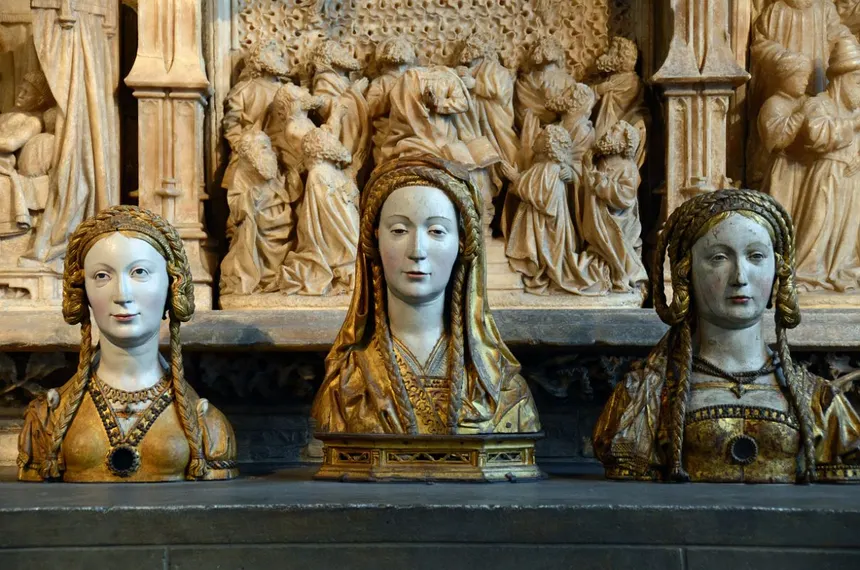
The Reliquary Bust of Saint Balbina, crafted in Belgium between 1520 and 1530, is one of the most extraordinary examples of late medieval devotional art. Designed to enshrine and honor the skull of Saint Balbina, a 2nd-century Christian martyr, this reliquary blends religious reverence with the exquisite artistry of the Northern Renaissance.
Originally safeguarded in Cologne, Germany, the relic journeyed across borders and centuries before finding its home in the Metropolitan Museum of Art in New York City. Today, it stands not only as a sacred vessel of faith but also as a striking testament to the craftsmanship and spiritual culture of 16th-century Europe.
Who Was Saint Balbina?
A Christian Martyr of the 2nd Century
Saint Balbina is venerated as a Roman martyr of the early Christian church. Tradition holds that she was the daughter of Saint Quirinus, a Roman tribune who converted to Christianity and was later executed for his faith.
Balbina herself dedicated her life to Christ, enduring suffering and martyrdom during the Roman persecutions of Christians in the 2nd century. Over time, her relics became objects of deep veneration, embodying both her sacrifice and the steadfastness of early Christian faith.
Patronage and Veneration
Saint Balbina’s relics were associated with healing and divine intercession. Churches dedicated to her name sprang up across Europe, including in Rome and Cologne, ensuring her place in the devotional life of the faithful.
The Tradition of Reliquaries
What Are Reliquaries?
Reliquaries are sacred containers designed to house the physical remains of saints, such as bones, skulls, or hair, as well as items associated with them. During the Middle Ages and Renaissance, reliquaries became central to Christian worship, serving as objects of pilgrimage, devotion, and ecclesiastical pride.
Bust Reliquaries in Europe
The bust reliquary emerged as a particularly powerful form, presenting the saint in sculpted likeness while enshrining their relics within. By offering a face to the faithful, bust reliquaries bridged the spiritual and the physical, embodying both artistic representation and holy presence
Creation of the Reliquary Bust of Saint Balbina
Belgian Craftsmanship (1520–1530)
This reliquary was created in Belgium during a period of remarkable artistic flowering. The early 16th century saw the rise of the Northern Renaissance, where artists blended Gothic traditions with new influences of naturalism, realism, and humanism.
The Reliquary Bust of Saint Balbina reflects this synthesis:
-
Crafted from wood overlaid with gilding and paint, it glows with sacred radiance.
-
The bust is hollowed to contain and safeguard the saint’s skull.
-
Finely detailed features imbue the figure with dignity and serenity, inviting contemplation and devotion.
Style and Symbolism
The artist’s rendering of Balbina is both regal and holy. Her visage projects calm authority, while the gilded surfaces suggest her sanctified status. Unlike abstract or symbolic reliquaries of earlier centuries, this work emphasizes human likeness, aligning with Renaissance ideals of realism and accessibility.
Symbolism and Function
A Sacred Vessel
The reliquary’s foremost function was to protect and enshrine the relics of Saint Balbina. By embodying her likeness, the bust reinforced the saint’s physical and spiritual presence among the faithful.
A Centerpiece of Devotion
Placed in churches or chapels, such reliquaries became focal points for prayer, veneration, and pilgrimage. Worshippers would approach the bust seeking intercession, healing, and spiritual strength.
Eternal Splendor
The gilded surfaces and precious materials symbolized not only reverence but also the heavenly glory awaiting saints and martyrs. For believers, the reliquary made tangible the invisible promise of salvation.
From Cologne to New York
Cologne: A Medieval Center of Relics
Cologne was one of the most important centers of Christian relic veneration in medieval Europe, famously housing the Shrine of the Three Kings. The Reliquary Bust of Saint Balbina was originally safeguarded there, adding to the city’s rich spiritual heritage.
Later Movements
Over centuries, as relics and reliquaries were displaced by wars, secularization, and art markets, many found their way into private collections and museums. The bust of Saint Balbina eventually traveled to the United States, where it entered the collection of the Metropolitan Museum of Art in New York City.
At the Met Today
In the Met’s medieval galleries, the reliquary continues to inspire awe. Visitors encounter not only an exquisite artwork but also a relic that carried profound meaning for generations of faithful.
The Artistry of Belgian Reliquaries
Northern Renaissance Influence
Belgium, particularly regions like Flanders, was a hub of Renaissance art in the 16th century. Artists and craftsmen were renowned for their detailed wood carving, metalwork, and polychrome decoration.
The Reliquary Bust of Saint Balbina exemplifies these qualities:
-
Lifelike facial rendering reflects Renaissance humanism.
-
Ornate gilding highlights Gothic traditions of splendor.
-
Integration of relic and representation bridges art and spirituality.
Comparison with Other Works
Other bust reliquaries from Belgium and Germany, such as those of female martyrs like Saint Ursula, share similar stylistic elements. Yet Saint Balbina’s reliquary stands out for its balance of simplicity and grandeur, evoking both humility and divine majesty.
The Spiritual and Cultural Legacy
A Window into 16th-Century Faith
The reliquary offers profound insights into the devotional practices of early modern Europe. It embodies how believers connected with saints not only through abstract faith but also through tangible, visual, and physical forms.
Enduring Symbolism
For modern viewers, the Reliquary Bust of Saint Balbina symbolizes:
-
The endurance of Christian tradition.
-
The intersection of art, devotion, and material culture.
-
The human desire to honor and preserve sacred memory.
Conclusion
The Reliquary Bust of Saint Balbina (Belgium, c. 1520–1530) is far more than a beautiful artifact—it is a sacred vessel of memory and devotion, a masterpiece of Belgian craftsmanship, and a testament to the enduring veneration of Christian martyrs.
From its origins in Cologne to its home in the Metropolitan Museum of Art in New York, the bust has traversed centuries, carrying with it both artistic brilliance and spiritual power. In its serene face and gilded splendor, viewers glimpse the deep reverence that shaped late medieval and Renaissance Europe.
Today, it continues to bridge the worlds of faith and art, standing as a reminder of the profound ways humans have sought to preserve holiness in material form.