The Real-Life “Mowgli”: The Boy Raised by Wolves in 19th Century India
In 1867, hunters in the dense forests near Bulandshahr, India, stumbled upon a discovery that would blur the boundaries between myth and reality. A small, wild-eyed boy emerged from a cave, crawling on all fours and snarling like the wolves beside him. This boy’s name was Dina Sanichar, later known around the world as the “real-life Mowgli” — a child of the jungle raised by wolves, not humans.
The story of Dina Sanichar is both haunting and fascinating. It raises timeless questions about what makes us human, how environment shapes identity, and how fragile the line is between civilization and wilderness.
A Discovery in the Wild: The Year 1867
In the late 19th century, India was still under British colonial rule. Dense forests stretched across the northern plains, sheltering rich wildlife — and sometimes, strange human tales.
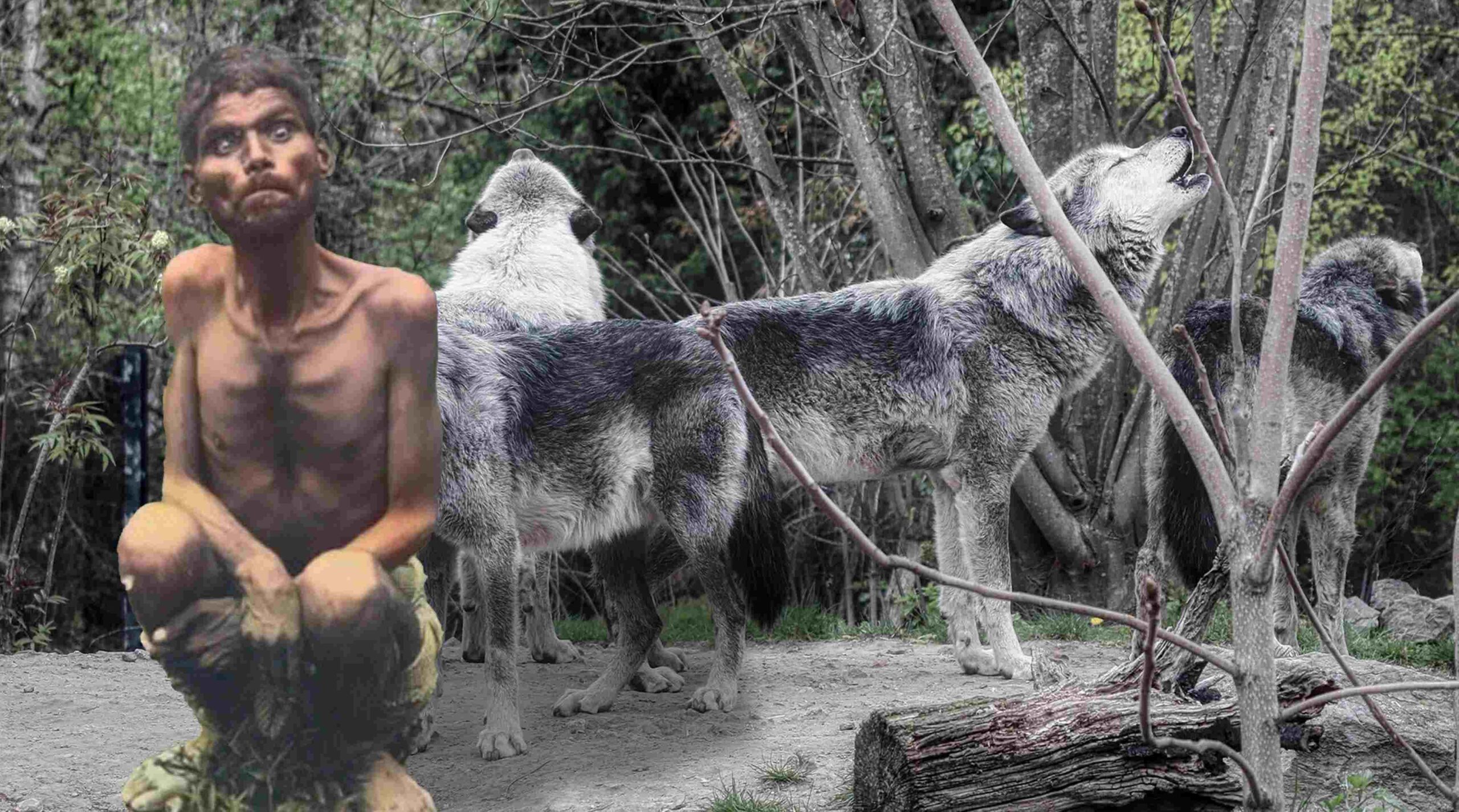
Local hunters near the forests of Bulandshahr, a region in Uttar Pradesh, followed a wolf pack to their den. What they found inside shocked them: a human boy living among wolves. Naked, dirty, and crawling on all fours, he growled and howled when approached. The wolves attempted to defend him — as if he were one of their own.
After capturing the wolves, the hunters carefully pulled the boy out of the cave and brought him to an orphanage in Agra. There, a new chapter of his life — and one of history’s most extraordinary case studies — began.
From the Jungle to Civilization
When Dina arrived at the Agra Orphanage, his behavior baffled the caretakers. He could not speak. He avoided humans. He preferred the company of animals and tried to eat raw meat. His senses were sharp — his hearing, smell, and sight were attuned to the wilderness, not human surroundings.
Despite years of gentle care, Dina’s adaptation to human life remained partial.
He slowly learned to walk upright, wear clothes, and recognize basic human routines. But emotionally and psychologically, the jungle had already claimed him. Dina never learned to speak any language. His communication remained limited to gestures and sounds.
The orphanage workers recorded that he used to sharpen his teeth by chewing on bones and refused cooked food. They fed him simple raw meat and milk — things he accepted without fear. His story defied every norm of child development.
The Science Behind Feral Children
Psychologists and anthropologists classify children like Dina as “feral children” — humans who grew up isolated from human contact, often surviving among animals. Such children lack exposure to language, social behavior, and culture during their critical developmental years.
Modern research on feral children points to a phenomenon known as the critical period hypothesis. If a child doesn’t acquire language or human social interaction before a certain age — usually before puberty — it becomes nearly impossible for them to develop these skills later in life.
In Dina’s case, by the time he was found, he had spent at least six formative years in total isolation from human society. His developmental window for language had closed. Thus, even though he could stand upright and mimic certain human habits, he remained psychologically between two worlds — neither fully wolf nor fully man.
Dina Sanichar and the Colonial Curiosity
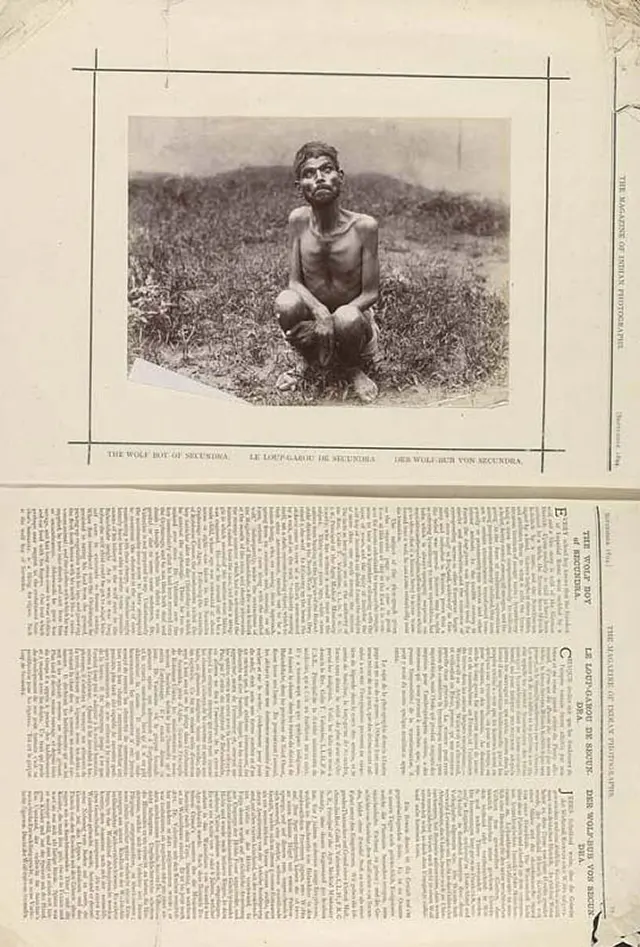
The British officials who oversaw India at the time took a great interest in such cases. Reports of wolf-children or wild children had emerged before — but Sanichar’s case was better documented due to colonial administrative record-keeping.
The Agra Orphanage staff, under the Church Mission Society, recorded his progress. Observers noted how he responded to human contact reluctantly and often retreated to animalistic behaviors. Over time, he began to trust certain caregivers, especially those who treated him with patience.
Yet, Dina’s case was not just a curiosity. It became a window into understanding human nature itself. Was humanity something taught — or something instinctual?
Life Inside the Orphanage
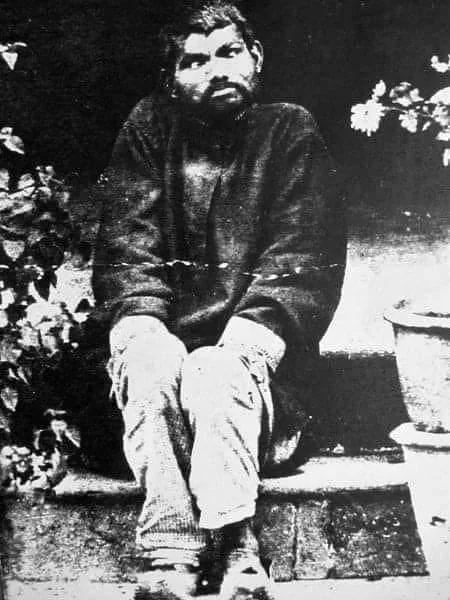
For about two decades, Dina lived within the walls of the Agra Orphanage. Accounts describe him as a man of average height, dark skin, and a quiet presence. He never verbalized a single intelligible word.
Ironically, one distinctly human habit he did pick up — was smoking. The caretakers noted that he began imitating the men around him who smoked tobacco. Before long, he became addicted — a striking example of how mimicry could bridge the gap that language could not.
But Dina’s health deteriorated. He suffered from chronic respiratory issues and eventually died in his early thirties — likely from tuberculosis, a common illness in the late 19th century. His death marked the end of a lonely and misunderstood life, but his legacy persisted in literature and memory.
Echoes in Literature: From Dina to Mowgli
When Rudyard Kipling published The Jungle Book in 1894, the character of Mowgli — a boy raised by wolves in India — became an instant classic. Scholars have long debated whether Kipling based Mowgli directly on Dina Sanichar’s story.
Although Kipling never explicitly credited Sanichar, the similarities are undeniable. Both were Indian boys found among wolves, both grew up outside the human world, and both embodied the tension between wilderness and civilization.
However, Kipling’s Mowgli lived a romanticized life — wise, agile, communicative, and morally heroic. The truth of Dina’s existence was far more tragic: a silent, isolated being lost between two worlds. In literature, the wild boy becomes legend. In reality, he remained a haunting symbol of human fragility.
Feral Children Through History
Dina was not the only child found in such circumstances. Across centuries and continents, stories of feral children have surfaced:
-
Victor of Aveyron (France, 1797): A boy found in the forests of southern France who lacked speech and social behavior.
-
Amala and Kamala (India, 1920): Two girls reportedly raised by wolves, later found in Midnapore, Bengal. Their case drew scientific attention from psychologists worldwide.
-
Marina Chapman (Colombia, 1950s): A girl kidnapped and abandoned in the jungle, who reportedly lived among capuchin monkeys for years.
These cases underscore the incredible adaptability of human physiology — but also the dependence of human identity on social connection.
The Psychology of Isolation
Children like Dina Sanichar reveal how environment fundamentally molds the mind. Human identity is not merely biological — it’s social, linguistic, and cultural.
Without interaction, the neural pathways responsible for empathy, language, and higher reasoning fail to develop fully.
Feral children demonstrate that being “human” is more than appearance; it’s about communication, relationships, and consciousness. Dina’s existence forces us to confront the question: Are we born human — or do we become human through others?
Nature vs. Nurture: Lessons from Dina’s Life
The case of Dina Sanichar remains a powerful lens through which to examine the classic debate: nature versus nurture.
-
Nature: His survival instincts, sensory awareness, and animal-like agility showed the human body’s raw adaptability to nature.
-
Nurture: His inability to learn language or emotions revealed how vital social nurturing is in shaping a human mind.
Dina was nature’s child — an extreme example of how nurture defines civilization. His story emphasizes that human culture is a fragile construct built through connection, not instinct.
The Colonial Interpretation and Ethnographic Bias
It is essential to explore how colonial attitudes shaped Sanichar’s narrative. To the British administrators, his case symbolized both the mystery and primitiveness they often associated with India. Reports about wild children fitted colonial stereotypes of the exotic East — full of wonders, oddities, and lessons about civilization.
In truth, India’s rural and forested areas have long been home to stories about children lost to nature or raised outside society. Such accounts were often treated by villagers as spiritual — the child touched by the forest gods — rather than pathological. Colonial recorders, however, stripped the spiritual meaning and reframed it as scientific “case studies,” creating a skewed cross-cultural record.
Understanding Dina’s story today thus requires reading between the lines — removing colonial bias and recognizing the human being behind the myth.
Dina Sanichar’s Enduring Legacy
Over 150 years later, Dina Sanichar’s story continues to capture imaginations. He stands as a symbol of humanity’s connection to the wild, and of what happens when that connection becomes complete.
Modern documentaries, books, and podcasts have revisited his life. Anthropologists examine his case to explain developmental psychology; artists find inspiration in his silence and defiance. Even neuroscientists reference his case as evidence of how deeply environment sculpts cognition.
In pop culture, films and literature about feral children — from Tarzan to The Jungle Book — echo the same enduring question Dina’s life raises: What makes us human?
Reassessing the Line Between Human and Wild
When the hunters found Dina in that forest cave, they may have rescued him — or perhaps, uprooted him. His story forces us to reconsider what “civilization” truly means. Was Dina happier in the jungle, free from language, rules, and expectations? Or did he lose something greater — the shared experience that defines our species?
His haunting silence answers ambiguously. Some see tragedy; others see freedom.
Archaeological and Historical Context: India’s Forest Culture
India’s forests have long been central to its mythology and anthropology. Ancient texts like the Ramayana and Mahabharata feature characters retreating into the forest for enlightenment. The idea of the vana (forest) as both danger and sanctuary is deeply embedded in Indian consciousness.
The 19th-century forests of Uttar Pradesh and Madhya Pradesh were teeming with wolves, leopards, and tigers. It is plausible that isolated incidents of children surviving in these conditions could happen, especially when villages were small and medical systems nonexistent.
Thus, beyond fiction, Dina Sanichar’s life sits at a unique intersection — where myth meets anthropology.
The Ethical Lens: Can Civilization “Save” the Wild?
Today, Dina Sanichar’s story challenges modern ethics. When such children are found, is reintegration into society always the right choice?
Cases in later centuries revealed that forced adaptation often led to trauma, depression, or even death. For beings like Dina, their “rescue” might have also been their undoing.
Ethicists now argue for sensitive, consent-based rehabilitation, acknowledging that returning to human society cannot erase years of wild existence. Sanichar’s experience offers a powerful cautionary tale about imposing civilization on those formed by nature.
Modern Scientific Reflection
Neuroscientists studying feral children often reference Dina’s case when discussing neuroplasticity and critical learning windows.
Without early exposure to speech and human contact, the language centers of the brain — particularly Broca’s area and Wernicke’s area — remain inactive and eventually atrophy.
This biological truth mirrors Dina’s fate. It wasn’t lack of intelligence that silenced him; it was the irreversible consequence of missing humanity’s formative experiences.
In this sense, Dina Sanichar’s life isn’t merely a historical curiosity. It stands as living evidence of how environment sculpts the human brain itself.
Pop Culture and the Myth of Mowgli
While Kipling’s Mowgli remains iconic, it is vital to remember that the story is fiction — a colonial-era literary reflection on identity, belonging, and empire.
Kipling, born in India, used the jungles of Central India as his imaginative landscape, but he also drew inspiration from real colonial reports like those of Dina Sanichar.
In Disney’s adaptations, the story transforms into a tale of courage and friendship — a fantasy of harmony between human and animal worlds. Yet, the truth of Dina’s life reminds us that nature’s embrace is not always gentle, and human reintegration is a complex journey, not an adventure.
Remembering Dina Sanichar: The Silent Symbol
Today, Dina Sanichar remains largely unknown outside specialist circles, overshadowed by Kipling’s Mowgli. Yet, his real story deserves to be remembered — not as a curiosity, but as a mirror to human nature itself.
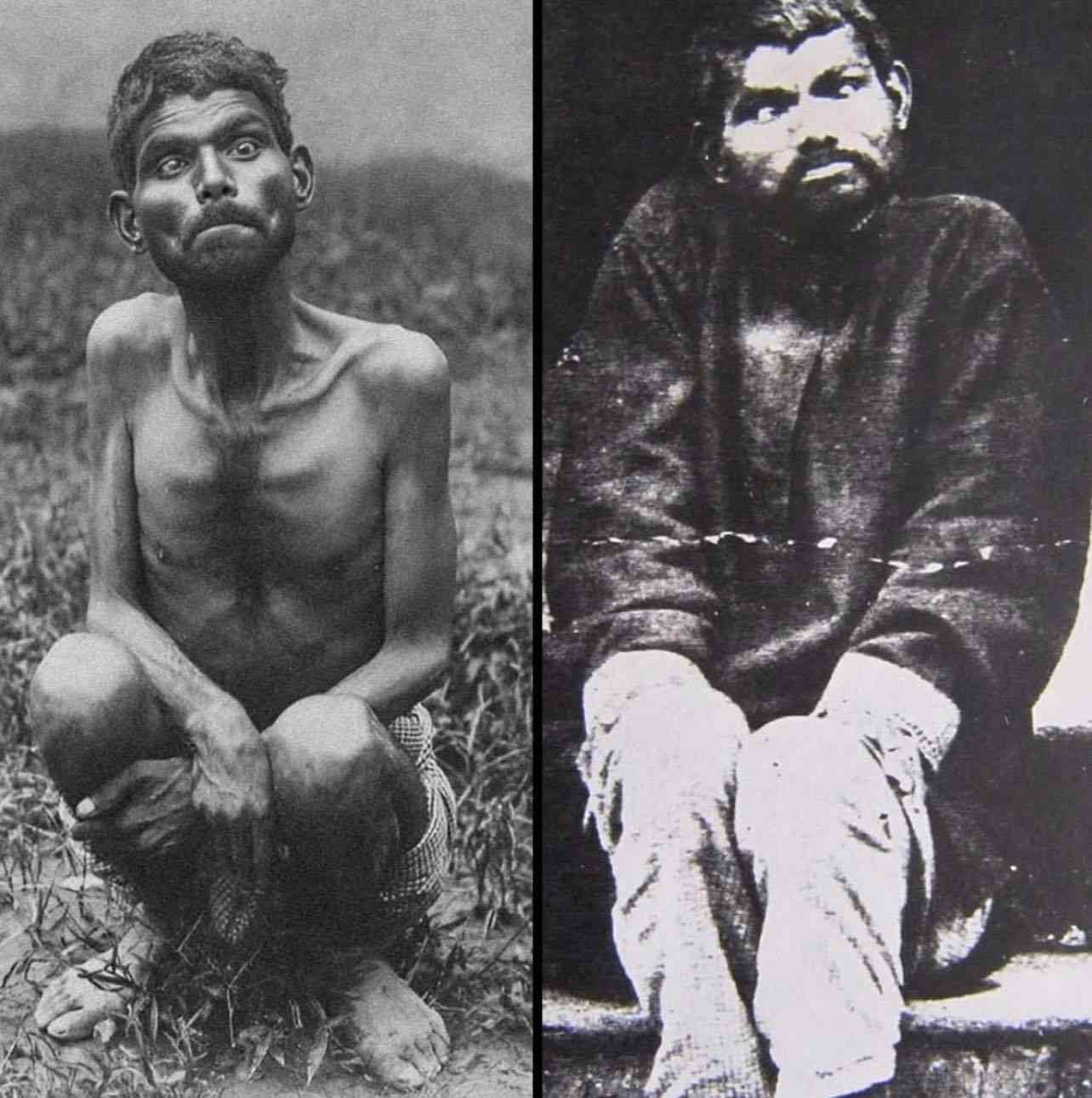
He teaches us that being human is not about birth but about connection; not about language but about interaction. His lonely existence reaffirms that civilization is a collective effort — one that each of us must continually sustain.
Conclusion: The Wild Within Us
The legend of The Real-Life Mowgli endures not because it’s romantic, but because it’s profoundly unsettling. Dina Sanichar’s life reveals both the resilience and fragility of humanity. Found among wolves yet unable to find a home among men, he represents the tension within us all — between instinct and intellect, nature and nurture.
In the end, Dina’s silence speaks louder than any tale. It reminds us that our humanity is not inherent — it is learned, nurtured, and fragile. His story continues to echo from the forests of 19th-century India into our modern consciousness — as both a warning and a wonder.
ALSO READ: The Crescent Moon Samurai Armor: An Icon of Warrior Prestige