The Pyramid of the Sun: A Monumental Testament to Ancient Teotihuacán’s Power and Vision
The Radiant Heart of Teotihuacán
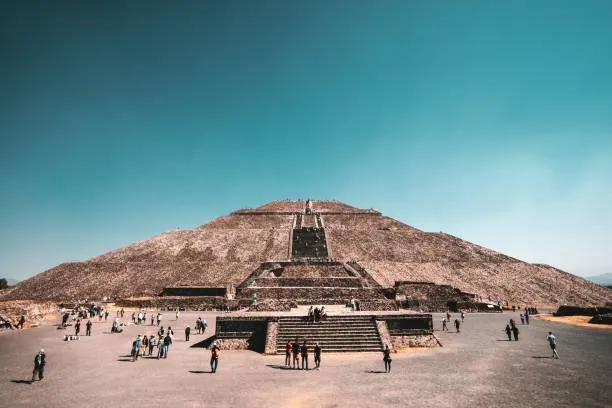
Standing proudly in the heart of the ancient city of Teotihuacán, the Pyramid of the Sun is one of the most awe-inspiring and enigmatic monuments of the ancient world. Built around 200 CE, this colossal pyramid dominates the central Mexican plateau and continues to inspire wonder for its scale, purpose, and the mystery surrounding its creators. Rising to a height of approximately 216 feet (66 meters) and spanning 738 feet (225 meters) on each side of its base, it is the largest structure in Teotihuacán and one of the largest pyramids in the Western Hemisphere.
Despite being constructed nearly two millennia ago — without metal tools, wheels, or pack animals — the Pyramid of the Sun remains a breathtaking symbol of Teotihuacán’s power, organization, and spiritual depth.
A Colossal Feat of Ancient Engineering
The construction of the Pyramid of the Sun is a testament to the remarkable engineering skills of the Teotihuacanos. Built primarily from volcanic stone, adobe bricks, and rubble, the pyramid is estimated to contain nearly one million cubic meters of material. Such a volume rivals that of the Great Pyramid of Giza in Egypt, placing Teotihuacán among the elite of ancient civilizations capable of monumental architecture.
Archaeologists estimate that the construction required the labor of tens of thousands of workers over several decades. Without the use of beasts of burden or wheeled carts, every stone and mound of earth was carried manually, reflecting an extraordinary level of social coordination and state control.
The Urban and Cosmic Center of Teotihuacán
The Pyramid of the Sun occupies a central position within the ancient city of Teotihuacán, which at its peak (circa 450 CE) housed more than 125,000 inhabitants, making it one of the largest cities in the pre-Columbian Americas. The pyramid aligns with the Avenue of the Dead, the city’s grand ceremonial boulevard that connects other monumental structures such as the Pyramid of the Moon and the Temple of the Feathered Serpent (Quetzalcoatl).
This alignment is not accidental — it reflects the cosmological and astronomical beliefs that guided the Teotihuacanos. The pyramid is precisely oriented toward the setting sun on certain days of the year, particularly around the summer solstice, emphasizing its deep connection to celestial cycles and agricultural fertility.
Built Over a Sacred Cave: The Underworld Connection
Beneath the Pyramid of the Sun lies a natural cave system, which may have held profound spiritual significance for the builders. Archaeologists have discovered that the pyramid’s construction deliberately incorporated this cave, possibly viewed as an entrance to the underworld — a sacred space where creation myths originated.
In Mesoamerican belief systems, caves were often associated with birth, fertility, and the divine, symbolizing the womb of the Earth. By erecting their grandest monument directly above this cave, the Teotihuacanos may have sought to physically and symbolically link heaven, earth, and the underworld — creating a cosmic axis at the very heart of their city.
Religious Significance: The Power of the Gods
Although the Aztecs, who arrived centuries later, named it the Pyramid of the Sun, the original purpose and deity it honored remain uncertain. Current research suggests it may have been dedicated not to the sun itself, but to a Great Goddess associated with fertility, water, and the earth — or to the Storm/Water Deity who sustained agricultural abundance.
Religious ceremonies performed atop the pyramid likely involved offerings, rituals, and possibly human sacrifices intended to maintain cosmic balance and ensure the fertility of the land. These practices highlight the Teotihuacanos’ complex cosmological worldview, in which monumental architecture served as both a stage for ritual and a representation of divine power.
The Experience of Ascension: Climbing the Pyramid
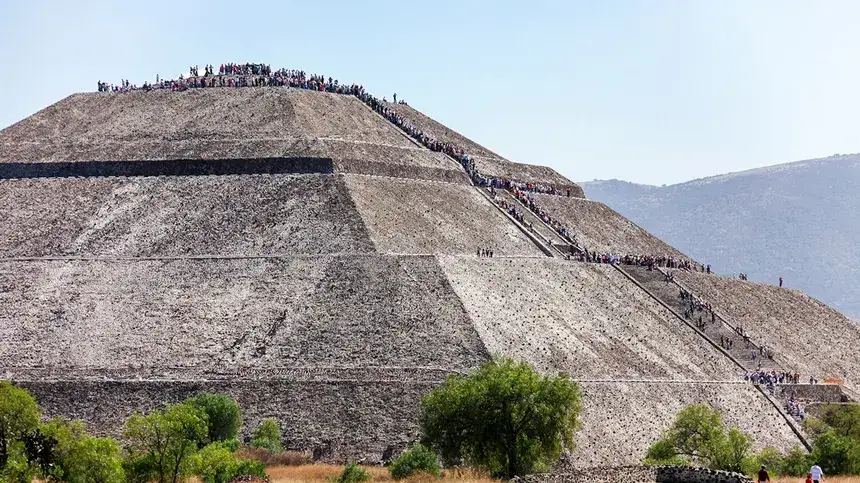
For modern visitors, ascending the 248 steps to the summit of the Pyramid of the Sun is a humbling experience. Each step reveals not only the immense labor of its builders. But also a panoramic view of the Avenue of the Dead and the surrounding archaeological landscape. Standing atop this ancient monument, one gains a tangible sense of connection to the people. Who envisioned and constructed it nearly 2,000 years ago.
From above, the geometric precision and scale of Teotihuacán unfold dramatically. A reminder that this was once a planned city, laid out with mathematical accuracy and spiritual purpose. The sight embodies the enduring harmony between human creativity, architecture, and the cosmos.
Archaeological Discoveries and Ongoing Mysteries
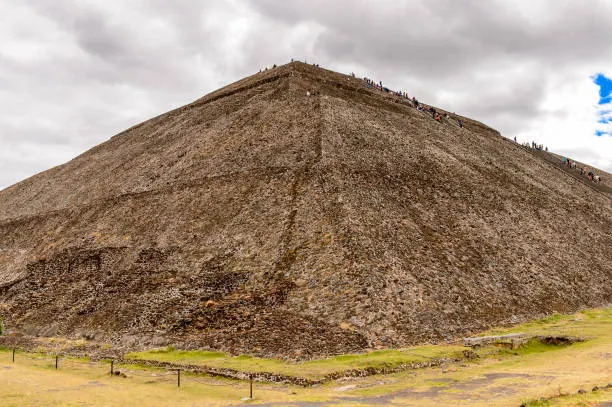
Archaeological exploration of the Pyramid of the Sun has revealed burial. Offerings, ceramic artifacts, and evidence of ritual activity, yet no royal tomb has ever been found. This absence deepens the enigma of who ruled Teotihuacán and directed its vast resources.
Recent excavations using ground-penetrating radar and remote sensing have uncovered hidden chambers, tunnels, and sealed passages. Suggesting that many secrets still lie buried within. Despite decades of study, Teotihuacán’s origins, political structure, and language remain unknown. Adding to its allure as one of the world’s greatest archaeological mysteries.
Teotihuacán and Its Enduring Legacy
The decline of Teotihuacán around the 7th century CE remains a subject of scholarly debate. Some theories point to internal rebellion, environmental stress, or resource depletion, while others suggest external invasion. Whatever the cause, its influence endured long after its fall.
When the Aztecs discovered the ruins centuries later, they were so awestruck that they named it Teotihuacán. Meaning “the place where gods were created.” To them, the Pyramid of the Sun was not merely a ruin. It was a divine creation, a site of cosmic origin. This perception ensured that the monument remained a sacred pilgrimage site for generations.
The Pyramid of the Sun Today: A UNESCO World Heritage Marvel
In 1987, Teotihuacán was designated a UNESCO World Heritage Site, recognizing its immense cultural, historical, and architectural value. Today, millions of visitors from around the world come to walk. Its sacred avenues, climb its pyramids, and connect with the ancient civilization that once flourished here.
Conservation efforts continue to protect this fragile site from erosion, pollution, and over-tourism. Visitors are encouraged to experience the site with respect. Understanding that each stone, stairway, and alignment embodies centuries of human devotion, ingenuity, and cosmic aspiration.
Conclusion: A Legacy Set in Stone
The Pyramid of the Sun in Teotihuacán is more than an ancient monument. It is a symbol of human ambition, belief, and unity. Its scale rivals the greatest wonders of the world. Yet its purpose reaches beyond earthly power into the realm of the divine. It reflects a civilization that understood not only the physical world but the spiritual rhythms of the cosmos.
Today, as the sun sets over the Valley of Mexico, the pyramid still commands awe and reverence. A timeless testament to the enduring spirit of Teotihuacán and the people who built their city to touch the heavens..
ALSO READ: The Sandstone Doorway of Karnak – A Portal to the Divine