Unearthing Egypt’s Ancient Secrets: The Discovery of a Ptolemaic Sphinx at Kom Ombo
A Landmark Discovery in Egyptian Archaeology
In the ever-unfolding story of Egypt’s rich past, few discoveries capture both imagination and historical significance as vividly as the Ptolemaic sphinx unearthed at Kom Ombo Temple. Carved from fine sandstone, this extraordinary statue stands as a reminder of the Ptolemaic dynasty (305–30 BCE), an era where Greek and Egyptian cultures merged to create a uniquely hybrid civilization.
Uncovered during efforts to control groundwater at the temple site, this sphinx not only enriches our understanding of Kom Ombo’s symbolic landscape but also offers deeper insights into how Egypt’s artistic traditions evolved under foreign rule while maintaining strong ties to its native heritage.
The Kom Ombo Temple: A Dual Dedication
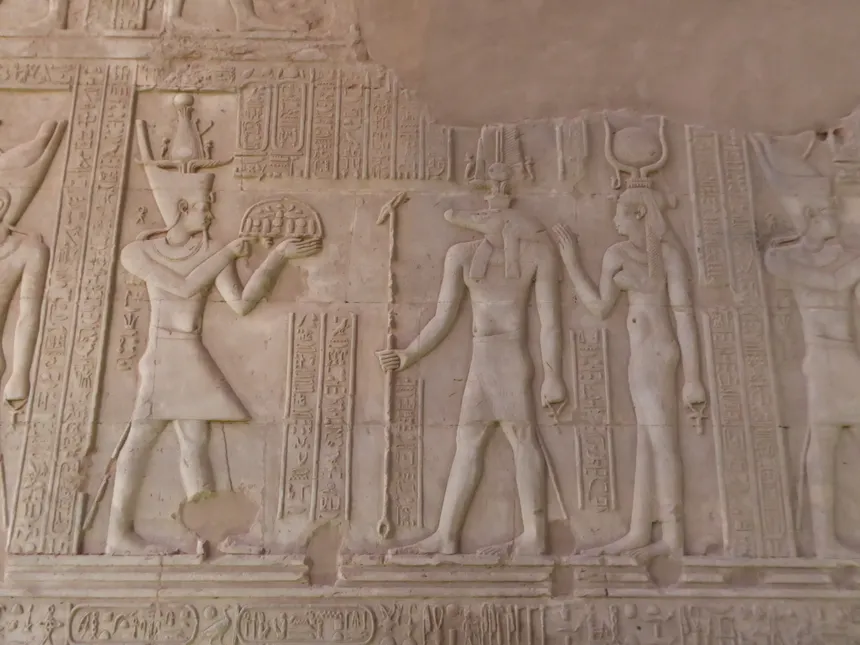
The Temple of Kom Ombo, located along the Nile in Upper Egypt, is among the most distinctive temples from the Ptolemaic era. Built during the reign of Ptolemy VI Philometor (180–145 BCE) and expanded by later rulers, Kom Ombo holds unique significance because it is dedicated to two gods simultaneously:
-
Sobek, the crocodile god of fertility and military prowess.
-
Horus the Elder, the falcon-headed god of kingship, healing, and protection.
This rare dual dedication created a perfectly symmetrical temple design, with duplicate halls, sanctuaries, and chambers reflecting the duality of divine power. Against this backdrop, the discovery of the sandstone sphinx adds another layer of symbolic importance, likely serving as a guardian of sacred space.
The Sphinx in Egyptian Symbolism
The sphinx is one of ancient Egypt’s most enduring symbols, representing power, wisdom, and divine protection. Traditionally featuring a lion’s body with a human head, the sphinx embodies strength combined with intellect.
In Egyptian culture, sphinx statues often flanked temple entrances, pathways, and sacred structures, serving both a protective function and a symbolic one, representing the ruler’s divine authority. During the Ptolemaic dynasty, this iconography persisted but was also infused with Hellenistic artistic styles, blending Egyptian tradition with Greek realism and aesthetic refinements.
The Kom Ombo sphinx reflects this fusion—its sandstone craftsmanship exemplifies continuity of tradition while subtly echoing the cross-cultural influences of the era.
The Ptolemaic Dynasty: A Blend of Two Worlds
The Ptolemaic dynasty began with Ptolemy I Soter, a general under Alexander the Great who claimed Egypt as his territory after Alexander’s death in 323 BCE. The Ptolemies ruled for nearly three centuries, ushering in an age where Greek and Egyptian traditions coexisted and often blended:
-
Religion: Greek rulers adopted Egyptian religious customs, presenting themselves as pharaohs and commissioning temples in traditional styles.
-
Art: Egyptian symbolic art merged with Greek realism, producing statues and reliefs with hybrid aesthetics.
-
Culture: The famous city of Alexandria became a center of learning, philosophy, and commerce, hosting the legendary Library of Alexandria.
The sphinx discovered at Kom Ombo exemplifies this era’s cultural duality, reinforcing the temple’s significance as a living embodiment of Egypt’s multicultural identity during Ptolemaic times.
Discovery of the Sandstone Sphinx at Kom Ombo
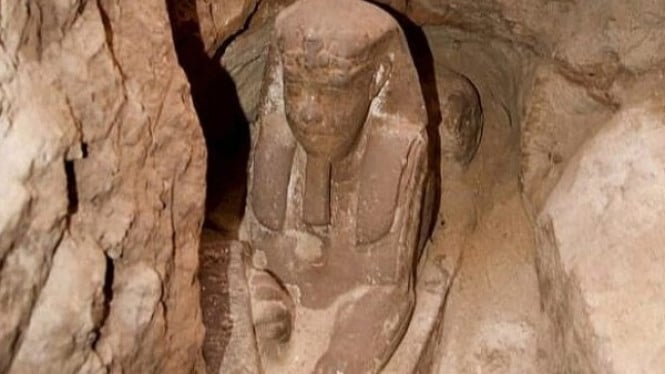
The sandstone sphinx was uncovered during groundwater control efforts around Kom Ombo Temple. Groundwater has long threatened ancient monuments in Egypt, eroding foundations and damaging structures. As archaeologists worked to mitigate these effects, the sphinx emerged, remarkably well-preserved despite centuries buried beneath layers of soil and sediment.
Key features of the discovery include:
-
Material: Finely carved sandstone, durable yet detailed in craftsmanship.
-
Condition: The sphinx is intact, retaining facial features, body proportions, and symbolic detail.
-
Context: Its location suggests it may have originally stood as part of a decorative or protective ensemble within the temple complex.
This finding not only adds to the temple’s archaeological richness but also provides new avenues for studying how sphinx statues functioned in Ptolemaic religious landscapes.
Cultural Significance of the Kom Ombo Sphinx
The Kom Ombo sphinx carries layered meanings that extend beyond its artistic value:
-
Religious Role – As a guardian statue, the sphinx would have symbolized divine protection, aligning with the temple’s dedication to Sobek and Horus.
-
Political Symbolism – In the Ptolemaic period, sphinxes reinforced the legitimacy of rulers who styled themselves as both Egyptian pharaohs and Hellenistic kings.
-
Cultural Fusion – Its design likely blends Egyptian symbolism with subtle Greek stylistic influences, embodying the fusion of traditions central to Ptolemaic rule.
-
Architectural Harmony – The sphinx’s placement within Kom Ombo’s symmetrical temple design would have enhanced the symbolic balance of dual deities.
Archaeology Meets Preservation: Protecting Kom Ombo
The discovery also underscores the importance of archaeological conservation efforts in Egypt. Kom Ombo Temple faces threats from:
-
Groundwater rise caused by irrigation and Nile-level changes.
-
Salt crystallization, which damages stone surfaces.
-
Tourism pressure, as Kom Ombo remains a popular site for visitors traveling along the Nile.
The excavation that revealed the sphinx highlights how preservation work often leads to new discoveries. Reinforcing the need for continued investment in protecting Egypt’s ancient treasures.
The Global Importance of the Kom Ombo Find
This sphinx is not just an Egyptian treasure—it is of global significance. It enriches our understanding of:
-
Cross-cultural interactions between Egypt and Greece in antiquity.
-
Religious symbolism during the Ptolemaic dynasty.
-
Artistic continuity, showing how Egyptian traditions persisted under foreign rule.
-
Archaeological methodology, demonstrating how modern conservation efforts contribute to major discoveries.
Scholars worldwide are likely to study the sphinx for years to come. Using it to piece together a more nuanced picture of Egypt’s Ptolemaic period.
A Symbol of Egypt’s Eternal Legacy
The discovery of the Ptolemaic sphinx at Kom Ombo is a reminder that Egypt’s sands still conceal secrets waiting to be uncovered. Every new artifact, from colossal statues to intricately carved reliefs, adds another thread to the tapestry of Egyptian history.
This sphinx embodies the resilience of cultural memory. It shows how Egypt’s identity—rooted in its pharaonic past yet open to outside influence—remained strong even under foreign dynasties. In this way, the Kom Ombo sphinx is more than a statue. It is a bridge between worlds, a guardian of history, and a symbol of the timeless power of Egypt’s civilization.
Conclusion
The sandstone sphinx discovered at Kom Ombo Temple is one of the most significant finds in recent Egyptian archaeology. Carved during the Ptolemaic dynasty, it reflects the artistry, cultural fusion, and spiritual symbolism of its time.
Set against the backdrop of Kom Ombo’s dual dedication to Sobek and Horus. The sphinx enhances our understanding of how religion, politics, and art intertwined in ancient Egypt under Greek rule. More importantly, it stands as a testament to the enduring richness of Egypt’s past. Still capable of surprising the modern world with its hidden wonders.
ALSO READ: Fossil Fish from Wyoming’s Green River Formation: A Perfectly Preserved Window into the Eocene Epoch