The Portonaccio Sarcophagus: A Masterpiece of Roman Battle Imagery
The Portonaccio Sarcophagus is a striking example of 2nd-century Roman funerary art, renowned for its dramatic depictions of battle and heroism. Discovered in the Portonaccio district of Rome, this monumental sarcophagus now resides at the Museo Nazionale Romano (Palazzo Massimo). Dating to around 180 AD, it was likely commissioned for a Roman general who perished during the German-Sarmatian campaign (172–175 AD), part of the Marcomannic Wars under Emperor Marcus Aurelius.
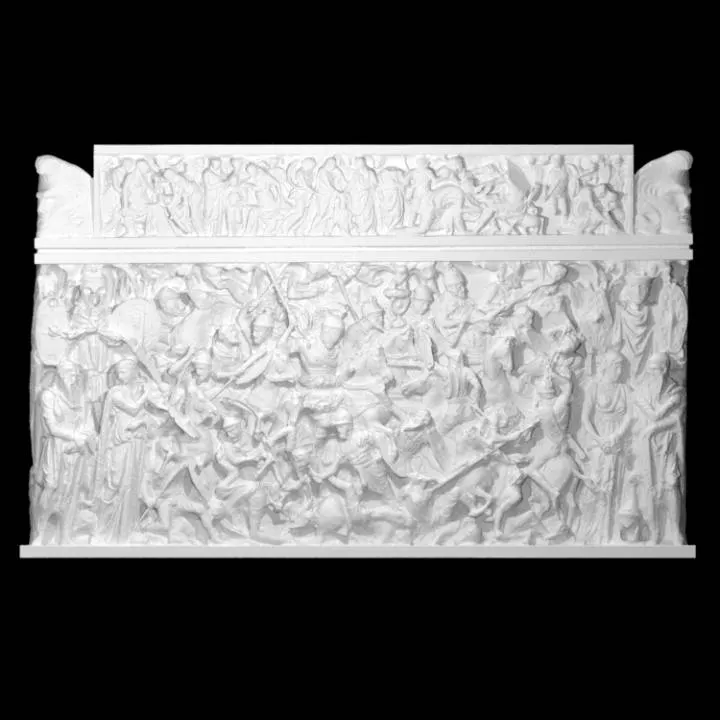
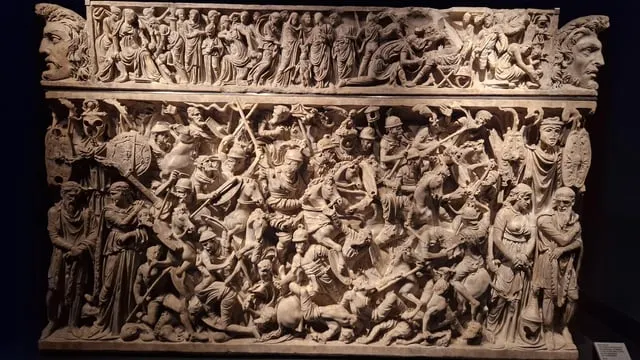
Carved in high relief, the sarcophagus captures the intensity of combat, showcasing warriors, horses, and weapons in a dynamic and chaotic yet ordered composition. Beyond serving as a tomb, it functioned as a powerful symbol of heroism, honor, and eternal legacy, reflecting the values of the Roman elite during a period of military and cultural strength.
Historical Context
The Marcomannic Wars
The Marcomannic Wars (166–180 AD) were a series of campaigns along Rome’s northern frontier, involving Germanic and Sarmatian tribes. These conflicts tested the strength and organization of Rome’s legions and became a defining aspect of Emperor Marcus Aurelius’ reign.
A general who fell in these campaigns would have been commemorated not only for military prowess but also as an exemplar of Roman virtue. The Portonaccio Sarcophagus reflects this dual purpose: memorializing an individual while celebrating Rome’s military supremacy.
Roman Funerary Practices
During the 2nd century AD, elite Romans often commissioned elaborate sarcophagi to honor the deceased. These monuments blended personal commemoration with public display of status, reinforcing family prestige and societal values. The Portonaccio Sarcophagus exemplifies this trend, merging realism, narrative drama, and imperial ideology.
Discovery and Preservation
Excavation in Portonaccio
The sarcophagus was unearthed in the Portonaccio district, an area rich in Roman antiquities. Its excellent preservation allows modern viewers to appreciate the intricacy of its carving, the depth of its reliefs, and the artistry of the Roman sculptors who executed it.

Museo Nazionale Romano (Palazzo Massimo)
Today, the sarcophagus is displayed in the Palazzo Massimo, part of the Museo Nazionale Romano. Scholars and visitors alike are drawn to its vivid narrative scenes, which convey both chaotic warfare and disciplined military order, hallmarks of Roman culture and aesthetics.
Artistic Features
High Relief Carving
The Portonaccio Sarcophagus is distinguished by its high relief technique, giving figures a pronounced three-dimensionality. Warriors leap forward, horses rear, and weapons clash, creating a sense of movement and urgency rarely matched in Roman sculpture.
Composition and Style
The composition is densely packed yet carefully structured:
-
Soldiers and cavalry fill the foreground and background, overlapping to create depth.
-
Figures are individualized, with expressive faces and varied postures.
-
Weapons, shields, and armor are meticulously detailed, reflecting both realism and artistic stylization.
This style draws inspiration from the Column of Marcus Aurelius, which similarly narrates campaign victories in continuous relief around a monumental pillar. The sarcophagus translates this public imperial imagery into a private funerary context, celebrating the deceased general’s valor.
Symbolism and Narrative
Heroism and Martial Virtue
The sarcophagus depicts the general not just as a participant in battle but as a hero embodying Roman virtues: courage, discipline, and loyalty to the empire. The imagery reinforces the ideal of the soldier-statesman, immortalizing the deceased as a model of military excellence.
Chaos and Order
Though the battlefield scenes appear chaotic, careful observation reveals a sense of organization: Roman soldiers dominate the composition, suggesting the triumph of Roman order over barbarian disorder. This visual narrative reinforces imperial ideology, linking personal commemoration to the glory of Rome itself.
Immortality through Art
Funerary art in Rome served a spiritual as well as social function. The dynamic battle scenes on the Portonaccio Sarcophagus symbolize eternal memory, ensuring that the deeds of the deceased are remembered and celebrated for generations.
Technical Mastery
Sculptural Skill
The sarcophagus showcases exceptional technical skill:
-
Deep undercutting produces dramatic shadows, enhancing three-dimensionality.
-
Realistic anatomy and musculature reflect careful study of the human body.
-
Horses are rendered with dynamic poses, conveying power and movement.
Material and Scale
Carved from marble, the sarcophagus is large enough to accommodate a full-length adult, emphasizing its monumental and commemorative purpose. The material allowed for fine detail, from facial expressions to intricate armor and weaponry.
Comparisons with Contemporary Works
The Column of Marcus Aurelius
The sarcophagus shares stylistic and thematic elements with the Column of Marcus Aurelius, which commemorates imperial campaigns in Rome. Both works emphasize heroic action, narrative continuity, and military prowess, though the sarcophagus adapts these features to a private funerary context.
Other 2nd-Century Sarcophagi
While many Roman sarcophagi depict mythological or allegorical scenes, the Portonaccio Sarcophagus is notable for its explicit martial focus, reflecting the identity and achievements of the deceased in a manner unusual for private tombs of the era.
Cultural Significance
Reflection of Roman Identity
The sarcophagus embodies key aspects of Roman cultural identity:
-
The valorization of military service.
-
The integration of public imperial imagery into private commemoration.
-
The celebration of personal and civic virtue.
Private and Public Memory
By commissioning such a sarcophagus, the general’s family ensured both personal remembrance and public acknowledgment of his contributions. This dual purpose illustrates how Roman art merged personal grief, social prestige, and imperial ideology.
Legacy and Modern Scholarship
Influence on Art History
The Portonaccio Sarcophagus has influenced studies of Roman sculpture, particularly in understanding how private monuments reflected public ideals. Its dramatic composition and technical skill exemplify the apogee of Roman narrative relief sculpture in the 2nd century AD.
Museum Display and Education
Today, the sarcophagus educates visitors about Roman military culture, funerary practices, and artistic achievement. Scholars continue to study it to understand:
-
Roman battle imagery and iconography.
-
Techniques of high-relief sculpture.
-
Social and political symbolism in private commemorative art.
Conclusion
The Portonaccio Sarcophagus stands as one of the most remarkable examples of Roman funerary art, blending vivid battle imagery, technical mastery, and ideological symbolism. Carved around 180 AD for a general who fell in the Marcomannic Wars, it immortalizes the deceased as a hero while reflecting Rome’s cultural values and military ideals.
From its discovery in the Portonaccio district to its display at the Museo Nazionale Romano, the sarcophagus continues to captivate audiences with its dynamic narrative, intricate detailing, and powerful symbolism. It remains a testament not only to the achievements of a Roman general but also to the artistic brilliance and enduring cultural identity of the Roman Empire.