Ollantaytambo: The Living Inca Fortress of Precision and Power
Nestled in the heart of Peru’s Sacred Valley, between Cusco and Machu Picchu, lies one of the most remarkable achievements of the Inca Empire — Ollantaytambo. Known as both a fortress and a living archaeological site, Ollantaytambo stands as a monument to human ingenuity, precision engineering, and spiritual harmony with the natural world.
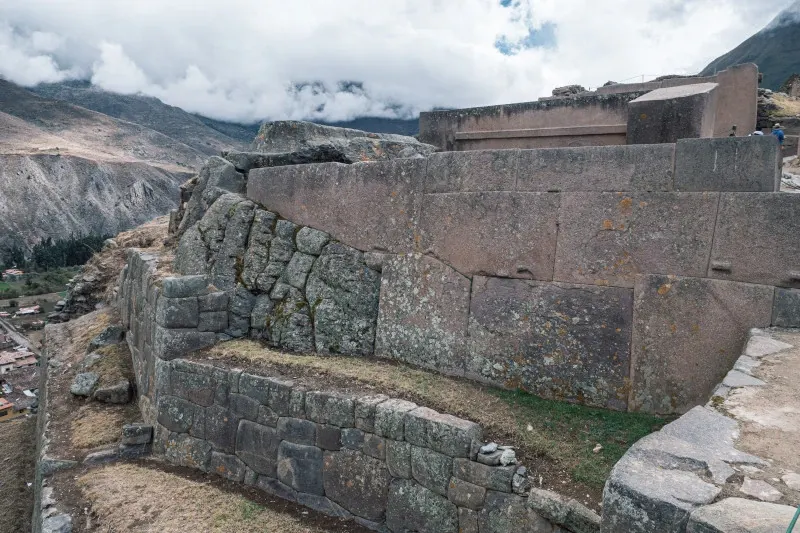
Built more than 500 years ago, this stone city has survived earthquakes, invasions, and the relentless passage of time. Its massive blocks — some weighing over 50 tons — fit together so seamlessly that even a blade of grass cannot pass between them.
More than a fortress, Ollantaytambo was a royal estate, ceremonial center, and agricultural marvel, showcasing the Incas’ unmatched mastery of architecture, astronomy, and hydraulics.
The Heart of the Sacred Valley
Ollantaytambo lies approximately 60 kilometers northwest of Cusco, within the Sacred Valley of the Incas, a fertile region nourished by the Urubamba River. This valley was the spiritual and agricultural heart of the Inca civilization, connecting key cities and ceremonial sites.
Strategically located at an altitude of 2,792 meters (9,160 feet), Ollantaytambo served as both a military stronghold protecting the valley and a gateway to the dense Amazon jungle beyond.
The Incas chose this location with purpose — aligning architecture, water channels, and terraces with the natural contours of the mountains and the cosmic order they so deeply revered.
The Genius of Inca Engineering
One of the most astonishing aspects of Ollantaytambo is its stone masonry, an engineering achievement that continues to baffle modern architects.
The Incas employed a technique known as ashlar masonry, where stones are precisely cut and fitted together without the use of mortar. The resulting structures are so stable that they have withstood countless earthquakes that have devastated later constructions.
Stones of Impeccable Precision
Some of the stones used in Ollantaytambo’s walls weigh up to 50 tons and were transported from quarries located over 6 kilometers (3.7 miles) away — across rivers and steep mountain slopes.
How these stones were moved remains a mystery. Archaeologists believe the Incas used a combination of log rollers, ramps, and manpower, guided by extraordinary planning and organization.
Once at the site, each stone was shaped to interlock perfectly with the next, creating walls that were both flexible and unbreakable — capable of absorbing seismic shocks without collapsing.
Even today, the precision of this stonework challenges modern technology, inspiring admiration from engineers and scientists around the world.
A City of Dual Purpose: Fortress and Sanctuary
Though often referred to as a fortress, Ollantaytambo was much more than a military outpost. It was also a royal estate built for the Inca emperor Pachacuti, who ruled during the empire’s expansion in the 15th century.
The complex includes temples, terraces, plazas, and waterworks, all designed with the Incas’ signature blend of utility and spiritual symbolism.
The Temple of the Sun
At the heart of the site lies the Temple of the Sun, one of the most impressive architectural features of the Inca world. Constructed from massive red porphyry stones, the temple’s walls are arranged in perfect alignment with the solstices and celestial events.
During the winter solstice, the rising sun casts light precisely on the temple’s ceremonial niches — evidence of the Incas’ deep astronomical knowledge and reverence for the sun god Inti.
The Agricultural Terraces
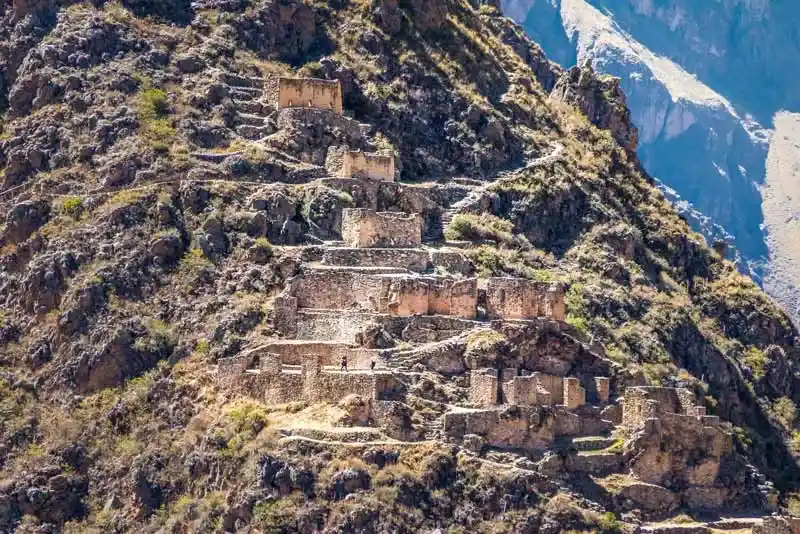
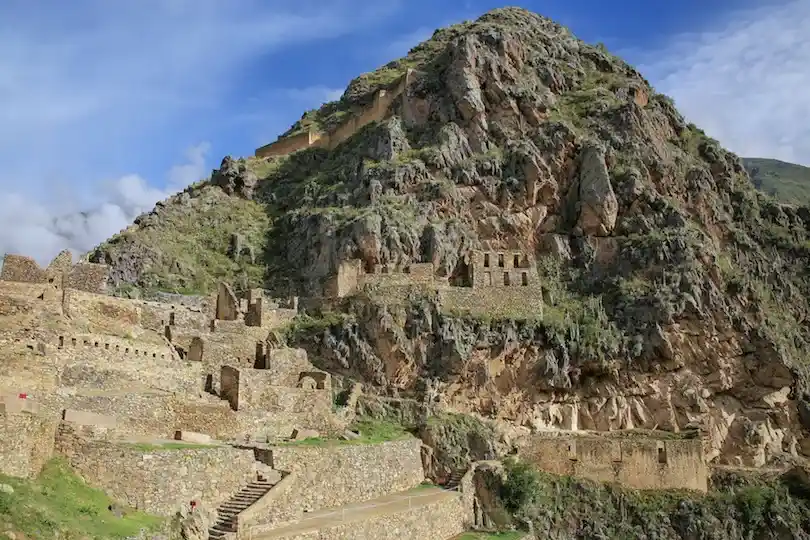
Below the fortress, a series of stepped terraces cascade down the mountainside, forming a spectacular landscape that served both agricultural and defensive purposes.
These terraces conserved soil, maximized sunlight exposure, and created microclimates that allowed the Incas to grow crops at varying altitudes. They also prevented erosion and helped manage water distribution — a testament to the Incas’ sophisticated environmental engineering.
Mastery of Water: Inca Hydraulics at Its Finest
Ollantaytambo’s water systems are another wonder of Inca design. Stone aqueducts, fountains, and channels run throughout the site, demonstrating precise control over the natural flow of water.
Engineers diverted streams from nearby mountains, distributing water to temples, baths, and terraces with perfect balance — ensuring both functionality and spiritual purity.
The Bath of the Princess, a finely carved fountain still flowing today, showcases the Incas’ ability to integrate practical needs with ritual symbolism. For them, water was sacred, representing life, renewal, and divine connection.
A Stronghold of Resistance
Ollantaytambo also holds a special place in history as the site of one of the few major Inca victories against the Spanish conquistadors.
In 1536, following the fall of Cusco, the Inca general Manco Inca retreated to Ollantaytambo and used the fortress’s strategic position to repel Spanish forces led by Hernando Pizarro.
From the terraced heights, Manco’s army flooded the valley and forced the Spaniards to retreat — a rare moment of triumph in the struggle against colonial invasion.
Though the Inca resistance eventually moved deeper into the jungle, the battle cemented Ollantaytambo’s reputation as a symbol of defiance and resilience.
Ollantaytambo Today: A Living Inca Town
Unlike many ancient sites, Ollantaytambo remains alive. The modern village below the fortress retains its original Inca layout — narrow cobblestone streets, water channels, and stone foundations still in daily use.
Local residents live in homes built atop Inca walls, carrying forward traditions that have endured for centuries. The town is a gateway to Machu Picchu, often serving as the final train stop before the famous citadel.
Yet Ollantaytambo is more than a waypoint — it is a destination in its own right, offering travelers a glimpse of authentic Andean life, surrounded by breathtaking scenery and living heritage.
The Legacy of Inca Genius
Ollantaytambo stands as one of the clearest expressions of Inca philosophy and worldview — a civilization that sought harmony between humanity, nature, and the cosmos.
Its design was not just about defense or aesthetics; it was about balance and respect for the environment. Every stone, terrace, and channel reflects the Incas’ belief that their cities were extensions of the landscape — a partnership between earth and spirit.
Even in ruins, the site continues to inspire awe. It reminds us that true greatness lies not in domination, but in understanding and working with the forces of nature.
Conclusion: A Stonework Masterpiece That Defies Time
More than five centuries after its construction, Ollantaytambo endures as a masterpiece of stone, design, and imagination.
Its walls still stand firm against earthquakes Its terraces still cling to the mountainside. Its water still flows in channels carved by hands long gone.
As the sun sets over the Sacred Valley, golden light washes across the stones — the same stones that have witnessed empires rise and fall.
In that moment, Ollantaytambo is no mere ruin. It is a living reminder of a people who built in harmony with the world, crafting structures so precise, so purposeful, that even time itself seems to pause in reverence.
ALSO READ: Chedworth Roman Villa: A Timeless Masterpiece of Roman Luxury and Engineering