The 9,000-Year-Old Nahal Hemar Mask: The Oldest Mask in the World
A Glimpse Into Humanity’s Earliest Faces
Among the dry cliffs of the Judean Desert, near the Dead Sea, archaeologists uncovered an artifact that speaks directly to the origins of ritual and identity: the Nahal Hemar mask. Dating back nearly 9,000 years, this object is considered the oldest mask in the world.
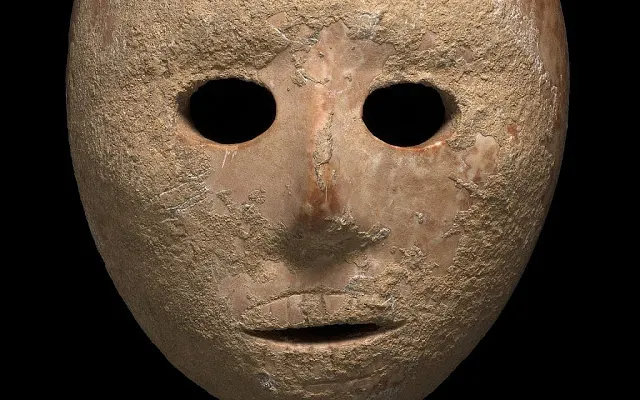
Fashioned from stone and shaped into a human-like visage, the mask was discovered in a cave on the banks of Nahal Hemar, a dry riverbed named after the Hebrew word hemar (asphalt or bitumen), which seeps naturally from the ground in the region. Its survival across millennia makes it not only a rare archaeological treasure but also a profound cultural symbol—linking us to the spiritual lives of our Neolithic ancestors.
Discovery of the Nahal Hemar Mask
The Cave of Nahal Hemar
In the early 1980s, archaeologists excavating near the Dead Sea stumbled upon the Nahal Hemar cave, a site that yielded an extraordinary collection of artifacts. Among baskets, textiles, ropes, and ritual objects, the standout find was the stone mask, perfectly preserved despite the passage of time.
Dating and Context
Carbon dating of associated materials placed the mask’s creation around 7000 BCE, during the Pre-Pottery Neolithic period. This was a transformative era when human societies shifted from nomadic hunter-gathering to settled agricultural life. The mask reflects this new phase of symbolic and ritual complexity.
Description of the Mask
Material and Craftsmanship
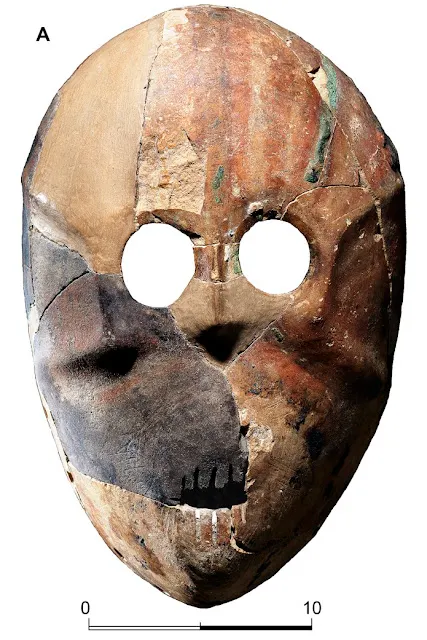
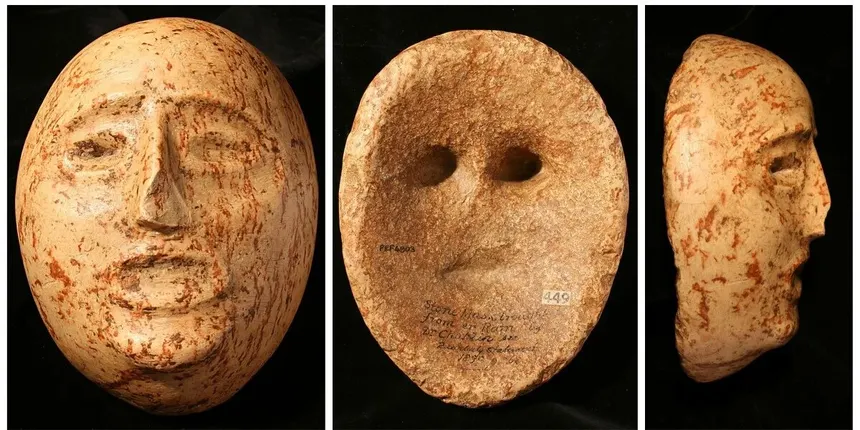
The mask was carved from limestone, a material abundant in the region. Craftsmen hollowed out eye sockets, a nasal ridge, and a mouth, giving it a hauntingly lifelike appearance.
Size and Features
-
Height: Approximately 9 inches (23 cm)
-
Eyes: Hollowed cavities, possibly once inlaid or painted
-
Mouth: A narrow slit, suggesting an enigmatic expression
-
Back: Perforations around the edges, possibly for straps or suspension
The drilled holes suggest it may have been worn on the face or displayed as part of ritual practices.
Symbolism and Purpose
Ritual and Ceremonial Use
Archaeologists believe the Nahal Hemar mask was not an ordinary object. Instead, it was likely used in rituals connected to ancestor worship, fertility, or funerary practices. Masks have long been symbolic mediators between the living and the spiritual world.
Ancestor Veneration
The mask may have been used to channel the spirits of ancestors during ceremonies, reflecting the Neolithic community’s reverence for lineage and continuity. This connects it to broader prehistoric traditions across the Near East, where skulls and masks were often displayed together.
The Oldest Tradition of Masks
The Nahal Hemar mask belongs to a small group of Neolithic stone masks found in the Judean Desert and surrounding regions, often referred to as the “stone mask tradition.” These artifacts highlight the early development of symbolic performance, identity, and ritual expression.
Cultural Context: Life in the Neolithic Near East
Settled Communities
By 7000 BCE, people in the Levant were building permanent villages, domesticating plants and animals, and creating more complex social structures. With stability came the need for rituals that reinforced community bonds.
Art and Symbolism
The creation of masks reflects a shift from purely utilitarian objects to those imbued with spiritual and social meaning. These artifacts indicate the rise of ritual specialists, possibly shamans or priests, who guided early communities in religious ceremonies.
Connection to the Dead Sea Region
The mask’s discovery near the Dead Sea adds another layer of symbolism. This area, rich in natural asphalt (hemar), held a unique status in antiquity, as people used the asphalt for construction, waterproofing, and even ritual mummification.
The environment of the Judean Desert, dry and isolated, provided the perfect conditions to preserve organic materials, allowing archaeologists to piece together a vivid picture of Neolithic ritual life.
Comparisons With Other Ancient Masks
Global Parallels
Although the Nahal Hemar mask is the oldest known example, many ancient cultures also created masks:
-
Africa: Wooden masks used in tribal ceremonies.
-
Mesoamerica: Stone and jade masks for rituals and burial practices.
-
Ancient Greece: Theatrical masks symbolizing gods and heroes.
These parallels suggest a universal human impulse to create ritual faces as tools for transformation, performance, and communication with the sacred.
Unique Aspects of the Nahal Hemar Mask
Unlike later masks, this example is prehistoric and stone-carved, placing it at the very dawn of symbolic cultural expression. Its preservation allows us to trace the earliest roots of a tradition that persists worldwide today.
The Mask in Modern Archaeology and Museums
Preservation and Study
Experts currently preserve the mask under controlled conditions to prevent deterioration. Advanced imaging technologies have revealed microscopic tool marks, confirming the sophistication of its Neolithic makers.
Public Display
The Israel Museum in Jerusalem displays the Nahal Hemar mask, where it remains one of the highlights of its prehistoric collection. Visitors often describe the experience as haunting—staring into the empty eyes of humanity’s earliest carved face.
Significance of the Oldest Mask in the World
Archaeological Importance
The mask bridges the gap between practical survival and symbolic expression, showing how early humans invested time and skill in objects that embodied spiritual meaning.
Cultural Legacy
As the oldest mask in the world, it represents the birth of performance, ritual, and identity in human society. From tribal dances to modern theater, the impulse to mask ourselves has roots stretching back to this artifact.
Human Connection
Standing before the Nahal Hemar mask, one feels a direct connection to people who lived 9,000 years ago—people who laughed, mourned, worshiped, and sought meaning just as we do today.
Fun Facts About the Nahal Hemar Mask
-
The mask predates the pyramids of Egypt by over 4,000 years.
-
Researchers have compared its eerie smile to those of later ritual masks found worldwide.
-
Perforations on the sides suggest people may have tied the mask to a human face or mounted it on a wall.
-
The cave where archaeologists found the mask also contained rare textile fragments, among the oldest ever discovered.
Conclusion: The Timeless Gaze of the Nahal Hemar Mask
The 9,000-year-old Nahal Hemar mask is more than an artifact—it is a window into the earliest expressions of human identity and spirituality. Carved from stone, worn or displayed in ritual, it embodies the mystery of our ancestors’ relationship with life, death, and the unseen world.
As the oldest mask in the world, it is a reminder that long before writing, architecture, or empires, humans were already shaping faces from stone—faces that could speak to gods, spirits, and communities.
Today, its hollow eyes still gaze out across millennia, inviting us to wonder, reflect, and recognize the deep continuity of human imagination.
ALSO READ: China’s Millennium Hanging Temple: An Architectural and Spiritual Marvel