Frozen in Time: The Remarkable Discovery of Nun cho ga, a 30,000-Year-Old Woolly Mammoth Calf
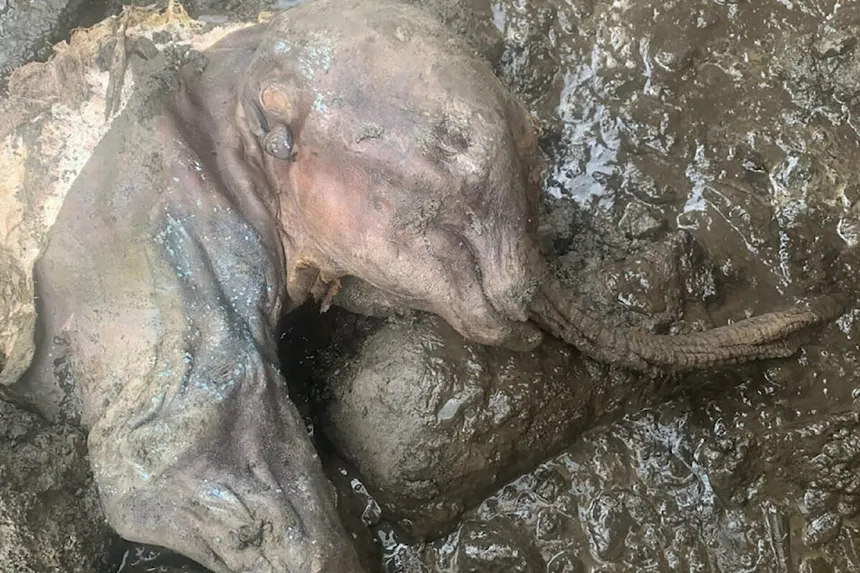
In June 2022, the vast and frozen landscapes of Yukon, Canada, witnessed a discovery that rivaled the allure of gold itself. A gold miner, working in the Klondike Gold Fields, uncovered something far more valuable than any precious metal — the remarkably preserved remains of a baby woolly mammoth. Estimated to be over 30,000 years old, the specimen was later named Nun cho ga, meaning “big baby animal” in the language of the Trʼondëk Hwëchʼin First Nation.
What sets this discovery apart is the calf’s extraordinary preservation. Unlike fragmented fossils often unearthed, Nun cho ga remains nearly intact, with skin, fur, trunk, ears, and even toenails still visible. This remarkable find provides not only a glimpse into the Pleistocene epoch but also an opportunity to connect with Indigenous heritage and the land’s ancient history.
The Moment of Discovery
The unearthing of Nun cho ga was entirely unexpected. As a miner’s equipment broke through layers of frozen permafrost in the Klondike Gold Fields, it revealed the mammoth calf. Workers immediately recognized its significance and halted operations to protect the specimen.
Paleontologists, geologists, and Indigenous representatives rushed to the site to ensure the proper preservation and respectful handling of the find. The sight of the tiny mammoth, curled as if still sleeping, struck awe among everyone present.
This was not merely a fossil — it was a time capsule from an era when giant creatures roamed the tundra.
Who Was Nun cho ga?
Scientists estimate that Nun cho ga was just one month old at the time of its death. Measuring about 140 centimeters long, the calf would have been comparable in size to a modern baby elephant.
Evidence suggests that the mammoth likely became trapped in mud or silt, where it quickly froze in the permafrost. This rapid burial and freezing prevented scavengers and decay, leaving the body almost entirely preserved for millennia.
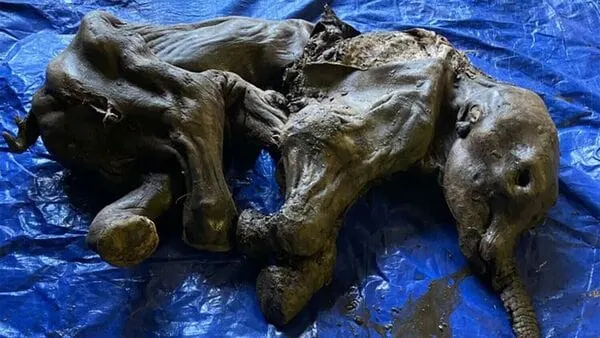
From the delicate wrinkles on her skin to her tiny trunk and fur, Nun cho ga offers scientists a pristine example of a woolly mammoth calf, rivaled only by discoveries in Siberia.
The Role of Permafrost: Nature’s Cryogenic Chamber
The preservation of Nun cho ga is thanks to the permafrost of Yukon’s Klondike region. Acting like a natural freezer, permafrost locks organic material in ice, slowing decomposition to a near halt.
This cryogenic environment kept Nun cho ga’s tissues intact for tens of thousands of years. Unlike skeletons or partial remains, soft tissues such as skin and fur open new doors for research, including:
-
DNA analysis, offering insights into mammoth genetics.
-
Stomach content studies, which may reveal Ice Age vegetation.
-
Growth patterns, helping scientists understand mammoth development.
The permafrost has essentially gifted humanity with a biological archive of a species long extinct.
Insights into the Pleistocene Epoch
The Pleistocene epoch, often referred to as the Ice Age, spanned from about 2.6 million to 11,700 years ago. It was a period when woolly mammoths, giant bison, saber-toothed cats, and other megafauna thrived.
Nun cho ga offers researchers a chance to reconstruct the ecosystem of Ice Age Yukon, revealing details about:
-
Climate conditions and how species adapted.
-
Mammoth herds and behaviors, based on age and biology.
-
Causes of extinction, which may help scientists understand modern species’ vulnerabilities.
Each discovery like Nun cho ga adds another piece to the puzzle of Earth’s prehistoric past.
Scientific Significance of Nun cho ga
The discovery is considered one of the most complete mammoth specimens ever found globally. Scientists now have the rare opportunity to study:
-
Comparative anatomy between mammoths and modern elephants.
-
Genomic sequences, which may shed light on de-extinction possibilities.
-
Microbial life within the specimen, preserved in permafrost.
This makes Nun cho ga not only a paleontological treasure but also a cornerstone for future evolutionary and climate research.
A Cultural Treasure for the Trʼondëk Hwëchʼin First Nation
Beyond its scientific importance, Nun cho ga carries deep cultural significance. The discovery occurred in the ancestral territory of the Trʼondëk Hwëchʼin First Nation, whose people named the mammoth calf.
This collaboration between Indigenous communities and scientists has set a new standard for archaeological partnerships, ensuring discoveries are treated with both scientific rigor and cultural respect.
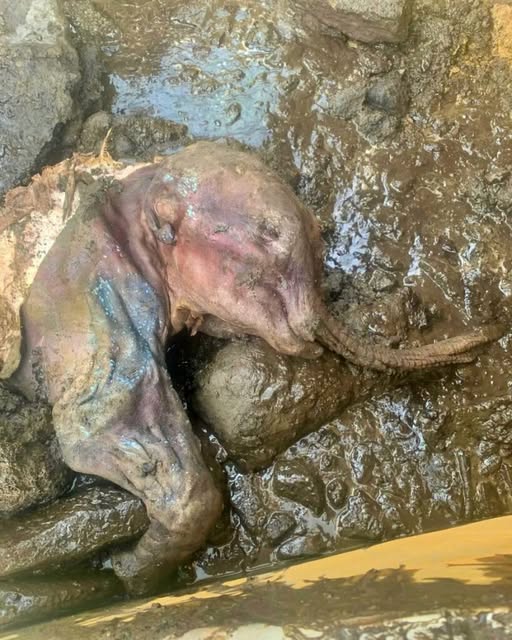
For the Trʼondëk Hwëchʼin, Nun cho ga is not only an ancient creature but also a symbol of ancestral connection to the land and oral traditions that speak of Ice Age animals.
Nun cho ga and Other Famous Mammoth Discoveries
While Siberia has yielded several frozen mammoths, including Lyuba, another well-preserved baby, Nun cho ga is unique as the first near-complete specimen found in North America.
This positions Yukon as a vital region for Ice Age paleontology and places Canada on the global map of prehistoric discoveries. Together, these finds continue to reshape our understanding of mammoth life and extinction.
What Nun cho ga Teaches Us Today
The story of Nun cho ga is more than a tale of prehistoric life — it also offers lessons for today:
-
Climate Change Awareness: As permafrost melts due to global warming, more specimens may emerge, but ecosystems also face unpredictable consequences.
-
Cultural Respect: Collaboration between Indigenous peoples and scientists highlights the importance of integrating traditional knowledge with modern science.
-
Human Connection to the Past: Discoveries like Nun cho ga remind us of our shared history with the natural world and the fragile balance of life.
Conclusion: A Legacy Frozen in Ice
The discovery of Nun cho ga, the 30,000-year-old woolly mammoth calf, is nothing short of extraordinary. Preserved in Yukon’s permafrost, the calf bridges the distant Pleistocene epoch with the present day. It offers scientists invaluable insights into prehistoric ecosystems while serving as a cultural treasure for the Trʼondëk Hwëchʼin First Nation.
Nun cho ga is more than an ancient animal frozen in time — it is a symbol of unity between science and tradition, a reminder of Earth’s ever-changing landscapes, and a gift from the past that continues to shape our understanding of life on this planet.
ALSO READ: The Emerald Tablet: Mystical Origins and the Secrets of the Universe