Sue II: The Mummified Tyrannosaurus Rex That Changed Paleontology Forever
A Revolutionary Find in the Montana Badlands
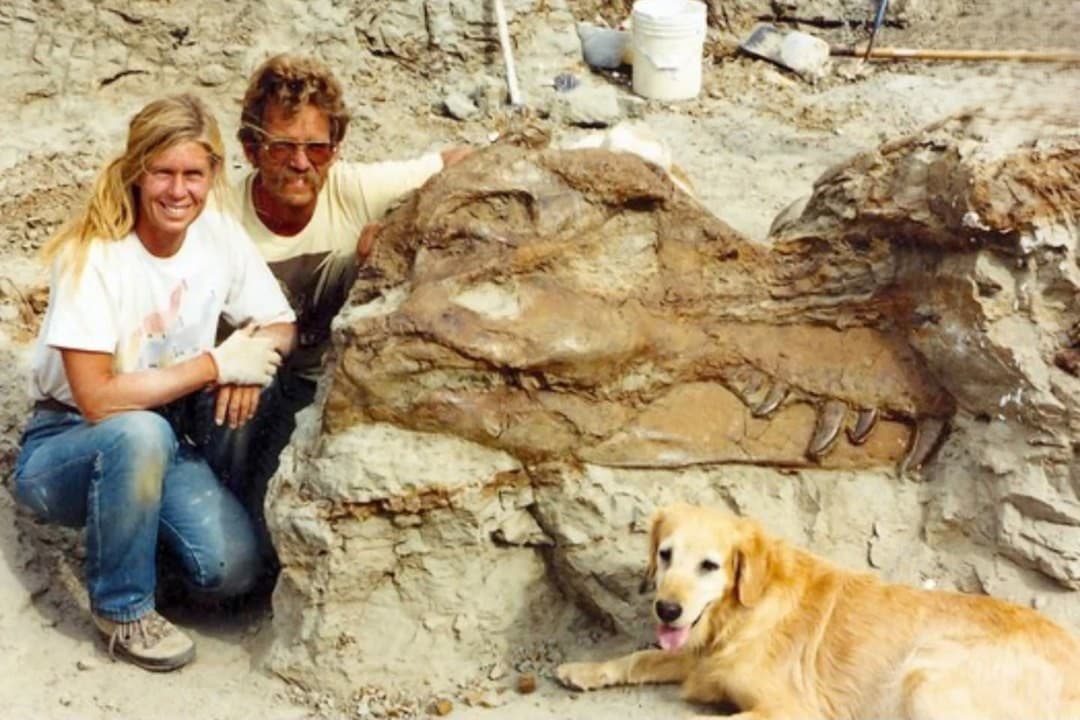
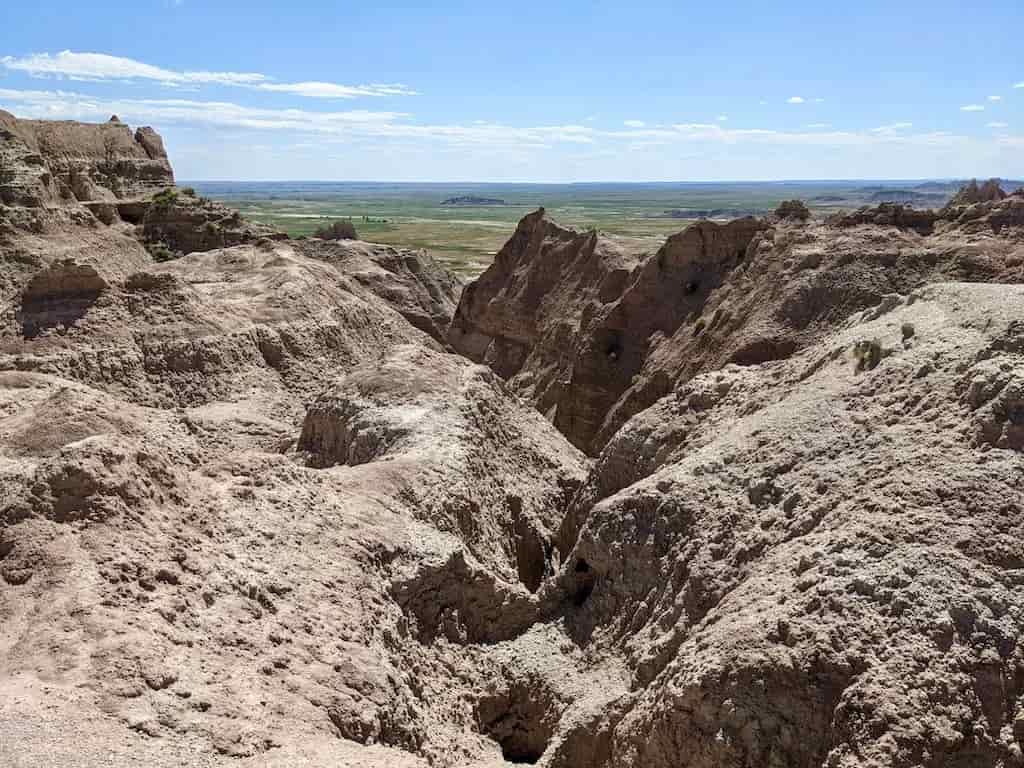
In an astonishing turn of events, a rockslide deep within the Montana Badlands has uncovered one of the most extraordinary paleontological discoveries in history — the mummified remains of a nearly complete Tyrannosaurus rex, now named Sue II. This beautifully preserved specimen is not just another fossil find; it may completely redefine how scientists understand what the mighty predator truly looked like, how it lived, and even how it saw the world.
Unlike traditional fossils that preserve only hardened bone, Sue II was discovered with fossilized skin, muscle fibers, and even impressions of internal organs. Such preservation is exceedingly rare, offering a once-in-a-lifetime opportunity for paleontologists to explore the biology of the most iconic predator of the Cretaceous.
The Miracle of Mummification
How could soft tissue from a 67-million-year-old animal survive the ravages of time? Scientists believe that Sue II’s extraordinary preservation may have occurred due to an incredible set of environmental coincidences. Rapid burial from the rockslide likely sealed the body from oxygen and scavengers, while the unique mineral composition of the Badlands’ sediment created conditions ideal for natural mummification.
Over millions of years, minerals gradually replaced organic molecules, stabilizing soft tissues before decay could destroy them. The result is not a dry mummy in the modern sense but a fossilized replica of the original anatomy — a three-dimensional blueprint of life from the Cretaceous period.
The Skin and Tissue That Defied Time
Preliminary imaging and microanalysis have revealed patches of fossilized skin covering much of the torso and tail. These preserved areas display scale patterns that vary across the body, suggesting that T. rex may have had region-specific textures suited to flexibility or armor-like protection.
Chemical traces within the skin hint at pigment residues, potentially unlocking secrets about T. rex coloration. While earlier reconstructions often portrayed this predator in dull earth tones, evidence from Sue II may show a more dynamic palette — perhaps mottled patterns ideal for camouflage in dense forests or river valleys.
Even more incredible are the remnants of muscle tissue. Fiber alignment and density give researchers new data points to calculate strength, speed, and agility. Early comparisons with modern animals suggest that the T. rex’s leg muscles were even more powerful than prior biomechanical models predicted, reinforcing its reputation as an apex hunter.
The Eyes of a Predator Reborn
Among Sue II’s most remarkable features are the partially preserved eye structures. Although soft eye tissue rarely fossilizes, mineralization captured the delicate details of the lens and retinal layers in one socket.
Using advanced imaging techniques, scientists can now reconstruct how the T. rex saw its environment. Its forward-facing eyes and wide field of binocular overlap indicate exceptional depth perception — a critical advantage when tracking or ambushing prey.
Chemical analysis of preserved pigments and retinal impressions may also reveal light-sensitivity adaptations, showing whether this hunter thrived under bright daylight, dense forest shade, or even twilight. If these findings hold true, paleontologists may soon describe, for the first time, not only how T. rex looked but how it visually experienced its prehistoric world.
Unlocking the Secrets of T. rex Biology
The nearly complete nature of Sue II gives scientists an unprecedented chance to revisit long-held theories about T. rex physiology. With preserved soft tissues, researchers can explore critical questions that bone fossils alone cannot answer:
-
Metabolism: Was T. rex warm-blooded like modern birds or cold-blooded like reptiles? Soft tissue structures could contain clues about blood vessel density and energy regulation.
-
Growth and Muscle Function: The preserved muscles may refine understanding of how T. rex grew and how much energy it consumed.
-
Motion and Speed: Detailed muscle fiber mapping could help biologists calculate exact walking and running speeds, finally settling debates about whether this giant truly ran or simply power-walked after prey.
-
Color and Camouflage: Traces of pigment molecules may uncover the true coloration of T. rex for the first time, reshaping how it is depicted in both scientific models and popular media.
How Sue II Changes the Paleontological Landscape
Few discoveries in the history of paleontology have combined such completeness with soft-tissue preservation. Sue II is being compared to the famous “Dakota” Edmontosaurus mummy and, of course, to the original Sue — the most complete T. rex skeleton ever found. Yet Sue II far surpasses these earlier finds in terms of biological detail.
This discovery has also sparked renewed debate about fossilization processes. Some scientists propose that lightning, mineral-rich groundwater, or specific geochemical conditions within the Badlands contributed to Sue II’s preservation. Others suggest the possibility of microbial activity that replaced organic molecules before decomposition set in.
Whatever the mechanism, Sue II provides direct, tangible evidence that fossilization can preserve not only form but also function — offering a vivid snapshot of ancient life that transcends the typical bone record.
The Future of Paleontological Research
The research team studying Sue II is employing a suite of cutting-edge tools:
-
Synchrotron scans are revealing tissue densities down to the cellular level.
-
Infrared spectroscopy is mapping organic remnants, helping identify residual proteins and pigment compounds.
-
3D digital modeling allows scientists to reconstruct Sue II’s anatomy virtually, permitting non-destructive exploration of internal structures.
This interdisciplinary approach blends paleontology, chemistry, and computational modeling, setting a new standard for how future fossil studies will be conducted.
A Glimpse Into a Lost World
For the public, Sue II is more than a scientific marvel — it’s a time capsule from the end of the dinosaur age. Its near-complete preservation invites viewers to look beyond bones and imagine the creature as it truly lived: muscle rippling, skin glistening, and eyes focused with deadly precision.

When fully studied and displayed, Sue II may forever change our image of the Tyrannosaurus rex. No longer just a skeleton of stone, it reemerges as a vibrant, complex organism that once ruled the Earth’s primeval landscapes.
The Legacy of Sue II
Sue II’s discovery reminds us that even after centuries of exploration, the Earth still holds profound secrets buried beneath its surface. Each new fossil find adds a piece to the great evolutionary puzzle, but rare specimens like this rewrite entire chapters of life’s story.
As researchers continue to uncover Sue II’s mysteries, one truth stands out: the mighty Tyrannosaurus rex, long a symbol of raw power and ancient dominance, still has more to teach us — not as a legend of extinction, but as a living presence captured forever in stone.