Beauty in the Bronze Age: Minoan and Mycenaean Fashion
Fashioning Beauty in Bronze Age Greece
In Bronze Age Greece (c. 3100 BCE – c. 1100 BCE), fashion was more than just clothing—it was a statement of identity, gender roles, and ideals of beauty that would ripple into later Greek and even modern aesthetics. The Minoans of Crete and the Mycenaeans of mainland Greece cultivated distinct but interconnected cultures, both leaving behind rich evidence of how they dressed, styled themselves, and adorned their bodies.
From frescoes, figurines, and burial finds, we see a vibrant society where men and women used dress, jewelry, and hairstyles to express power, femininity, masculinity, and status. Minoan and Mycenaean fashion not only reflected cultural values but also highlighted the interplay between art, beauty, and identity in the ancient Aegean.
Minoan Women: The Wasp-Waisted Ideal
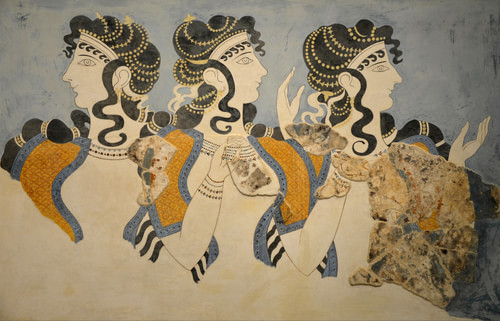
Among the Minoans of Crete, female beauty revolved around the slender, pinched waist, so much so that archaeologists believe women may have used corsets or tight belts to achieve this figure. This hourglass shape is evident in artifacts like the famous Snake Goddess figurines and in frescoes from Knossos and Akrotiri.
Key Features of Minoan Women’s Fashion
-
Flounced skirts: Tiered, full skirts that reached the ground, often decorated with bold patterns.
-
Open bodices: With short sleeves and plunging necklines that accentuated the breasts—symbols of fertility and beauty.
-
Vibrant fabrics: Dyed using natural resources—saffron for yellow, and the highly prized murex snail for deep purple.
-
Jewelry: Gold, beads, hoop earrings, necklaces, and bangles added sparkle and status to every outfit.
-
Hair & complexion: Long black tendrils or braids framed pale complexions, suggesting that beauty was linked to a domestic, indoor lifestyle.
The visual emphasis on pale skin contrasted with men’s darker tones, underscoring gender roles: women indoors, men outdoors.
Mycenaean Women: From Minoan Splendor to Mainland Conservatism
The Mycenaeans, rising to dominance after 1450 BCE, absorbed much of Minoan culture but introduced a more conservative aesthetic.
Mycenaean Women’s Dress
-
Silhouettes: Like the Minoans, they wore layered skirts and fitted waists, though some depictions show simpler tunics tied with belts.
-
Outerwear: Shawls and cloaks were common, offering more coverage than the revealing Minoan bodices.
-
Accessories: Elaborate hairstyles secured with ivory hairpins and the distinctive polos crown, a cylindrical headdress worn by women of high status, including goddesses.
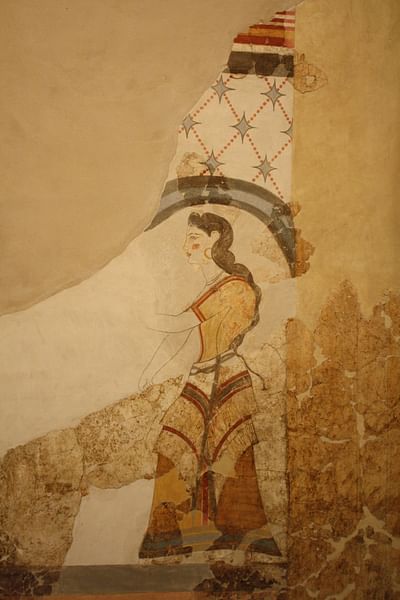
The Mycenaean look reflects a society more focused on warfare, hierarchy, and conservative order, in contrast to the flamboyance of Minoan Crete.
Minoan Men: Athletic, Decorative, and Proud
Minoan men, like their female counterparts, celebrated the body through fashion. Clothing was minimal, revealing muscular physiques honed by sports like bull-leaping, boxing, and hunting.
Key Elements of Minoan Men’s Fashion
-
Bare torsos: Men were often depicted shirtless, wearing only loincloths, kilts, or breechcloths.
-
Codpieces: Decorative elements that emphasized masculinity.
-
Bright textiles: Clothing was multicolored, often with blues, yellows, and whites.
-
Feathered hats: Vibrant plumes decorated ceremonial headdresses.
-
Jewelry: Necklaces, bracelets, and bicep bands were common. Gold signet rings doubled as both jewelry and personal seals.
Minoan men maintained a clean-shaven look, using obsidian razors found in graves. Hairstyles often featured several long locks against otherwise short hair.
Skin Tone and Masculinity
Frescoes show men with reddish-brown skin, a deliberate contrast with pale-skinned women. This ideal reflected men’s active, outdoor lifestyle. Exceptions exist—like the Priest-King Fresco, where a figure appears lighter, perhaps symbolizing elite status and less labor-intensive life.
Mycenaean Men: Warriors First
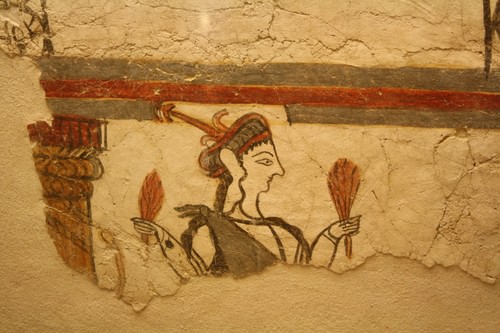
The Mycenaeans were more martial than the Minoans, and their fashion emphasized warrior identity. While fewer frescoes of men survive, evidence suggests:
-
Tunic-based clothing: More practical garments, often belted, suitable for movement and battle readiness.
-
Armor and helmets: Leather armor, boar-tusk helmets, and bronze gear reinforced their militaristic culture.
-
Conservative styles: Less flamboyant than Minoan men, aligning with Mycenaean priorities of discipline and hierarchy.
Where Minoan men expressed beauty and leisure, Mycenaean men expressed strength and dominance.
Fashion as a Reflection of Society
The stark differences between Minoan and Mycenaean fashion reveal much about their respective civilizations:
-
Minoan Crete: A culture of display, fertility, and flamboyance. Fashion was a celebration of life, color, and sensuality.
-
Mycenaean Greece: A society of warfare, hierarchy, and discipline. Fashion was practical, symbolic of power, and often more modest.
Both, however, emphasized idealized bodies—whether through pinched waists for women or muscular torsos for men—showing that beauty and physical form were deeply tied to cultural values.
Beauty Ideals and Lasting Influence
The Minoans and Mycenaeans planted seeds of beauty standards that persisted into Classical Greece and beyond. The concepts of:
-
Contrasting gender ideals (pale indoor women vs. tanned outdoor men),
-
Jewelry as status markers,
-
Elaborate hairstyles,
-
Athletic bodies as ideals of masculinity,
… all influenced later Greek art and, by extension, modern Western ideals of beauty.
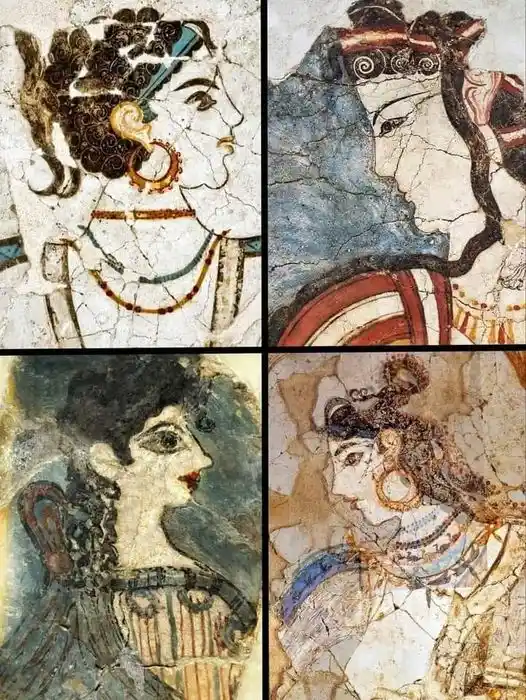
The use of corsetry, bright fabrics, and accessories shows a Bronze Age sophistication that rivals later European fashion traditions.
Conclusion: Fashioning Identity in the Bronze Age
The fashion of Minoan and Mycenaean civilizations was far more than mere clothing. It was a visual language of beauty, gender, status, and cultural values.
-
Minoan women perfected the wasp-waist silhouette, colorful fabrics, and bold jewelry.
-
Mycenaean women embraced a more conservative look but retained elegance through crowns, cloaks, and intricate hairstyles.
-
Minoan men celebrated athleticism and splendor through minimal dress and accessories.
-
Mycenaean men embodied their warlike identity with practical clothing and martial gear.
Together, they painted a picture of a Bronze Age world where fashion was identity—a medium through which both men and women declared who they were and what their society valued.