Forged from the Stars: The 2,700-Year-Old Meteoritic Iron Bracelet Unearthed in Poland
A Celestial Treasure Beneath Polish Soil
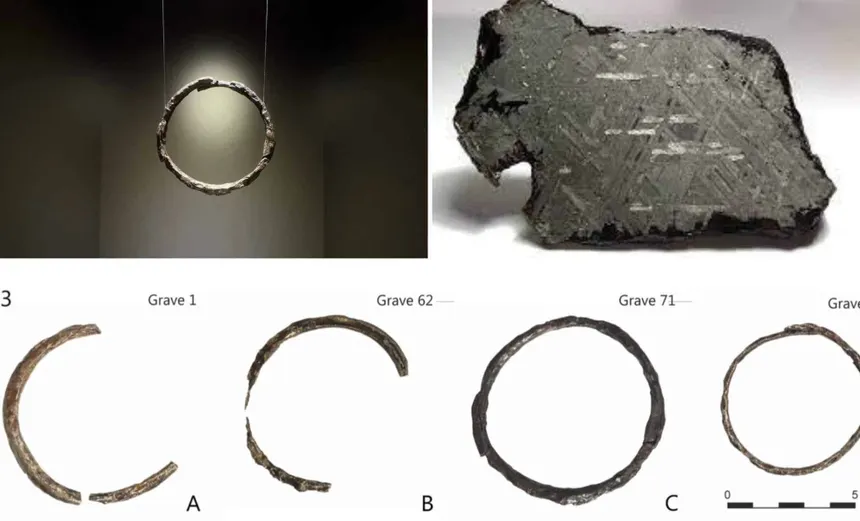
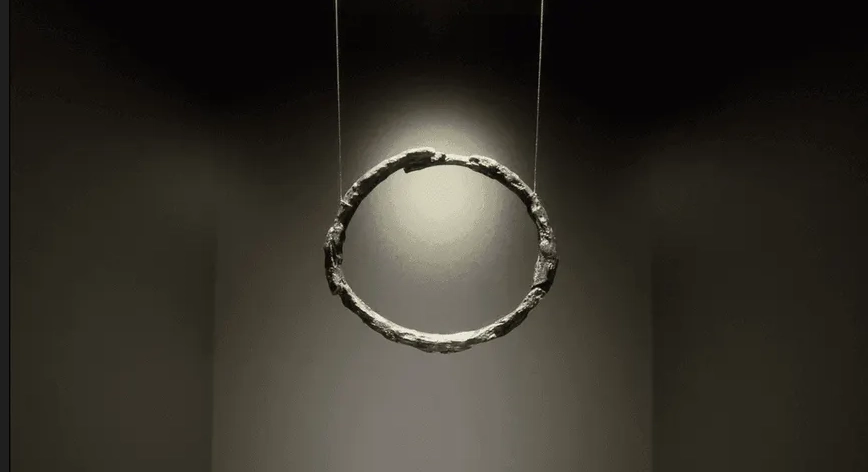
In the quiet fields near Częstochowa, Poland, archaeologists have uncovered something truly extraordinary — a 2,700-year-old Iron Age bracelet crafted from meteoritic iron. This remarkable artifact, forged from metal that originated in outer space, offers an unprecedented glimpse into the ingenuity, spirituality, and craftsmanship of early European cultures.
What makes the discovery even more remarkable is not just its age or origin, but the fact that ancient metalworkers were able to forge meteoritic iron — one of the toughest materials known to humanity — into an object of beauty and meaning. Through advanced scientific testing, researchers identified high levels of nickel, a hallmark of meteoritic metal, confirming its extraterrestrial source.
This bracelet is far more than an archaeological curiosity. It’s a symbol of cosmic connection, showing that Iron Age people in Poland saw meteorites not as random celestial debris, but as gifts from the heavens, worthy of reverence and transformation into sacred adornments.
1. The Discovery: Unearthing a Celestial Relic
The discovery site, located near Częstochowa, one of Poland’s most historically rich regions, yielded several Iron Age burial sites containing metal and ceramic artifacts. Among these finds, one object stood out — a small, elegantly curved bracelet unlike any other.
Initial visual inspection revealed unusual metallic properties, prompting further laboratory analysis. Scientists soon confirmed the object’s meteoritic origin, citing its high nickel and cobalt content — a chemical signature typical of iron meteorites.
Such findings are exceptionally rare in Europe, and this particular artifact now stands among the oldest examples of meteoritic iron use on the continent.
2. Forged from the Cosmos: The Science Behind Meteoritic Iron
Meteoritic iron comes from iron-nickel meteorites, fragments of ancient asteroids that formed billions of years ago in the cold reaches of space. When these celestial bodies crash into Earth, they occasionally leave behind chunks of dense, metallic material that early humans sometimes collected and shaped into tools or ornaments.
Working meteoritic iron, however, is an incredibly difficult task. The material is extremely hard and brittle, requiring advanced forging techniques to shape without breaking. Unlike terrestrial ores, which can be smelted and purified, meteoritic metal must be heated, hammered, and refined manually — a process that would have required both skill and patience.
The bracelet’s very existence thus proves that Iron Age metallurgists in Poland possessed a level of technical expertise far greater than previously believed. Their knowledge of temperature control, hammering methods, and alloy manipulation was sophisticated enough to transform a piece of cosmic iron into a refined artifact — an achievement that connects them to some of the world’s earliest metallurgical innovators.
3. Craftsmanship and Symbolism: A Glimpse into Iron Age Spirituality
Beyond its material composition, the meteoritic bracelet carries profound symbolic weight. Across ancient cultures, celestial phenomena were often interpreted as divine or supernatural. Meteorites, falling from the heavens in fiery displays, were likely regarded as sacred gifts from the gods or ancestors.
To fashion such a rare material into jewelry was an act rich in spiritual meaning. The bracelet may have served as:
-
A status symbol, worn by an elite member of the community.
-
A ritual object, representing a connection between earth and sky.
-
Or even a protective talisman, imbued with the perceived power of the stars.
The choice to craft a bracelet — a circular form symbolizing eternity and unity — from a fragment of the cosmos is deeply poetic. It suggests that the Iron Age people of Poland understood the interconnectedness of the natural and cosmic worlds, and expressed this understanding through their material culture.
4. The Challenge of Working with Star Metal
Modern metallurgists recognize meteoritic iron as a challenging substance to shape, even with today’s tools. The fact that artisans over 2,000 years ago managed to hammer, polish, and mold such material into wearable art speaks to their extraordinary skill.
The process would have involved:
-
Heating the iron-nickel alloy to soften it for shaping.
-
Hammering and folding the metal repeatedly to refine its texture.
-
Polishing to achieve a smooth, reflective surface.
Every step required precision — overheating could ruin the metal’s crystalline structure, while excessive force could cause it to fracture. The bracelet thus reflects a delicate balance between science and art, long before those terms existed in their modern sense.
5. A Global Context: From Poland to Egypt
The Częstochowa bracelet joins a select group of artifacts worldwide that were forged from meteorites. The most famous of these is the dagger found in the tomb of Pharaoh Tutankhamun, also crafted from meteoritic iron.
Like the Egyptian relic, the Polish bracelet shows that ancient civilizations around the world shared a fascination with celestial materials. Whether in Europe, the Middle East, or Asia, people viewed meteorites as bridges between heaven and earth, and worked them into symbols of divine power or royal prestige.
This discovery places Iron Age Poland within that broader global narrative — a testament to how even distant cultures were united by a common cosmic imagination.
6. Redefining Iron Age Europe
Until recently, scholars believed that advanced metalworking in early Europe was limited to bronze and simple iron. The meteoritic bracelet challenges this assumption, revealing that Iron Age communities in Central Europe were experimenting with exotic materials and mastering complex techniques.
This discovery encourages a re-evaluation of early European metallurgy. It suggests that technological innovation was more widespread than previously thought and that ancient craftsmen were not isolated but part of a shared, evolving human curiosity about the natural world.
7. Preservation and Research: Protecting a Cosmic Legacy
The Polish Academy of Sciences has taken the lead in studying and preserving the meteoritic bracelet. Using advanced spectrometry and metallographic analysis, researchers aim to determine the exact type of meteorite and reconstruct the techniques used to forge it.
Plans are underway to display the artifact in a national museum, where it will join other significant Iron Age finds. For both scientists and the public. The bracelet stands as a tangible link between Earth and the cosmos. A relic that transcends time and geography.
8. A Glimpse into Humanity’s Relationship with the Stars
Throughout history, humans have looked to the heavens for guidance, inspiration, and meaning. The Częstochowa bracelet reminds us that this fascination with the cosmos is not new. It is an ancient impulse woven into our cultural DNA.
The artisans who crafted this piece likely saw themselves as participants in a cosmic drama. Transforming fragments of the universe into symbols of life, death, and eternity. Their work bridges the gap between science, spirituality, and art. Reminding us that humanity’s dialogue with the stars began long before telescopes and space travel.
Conclusion: The Bracelet That Fell from Heaven
The 2,700-year-old meteoritic iron bracelet from Częstochowa is far more than an archaeological treasure. It’s a story of human ingenuity, belief, and our eternal connection to the cosmos. Forged from the remnants of a star, shaped by ancient hands, and rediscovered in modern times. It stands as a monument to creativity and wonder.
Just as meteorites once fell from the skies to Earth, this artifact now bridges two worlds. The heavenly and the human, reminding us that even in the Iron Age. Our ancestors looked upward and saw possibility in the stars.
ALSO READ: