The Cloaks of Power: Maya Textiles and Jaguar Pelts in Ancient Mesoamerica
Clothing as a Marker of Identity
For the ancient Maya civilization, which flourished across present-day Mexico, Guatemala, Belize, Honduras, and El Salvador, clothing was far more than a matter of comfort or aesthetics — it was a statement of identity, rank, and cosmic meaning. Among their garments, cloaks and capes stood out as symbols of prestige and authority.
While most Maya men and women wore woven, dyed textiles crafted from cotton or agave fibers, the elite adorned themselves in luxurious cloaks made of jaguar pelts, feathers, or finely embroidered fabrics. These distinctive garments reflected not only wealth and artistry but also spiritual power and divine association.
Archaeological findings, murals, and codices reveal that clothing among the Maya was deeply encoded with symbolism, serving as a visual language that communicated lineage, political influence, and connection to the gods.
Weaving the Fabric of Civilization
The Art of Maya Weaving
Weaving was among the most respected crafts in Maya society. Women, often from childhood, were trained in the intricate art of textile production. Using backstrap looms, they created cloths of exceptional detail and beauty.
Maya textiles were typically made from cotton (ixchel) and agave fibers, dyed with vibrant natural pigments derived from plants, minerals, and insects. Indigo, cochineal red, and yellow from tree bark created striking combinations that represented cosmic forces — sky, blood, and earth.
Color and Symbolism in Maya Textiles
Each color carried profound meaning:
-
Red symbolized life, blood, and the rising sun.
-
Blue-green represented water, jade, and the sacred realm of the gods.
-
White signified purity and death.
-
Black marked the underworld and the mysteries of night.
Weavers incorporated geometric patterns, deity symbols, and family emblems into their designs, transforming clothing into an expression of identity and spiritual belief.
Cloaks of Status: Everyday Garments and Ceremonial Dress
Textile Cloaks and Capes
For most Maya people, clothing consisted of simple woven garments such as the manta (rectangular cloak), huipil (blouse), or patí (loincloth). However, members of the nobility wore embroidered and dyed capes, draped elegantly over their shoulders.
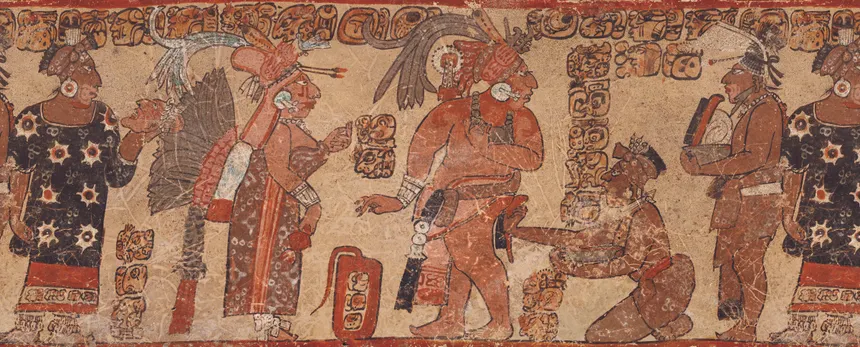
Elite men, especially rulers and priests, were often depicted in murals and stelae wearing richly patterned cloaks during ceremonies or diplomatic events. These garments not only provided warmth but also displayed social hierarchy and artistic refinement.
Ceremonial Uses and Ritual Dress
During religious rituals, Maya kings and priests donned elaborate capes decorated with jade beads, shell ornaments, or quetzal feathers. The act of wearing such garments symbolized transformation into divine beings, bridging the human and supernatural worlds.
Capes were often associated with deities such as Itzamna (the creator god) or Chaac (the rain god), suggesting that ceremonial dress mirrored divine attire.
Jaguar Pelts: Symbols of Royal Power
The Jaguar in Maya Cosmology
Among all animals, the jaguar held a position of supreme power in Maya belief. Known as balam in the Mayan languages, it symbolized strength, fertility, and the ability to traverse worlds — from the earthly jungle to the spiritual underworld.
To the Maya, the jaguar embodied royal authority and divine transformation. Kings and warriors who wore jaguar pelts were believed to channel the animal’s energy and ferocity, becoming earthly embodiments of cosmic power.
Cloaks of the Elite and the Divine
While commoners wore cloaks of woven cotton, the elite and royal classes reserved jaguar-skin capes for themselves. These garments were status symbols of kingship and spiritual mastery.
Murals from sites such as Bonampak and Yaxchilan depict rulers draped in jaguar pelts during rituals and warfare. The combination of jaguar skins and headdresses adorned with quetzal feathers emphasized their dual nature — human rulers who could assume divine forms.
The use of jaguar skins also connected rulers to Sun God mythology, where the sun’s nightly journey through the underworld was represented by a jaguar, reinforcing the idea of rebirth and cosmic renewal.
Craftsmanship and Material Rarity
From Jungle to Court
Obtaining a jaguar pelt was not a simple feat. Jaguars were apex predators found deep in the tropical forests of Mesoamerica. Their pelts were rare and valuable, requiring both bravery and skill to acquire.
Once obtained, artisans carefully prepared the hides, softening and shaping them to be worn as cloaks, capes, or throne coverings. Only the most skilled craftspeople in royal workshops could fashion such garments, often embellishing them with jade, obsidian, or shell inlays.
Textile-Metal Combinations
Some high-status Maya garments combined woven textiles and animal pelts, blending practicality with grandeur. These hybrid cloaks demonstrated not only wealth but also the integration of human craftsmanship and natural symbolism, central to Maya philosophy.
Clothing as Political and Spiritual Communication
Power, Authority, and Identity
In Maya society, clothing communicated rank and allegiance. Elite families distinguished themselves through dress codes that reflected lineage and political alliances. Cloaks were thus not just personal attire but tools of diplomacy and propaganda.
When rulers appeared before their people wearing jaguar pelts and jeweled capes, they projected divine legitimacy — a visual assurance of their mandate from the gods.
Ritual Transformation and the Sacred Self
Cloaks also played a key role in ritual performance. During public ceremonies, rulers would don symbolic garments to embody deities or ancestors, transforming their appearance and essence. The donning of the cloak marked the threshold between human and divine identity, reinforcing the cyclical relationship between gods, kings, and the cosmos.
Archaeological Evidence and Artistic Depictions
Murals, Stelae, and Codices
While few textiles survive in the humid Mesoamerican climate, artistic depictions provide a vivid record of Maya clothing. Murals from Bonampak, Tikal, and Palenque, as well as the Dresden Codex, illustrate nobles and priests in richly adorned cloaks.
Some tombs, such as those in Copán and Calakmul, contain jade beads, shell ornaments, and textile imprints — traces of garments that once clothed the dead. These finds confirm the existence of both woven and animal-skin cloaks among elite burials.
Experimental Reconstruction
Modern researchers and indigenous artisans have collaborated to recreate ancient Maya weaving techniques using traditional looms and natural dyes. These projects shed light on the technical mastery and symbolic complexity of Maya textile production, affirming the cultural continuity of weaving traditions that survive among contemporary Maya communities.
Legacy and Continuity
Maya Weaving Today
The art of weaving remains a living tradition in Maya-descendant communities across Guatemala and southern Mexico. Today’s weavers still use the backstrap loom, passing patterns and techniques from generation to generation.
Though materials have evolved, the symbolic language of colors and motifs continues to express identity, heritage, and spirituality — a testament to the endurance of ancient artistry.

Cultural Revival and Heritage Preservation
Museums and cultural organizations are now working with indigenous weavers to preserve traditional designs and document historical textile knowledge. These efforts ensure that the legacy of Maya cloaks and capes — from humble cotton mantas to regal jaguar pelts — remains alive in both scholarship and practice.
Conclusion: Threads of Power and Spirit
The cloaks and capes of the ancient Maya were more than garments; they were statements of power, belief, and identity. Whether woven from cotton or fashioned from the skin of the jaguar, these cloaks connected their wearers to both earthly authority and divine realms.
Through color, texture, and symbolism, the Maya expressed a worldview in which art, nature, and spirituality were inseparable. Every thread told a story — of craftsmanship, courage, and cosmic order — woven into the living fabric of one of the world’s greatest ancient civilizations.
ALSO READ: 1,900-Year-Old Roman Gold Ring with Holographic Image Found in Tomb of Aebutia Quarta