A Leaf from a Lost World: The Fossil Fern That Fueled an Age
A Window into the Carboniferous World
Long before the rise of dinosaurs, flowers, or mammals, Earth was a planet of green giants. Around 300 million years ago, during the Carboniferous Period, vast swampy forests blanketed much of the world. These landscapes were dominated not by flowering plants, but by towering lycopsids, horsetails, and the magnificent seed ferns — among them, the striking Macroneuropteris scheuchzeri.
The discovery of this fossilized fern-like leaf is more than a glimpse into an ancient ecosystem — it is a direct connection to the very origins of modern energy. The plants that once grew in these humid, low-oxygen swamps eventually became the coal deposits that powered the Industrial Revolution and continue to influence global industries today.
In essence, every lump of coal carries within it the sunlight captured by these lush forests hundreds of millions of years ago — a true legacy of deep time.
Meet Macroneuropteris scheuchzeri: The Seed Fern that Shaped an Era
Despite its fern-like appearance, Macroneuropteris scheuchzeri was not a true fern. It belonged to an extinct group of plants known as pteridosperms, or seed ferns — an evolutionary bridge between ancient spore-bearing ferns and the seed plants that would later dominate the planet.
Key Features of Macroneuropteris scheuchzeri:
-
Type: Seed fern (Pteridosperm)
-
Period: Late Carboniferous (around 323–299 million years ago)
-
Habitat: Warm, swampy lowlands and coal-forming forests
-
Distinctive Traits:
-
Large, tongue-shaped leaflets (pinnae)
-
Net-like (reticulate) vein patterns
-
Thick cuticle and visible midrib
-
Glossy leaf surface that helped resist decay
-
These broad, elegant leaves could grow more than 30 centimeters (1 foot) long and were attached to woody stems that formed part of the forest canopy. Their intricate venation patterns made them both efficient at photosynthesis and stunningly beautiful — a combination that explains why Macroneuropteris remains one of the most recognizable fossil plants in paleobotany.
The Carboniferous Forests: Cradle of Coal
The Carboniferous Period, named for its abundant coal beds, was a time of unparalleled plant growth. Vast forests thrived in tropical climates, their roots anchoring in wetlands and shallow swamps where oxygen levels were low.
When these plants died, they didn’t fully decay. Instead, layers of plant matter accumulated in waterlogged sediments, forming thick mats of peat. Over millions of years, geological pressure, heat, and time transformed these layers into coal — a process known as coalification.
Stages of Coal Formation:
-
Accumulation of Plant Material – Dead vegetation settles in swampy environments.
-
Peat Formation – Plant debris compresses into dense, spongy peat layers.
-
Lignite Formation – Burial under sediment increases temperature and pressure.
-
Bituminous and Anthracite Coal – Further heat and compression transform lignite into hard, carbon-rich coal.
It is astonishing to realize that the energy powering 19th-century steam engines — and, by extension, much of the modern industrial world — began as sunlight captured by plants like Macroneuropteris scheuchzeri over 300 million years ago.
Seed Ferns: The Missing Link in Plant Evolution
Seed ferns such as Macroneuropteris hold a crucial place in plant evolution. Unlike true ferns, which reproduce through spores, seed ferns produced seeds enclosed in protective coverings, marking an evolutionary leap toward the reproductive strategies of modern gymnosperms and angiosperms (flowering plants).
Their seeds, found attached to fern-like fronds, indicate that Macroneuropteris and its relatives were transitional species — blending fern-like structure with seed-based reproduction.
This adaptation allowed seed ferns to colonize drier environments and gain evolutionary resilience, paving the way for the spread of forests across the globe.
A Fossil of Beauty and Significance
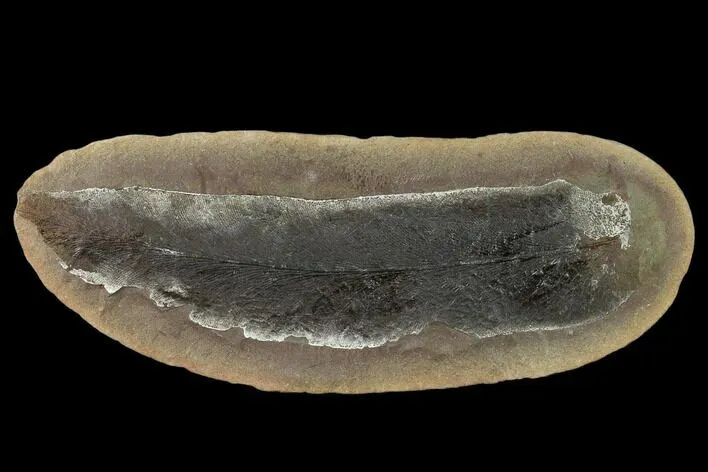
A fossil of Macroneuropteris scheuchzeri is not merely a remnant of an extinct plant — it’s a snapshot of an entire ecosystem frozen in stone.
When these leaves were buried in fine sediments, they left behind delicate impressions, sometimes even retaining carbonized film or cuticle structures. These fossils reveal not just the outline of the leaf but the very vein networks that once transported water and nutrients through its tissues.
Under a microscope, paleobotanists can study:
-
Stomata density, to infer ancient CO₂ levels
-
Cuticle texture, to understand climate conditions
-
Preserved spores and seeds, offering clues to reproduction
Every detail captured in these fossils tells a part of the Carboniferous story — a time when the Earth’s atmosphere, biosphere, and geosphere were locked in a delicate dance of creation and transformation.
When Fern Forests Powered the Future
It’s poetic to realize that the Industrial Revolution — the turning point of human civilization — was powered by the ancient sunlight stored in these very plants.
When humans first began mining coal in the 18th and 19th centuries, they were tapping into a biological time capsule, releasing the energy once captured by Macroneuropteris and its companions. This transformation — from ancient plant matter to industrial power — is one of the most profound links between biology and human history.
However, it also serves as a reminder of our interconnectedness with Earth’s deep past and the environmental consequences of exploiting these ancient resources.
The Carboniferous Atmosphere: Lungs of the Planet
The lush forests of the Carboniferous didn’t just create coal — they also reshaped Earth’s atmosphere. The massive burial of plant material locked away enormous amounts of carbon. Reducing atmospheric CO₂ and increasing oxygen to levels far higher than today’s.
Scientists estimate that oxygen made up as much as 35% of the atmosphere, compared to about 21% today. This oxygen-rich environment allowed giant insects — such as dragonflies with wingspans over 70 cm (2 feet) — to thrive.
Thus, the humble leaves of Macroneuropteris scheuchzeri contributed not only to the formation of coal but also to the very air composition that sustained prehistoric life.
Symbolism and Legacy: What the Fossil Represents Today
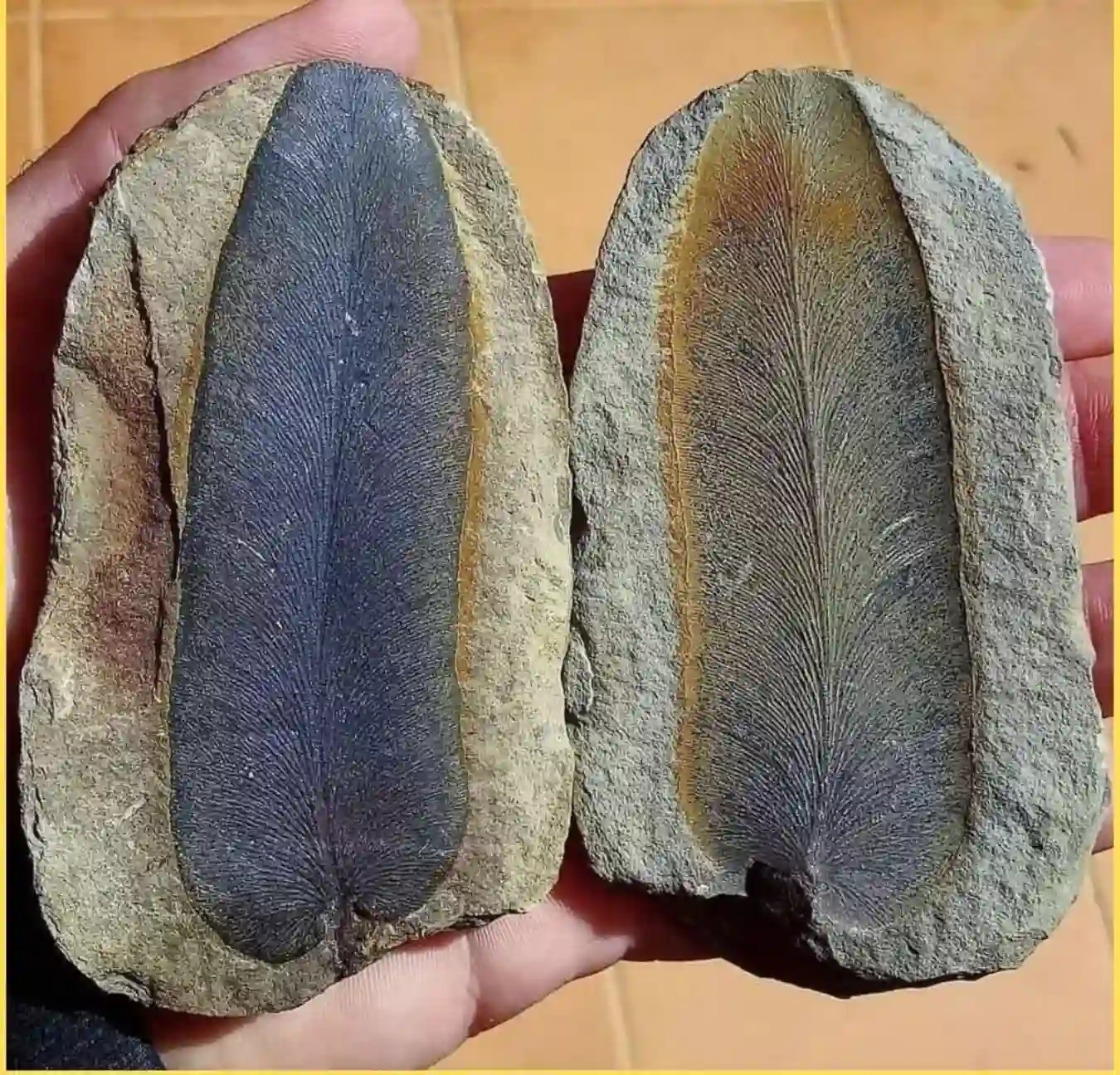
In museums and private collections, fossils of Macroneuropteris scheuchzeri are prized not only for their beauty but also for their story. Each specimen represents:
-
The deep history of Earth’s ecosystems
-
The origin of modern energy sources
-
The interconnectedness between life, death, and transformation
When you hold such a fossil, you are touching the physical remains of a world that no longer exists. A time when dense forests covered continents and the planet’s future energy was quietly forming beneath the soil.
This makes Macroneuropteris not just a paleobotanical specimen, but a symbol of the Earth’s memory. Holding lessons about sustainability, time, and the cycle of life.
Conclusion: A Leaf that Changed the World
A Leaf from a Lost World is more than a poetic phrase — it’s a truth rooted in science. Macroneuropteris scheuchzeri, the fossil fern that fueled an age, stands as a powerful reminder that life, in all its forms, shapes the destiny of the planet.
From photosynthesizing sunlight 300 million years ago to fueling the engines of modern industry. This ancient seed fern’s story bridges the deepest past with the present.
So the next time you see a lump of coal or a fossilized fern impression, pause for a moment. You’re looking at captured sunlight, ancient life, and the geological heart of human history.
ALSO READ: Stupendemys Geographicus: The Giant Prehistoric Turtle That Ruled South America’s Ancient Rivers