The Lost Cities of the Amazon: Unveiling Ancient Civilizations with LIDAR Technology 🌿✨
A Hidden World Beneath the Trees
For centuries, the Amazon rainforest was thought to be a vast, untouched wilderness, home only to small, scattered tribes. But a groundbreaking discovery using LIDAR (Light Detection and Ranging) technology has revealed something astonishing—ancient cities hidden beneath the dense canopy, once thriving with thousands of inhabitants nearly 2,000 years ago.
These findings challenge long-held assumptions about Amazonian societies and shed light on a sophisticated pre-Columbian civilization that flourished long before European contact. Known as the Upano people, they built monumental roadways, advanced agricultural systems, and interconnected urban centers that rivaled the complexity of other ancient cultures across the globe.
The Power of LIDAR: Technology Peeling Back the Jungle
How LIDAR Works
LIDAR is a remote sensing method that uses laser pulses to map landscapes with incredible accuracy. From aircraft or drones, LIDAR beams penetrate dense vegetation and measure ground elevation, revealing hidden structures invisible to the naked eye.
LIDAR in Archaeology
This technology has already transformed our understanding of ancient civilizations in places like Cambodia’s Angkor Wat and Mesoamerican Maya cities. In the Amazon, it has become a game-changer—exposing an intricate network of settlements and roads once swallowed by rainforest.

The Lost Cities of the Amazon: A Civilization Revealed
Location of the Discovery
The discovery took place in the Ecuadorian Amazon, near the Andes, a region now dubbed the “lost valley of cities.” Beneath thick jungle, LIDAR scans revealed clusters of settlements interconnected by monumental causeways, confirming what locals and researchers had speculated for years.
Scale of the Settlements
-
The urban landscapes were home to at least 10,000 inhabitants.
-
Roads stretched up to 10 meters (33 feet) wide and 20 kilometers (12 miles) long.
-
Settlements were arranged with geometric precision, linked by avenues, plazas, and ceremonial spaces.
This level of urban planning rivals other ancient city complexes and overturns the belief that the Amazon lacked large, organized societies.
The Upano People: Architects of the Ancient Amazon
Timeline of the Upano Civilization
-
500 BC – 600 AD: Period of flourishing settlement.
-
Centered around fertile valleys near the Andes foothills.
-
Eventually abandoned, leaving behind monumental traces of their ingenuity.
Daily Life and Culture
The Upano people cultivated an environment that sustained thousands:
-
Agriculture: Vast fields designed with advanced drainage systems to manage seasonal flooding.
-
Food production: Likely maize, cassava, and other staples essential for large populations.
-
Community life: Ceremonial centers and plazas suggest social and religious gatherings.
The integration of urban planning with agricultural sustainability underscores the Upano’s mastery of their environment.
Monumental Roadways: Pathways of Power
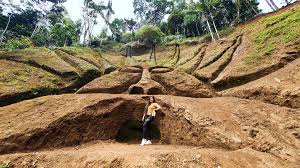
One of the most astonishing revelations is the network of monumental roadways connecting these Amazonian cities.
-
Roads were straight and wide, cutting through jungle and valleys.
-
They extended nearly 20 kilometers, linking distant settlements into a cohesive network.
-
Such road systems indicate centralized planning and governance, reflecting a society with organizational complexity far beyond what was previously imagined.
These avenues were more than practical—they symbolized unity, trade, and possibly spiritual or political authority across the region.
Overturning Old Assumptions: The Amazon as a Civilization Hub
For decades, scholars assumed that the Amazon’s poor soils and dense forests prevented large-scale urban societies. Small, nomadic groups were considered the norm.
The discovery of the Lost Cities of the Amazon fundamentally shifts this view:
-
The Amazon was not an untouched wilderness but a cultural landscape shaped by human innovation.
-
The Upano and other Amazonian civilizations demonstrate that dense populations thrived with sustainable farming and infrastructure.
-
This parallels discoveries of other “lost civilizations” worldwide, reminding us that history is far richer and more complex than textbooks once claimed.
Comparisons to Other Ancient Civilizations
While unique, the Upano’s achievements resonate with other great societies:
-
Like the Maya, they built urban centers connected by causeways.
-
Like the Inca, they mastered highland agriculture and integrated road systems.
-
Like ancient Mesopotamia, they developed drainage and irrigation to harness challenging landscapes.
Such parallels highlight that the Amazon was not isolated but part of the broader human story of innovation and resilience.
Challenges in Preserving the Lost Cities
Threats to the Site
-
Deforestation for agriculture and logging continues to endanger archaeological sites.
-
Climate change may further impact the fragile Amazon ecosystem.
-
Looting and lack of awareness pose risks to these newly discovered treasures.
Importance of Preservation
The rediscovery of the Upano cities underscores the urgent need for protecting cultural heritage in the Amazon. These ruins are not only historical artifacts but also reminders of sustainable living practices crucial for our own future.
Tourism and Cultural Impact
Potential for Archaeological Tourism
The Lost Cities of the Amazon could become a major draw for heritage tourism in Ecuador, similar to how Machu Picchu transformed Peru’s cultural landscape. However, responsible tourism must balance economic benefits with preservation.
Reclaiming Indigenous Narratives
For indigenous communities of the Amazon, these discoveries validate oral traditions that spoke of ancient, thriving civilizations. They reconnect modern inhabitants with ancestral heritage, strengthening cultural identity.
Lessons from the Lost Cities
The rediscovery of the Upano civilization teaches us profound lessons:
-
Human resilience: Societies can adapt and flourish even in challenging environments.
-
Sustainability: The Upano’s agricultural systems offer insights for modern ecological practices.
-
Historical humility: We must remain open to rewriting history when new evidence emerges.

Conclusion: Rewriting the History of the Amazon
The Lost Cities of the Amazon, revealed through cutting-edge LIDAR technology, stand as a monumental discovery in world archaeology. They prove that the rainforest once nurtured sophisticated, densely populated societies, reshaping our understanding of pre-Columbian history.
The story of the Upano civilization—their monumental roads, sustainable agriculture, and thriving cities—reminds us that the Amazon has always been a cradle of human innovation. Today, as we face environmental and cultural challenges, their legacy shines as both a mystery and a guide for the future.
The jungle may have hidden these cities for centuries, but with every discovery, the Amazon reveals its secrets—reminding us that the past still has much to teach about our present and our future.
ALSO READ: Spiraling Through History: The 1,000-Year-Old Helical Stepwell of Walur