The Mysterious 6,500-Year-Old Grave of the Ladies of Téviec: A Makeshift Casket of Sea Shells and Antlers
Few archaeological discoveries capture the imagination as vividly as the Ladies of Téviec grave. Unearthed in 1930 on the small island of Téviec, just off the coast of Brittany, France, this 6,500-year-old double burial continues to fascinate scholars and the public alike. Dating to around 4,500 B.C., during the Mesolithic–Neolithic transition, the grave provides an extraordinary glimpse into the ritual practices, artistry, and symbolic life of Europe’s early coastal communities.
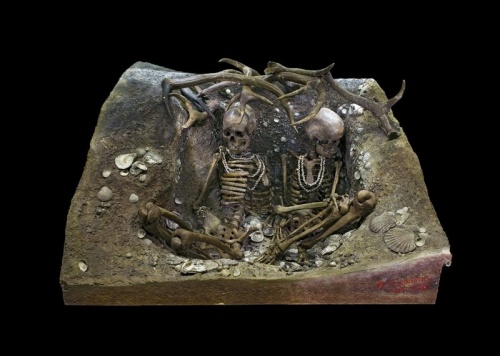
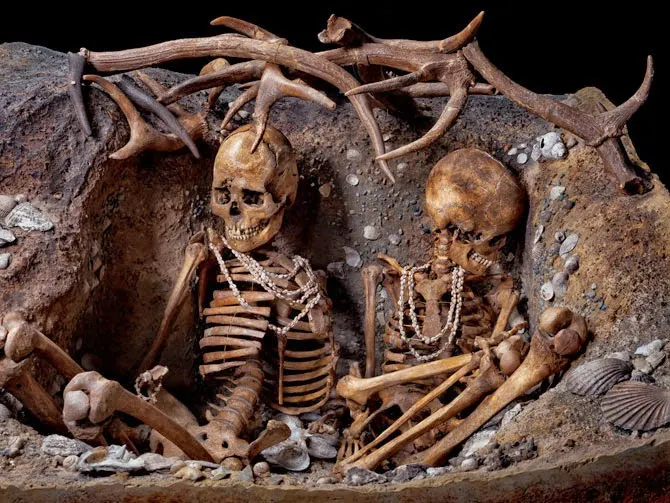
At the heart of the discovery lies a makeshift casket constructed of sea shells and deer antlers. Carefully arranged, these natural elements formed a protective covering for two women buried side by side. Their grave, adorned with jewelry made of marine shells and accompanied by grave goods, reveals not only reverence but also the elevated status the women may have held within their society.
Discovery of the Ladies of Téviec
Excavations of 1930
The grave was discovered in 1930 by archaeologists Marthe and Saint-Just Péquart, who were excavating prehistoric sites on the islands of Téviec and Hoedic. Their work revealed settlements, middens, and burials that documented the daily lives of Mesolithic communities living along the Atlantic seaboard.
Among these finds, the Téviec double burial stood out for its unusual preservation and symbolic richness. Despite erosion and centuries of exposure, the grave retained its structure and grave goods, offering a rare opportunity to study Mesolithic mortuary practices in detail.
A Rare Mesolithic Burial
Burials from this period are scarce in Western Europe. Many Mesolithic communities practiced open-air burials or cremation, leaving little behind. The Téviec grave’s survival is thus exceptional, making it a key site for understanding prehistoric ritual and symbolism.
The Grave Structure: Shells and Antlers
A Makeshift Casket
What makes the Ladies of Téviec grave truly unique is its protective covering. Archaeologists uncovered a carefully constructed arrangement of seashells and deer antlers, creating what has been described as a “makeshift casket.”
-
The shells, sourced from nearby beaches, may have symbolized the sea’s life-giving and protective powers.
-
The antlers, taken from red deer, likely represented strength, fertility, or spiritual authority.
This combination of marine and terrestrial elements suggests a worldview deeply connected to both land and sea.
Symbolic Meaning
The choice of materials points toward ritual significance. Shells often symbolized rebirth and continuity, while antlers carried associations with hunting, survival, and seasonal renewal. Together, they may have created a symbolic bridge between life, death, and the natural cycles governing prehistoric communities.
The Women of Téviec
Age and Identity
Analysis of the skeletons revealed that the two individuals were women, likely in their twenties or early thirties. Their exact relationship remains uncertain—sisters, kin, or members of a close-knit community—but their joint burial suggests a bond honored in death.
Status and Grave Goods
The women were interred with shell jewelry, including necklaces and ornaments made of marine mollusks, as well as other grave goods. Such adornments suggest they held elevated social status, possibly as respected figures, leaders, or individuals with ritual roles.
Life and Death in the Mesolithic
A Coastal Community
The people of Téviec belonged to a community of hunter-gatherers and fishers, living along the Atlantic shores. Their diet consisted of shellfish, fish, wild game, and gathered plants. Archaeological evidence shows that they built temporary shelters, fashioned tools from stone and bone, and created ornaments from natural materials.
Violent Deaths?
Intriguingly, some scholars suggest that the Ladies of Téviec met violent ends. Marks on their bones have been interpreted as evidence of trauma, possibly from conflict or ritual killing. While debate continues, this raises questions about social tensions, intergroup violence, or sacrificial practices in Mesolithic Europe.
Symbolism of the Burial
A Society of Ritual and Belief
The elaborate nature of the Téviec burial underscores the importance of ritual in Mesolithic society. Far from being mere subsistence communities, these groups invested time and resources into commemorating the dead.
Connection to Nature
The use of shells and antlers reflects an animistic worldview, where natural elements embodied spiritual power. The burial may have been designed to protect the deceased, honor their role in life, or ensure safe passage into an afterlife.
The Ladies of Téviec in Archaeological Context
Comparisons with Other Burials
Similar burials from the Mesolithic are known across Europe, though few are as elaborate as Téviec. Sites in Scandinavia, Iberia, and Central Europe also show the use of ornaments, red ochre, and symbolic coverings, pointing to shared traditions of honoring the dead.
Transition to the Neolithic
The Téviec grave dates to the cusp of the Neolithic revolution, when farming began to spread into Western Europe. The blend of Mesolithic traditions with emerging symbolic practices suggests this community stood at a cultural crossroads.
Preservation and Display
The Musée de Toulouse
Today, the remains of the Ladies of Téviec are preserved in the Muséum de Toulouse, France, where they are displayed under a protective glass dome that replicates the original shell-and-antler casket. Visitors can view the burial as it was uncovered, a haunting and evocative reminder of Europe’s deep prehistoric past.
A Controversial Exhibit
While the display captivates audiences, it has also sparked ethical debates about the exhibition of human remains. Some argue that the women deserve reburial, while others contend that their display serves educational and commemorative purposes.
Legacy and Significance
The Ladies of Téviec grave continues to intrigue archaeologists, historians, and the public for several reasons:
-
It offers a rare glimpse into Mesolithic funerary rituals.
-
It highlights the symbolic use of natural elements in burial practices.
-
It underscores the role of women within prehistoric communities.
-
It provides evidence of both artistry and violence in early European societies.
Above all, the burial demonstrates that even 6,500 years ago, humans sought to honor their dead with care, creativity, and reverence.
Conclusion
The Ladies of Téviec grave is more than an archaeological curiosity—it is a profound testament to the beliefs, artistry, and social bonds of Mesolithic Europe. The carefully arranged shells and antlers, the adornments of jewelry, and the solemn positioning of two women together all speak to a community that valued ritual and symbolism as much as survival.
Discovered on a small island off Brittany, the grave continues to echo across time, reminding us that the human desire to commemorate and protect the dead is as old as humanity itself. Through this haunting and beautiful burial, we glimpse not only tragedy but also the enduring spirit of reverence that shaped the earliest chapters of European history.