The Ivory Head of Apollo: Masterpiece of 5th Century BC Greek Sculpture
A Glimpse of the Divine in Ivory
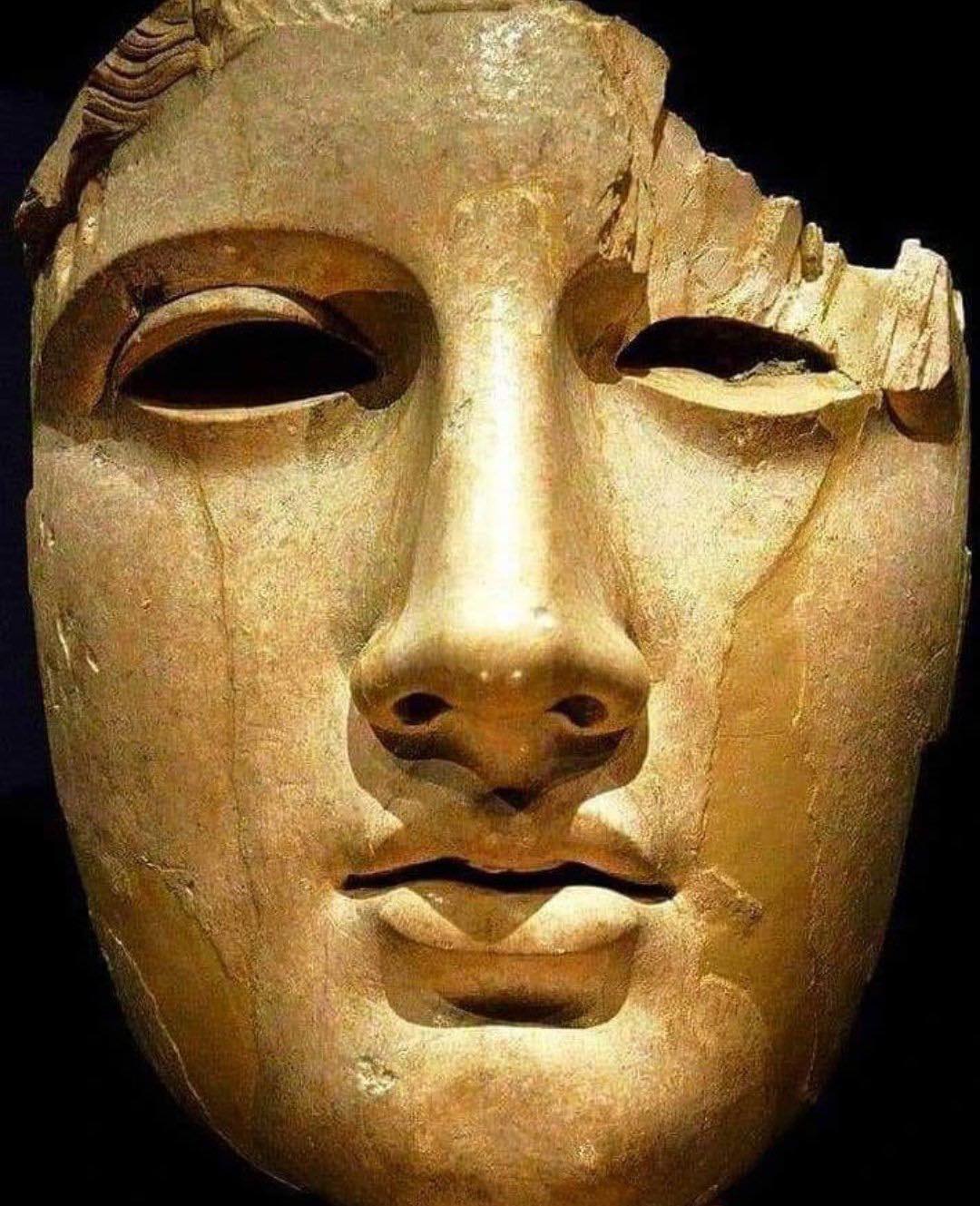
Among the wonders of ancient Greek art, few discoveries capture the essence of divine craftsmanship like the life-size ivory head of Apollo. Dating from the 5th century BC, this exquisite artifact is thought to have belonged to a grand chryselephantine statue—one made from gold and ivory—that celebrated the radiant Greek god of the sun, music, and prophecy. Scholars consider it one of the most remarkable surviving examples of classical sculpture, and many attribute its creation to the legendary sculptor Phidias.
The head stands as a rare intersection of mythology, artistry, and cultural devotion. Its features—delicately carved yet commanding—embody the spirit of Greece’s Golden Age, when religion, philosophy, and aesthetics fused into one extraordinary vision.
The Legacy of Phidias: Master of Divine Sculpture
Phidias, renowned as the greatest sculptor of ancient Greece, is immortalized through his colossal works, including the statue of Zeus at Olympia and the Athena Parthenos in Athens. His artistry defined the classical style: perfect proportions, refined expression, and a transcendent reverence for the divine.
The ivory head of Apollo showcases attributes long associated with Phidias’s hand. The serene expression, symmetrical features, and subtle idealism suggest not merely an imitation of nature but its perfection. Phidias was known to blend the real and the ideal—his figures embodied both human beauty and divine majesty.
If this ivory head indeed originates from his workshop, it reinforces Phidias’s unparalleled contribution to Western art. His mastery over the difficult chryselephantine technique also points to advanced technical knowledge rarely equaled in antiquity.
Chryselephantine Technique: Gold and Ivory in Harmony
The term “chryselephantine” derives from the Greek words chrysos (gold) and elephas (ivory). These statues were among the costliest and most prestigious creations of the ancient world. Artists constructed a wooden core that they overlaid with thin sheets of gold for garments and ivory for the flesh. This combination not only produced a lifelike radiance but also symbolized divine purity and immortality.
Creating such a statue required extraordinary skill. Ivory, notoriously fragile, had to be softened, shaped, and polished to mimic living skin. It was susceptible to temperature changes and humidity, meaning only the most advanced workshops could maintain its structural integrity. The size of the Apollo head implies it formed part of a monumental figure—possibly exceeding 8 to 10 meters in height—a scale consistent with Phidias’s grand artistic vision.
The God Apollo: Symbol of Light and Harmony
Apollo, one of the most venerated Olympian gods, personified light, music, healing, and intellectual harmony. His image captivated Greek artists from the Archaic through the Hellenistic periods, evolving from rigid early forms to fluid, idealized representations of youthful perfection.
The ivory head reflects Apollo’s divine attributes. Its gaze, gentle yet distant, suggests inner illumination—the embodiment of rational clarity and beauty that Greek thinkers revered. The smooth, unblemished ivory evokes not just physical purity but spiritual serenity. Through this image, Apollo is both humanized and eternal, a radiant ideal of Greek religion and aesthetics.
Discovery and Preservation of the Ivory Head
While the exact circumstances of the ivory head’s discovery remain partly debated, archaeological evidence suggests it originated from a temple context, possibly within a sanctuary dedicated to Apollo or another Olympian deity. Unlike bronze or marble, ivory seldom survives intact due to organic decay. Its preservation makes this artifact exceptionally rare.
Conservators undertake meticulous efforts to stabilize the ivory’s condition. Controlled humidity, minimal light exposure, and micro-climate storage prevent further deterioration. Modern imaging has revealed trace remnants of pigment and gilding, hinting that the original statue gleamed with lifelike color and luminosity under torchlight—a visual spectacle intended to inspire worshippers.
Artistic Analysis: Classical Ideals in Form and Expression
The Apollo head demonstrates hallmarks of High Classical style (circa 450–430 BC). The face exhibits perfect bilateral symmetry, soft facial planes, and finely delineated lips. The eyes, once inset with precious materials, would have created a gaze of divine animation. The hair, arranged in stylized locks, displays natural movement without sacrificing harmony.
This calm dignity distinguishes Phidias’s school from later emotional realism. It was not mere imitation but philosophical representation—a pursuit of aesthetic truth rooted in ideal form. The artist aimed to capture not what is, but what ought to be—the divine essence manifested through human perfection.
Symbolism and Religious Significance
In ancient Greece, images of gods were not mere decoration; they were embodiments of divine presence. The combination of gold and ivory elevated these statues beyond ordinary ritual objects. The gleam of gold evoked the sun’s brilliance, while ivory brought warmth and realism. Together, they expressed spiritual power and civic pride.
As a representation of Apollo, this head would have occupied a sacred temple environment, serving as a focus for offerings and prayers. Its beauty alone conveyed divine approval and cosmic order—concepts central to Greek religious philosophy during the Classical period.
Comparison with Other Chryselephantine Masterpieces
Historians place the ivory head of Apollo alongside Phidias’s renowned works such as the Athena Parthenos and Zeus at Olympia. While both of those colossal statues perished, descriptions by ancient writers like Pausanias allow for close comparison.
Like Athena and Zeus, Apollo’s depiction follows the same principles of balance and harmony. However, whereas Zeus represented authority and wisdom, and Athena embodied strategic intellect, Apollo reflected youthful vitality and artistic inspiration. The surviving head thus fills an important gap in our understanding of divine representation during Greece’s artistic zenith.
The Cultural Impact of Chryselephantine Art
Chryselephantine sculpture reached its height during the Periclean age, reflecting Athens’s power and wealth. Temples and sanctuaries became showcases for artistic and technical innovation. These statues were more than art—they were political and religious statements, symbols of civic identity and divine favor.
The loss of most chryselephantine works over time underscores the fragility of such opulence. Yet fragments like the ivory Apollo head remind us of an era when artistry, belief, and science converged to express humanity’s loftiest ideals. For modern viewers, these remains bridge millennia, restoring a faint echo of that original awe.
Modern Scholarship and Debates
Scholars continue to debate the head’s provenance and attribution. Some propose that it may come from a workshop influenced by Phidias rather than directly from the master himself. Stylistic parallels, however, remain compelling—especially in proportion, surface treatment, and expression.
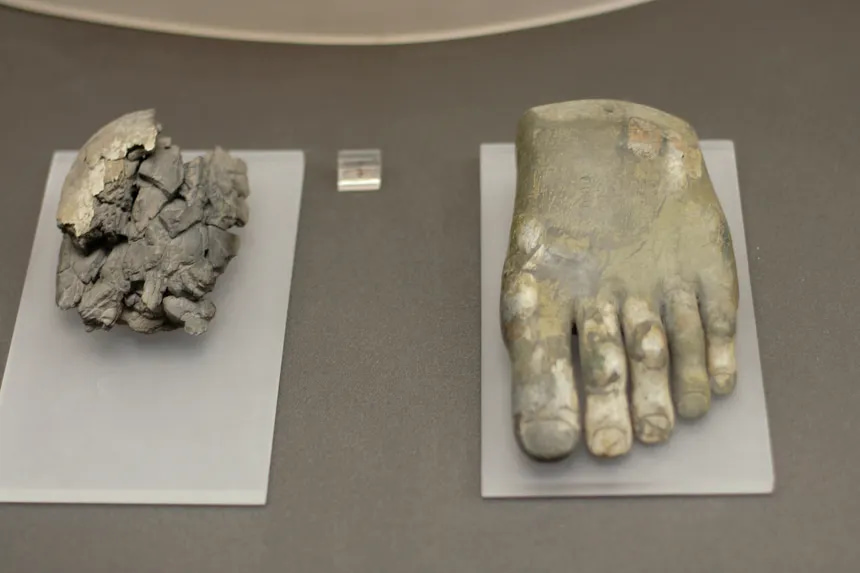
Scientific analyses, including radiocarbon dating and isotopic studies of the ivory, support its 5th-century BC origin. Comparative studies with known replicas and Roman copies further strengthen the identification with Phidias’s style. Even with ongoing debate, consensus holds that the Apollo head represents the pinnacle of Classical Greek aesthetic ideals.
Conclusion: The Timeless Radiance of Apollo
The life-size ivory head of Apollo stands as a beacon from Greece’s Golden Age, a testimony to human genius in pursuit of the divine. Through the delicate interplay of light, material, and form, its creator—very likely Phidias—captured an immortal vision of beauty and balance.
As a surviving trace of chryselephantine art, it connects the modern world to a time when sculpture was more than representation—it was revelation. The head of Apollo continues to inspire wonder, reminding us that the quest for harmony between art and spirit is as enduring as the god it portrays.
ALSO READ: The World’s Oldest Soccer Ball: A 16th Century Treasure from Stirling Castle