The Inzerki Apiary: Morocco’s World-Famous Collective Beehive
A Hidden Jewel of Morocco
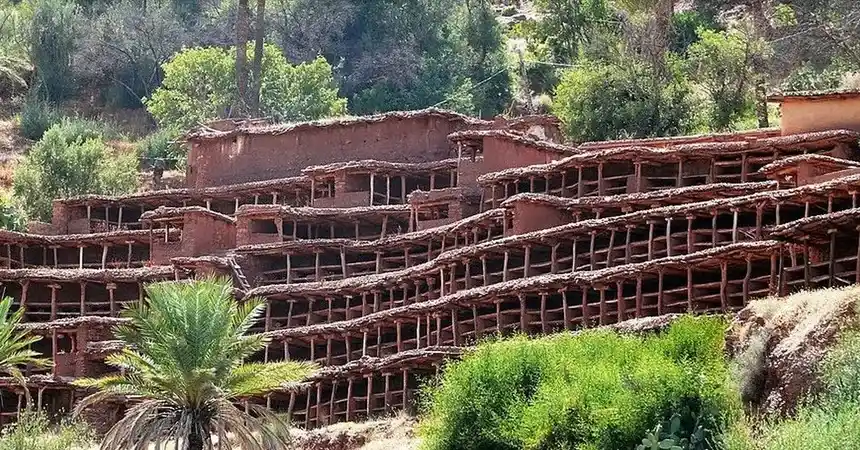
Nestled in the foothills of the Anti-Atlas Mountains in southern Morocco lies an extraordinary site that blends architecture, tradition, and sustainability—the Inzerki Apiary. Built in 1850, this sprawling structure is recognized as the oldest and largest collective beehive in the world, housing more than 4,000 individual hives crafted from clay, stone, and wood.
For centuries, the apiary has been a symbol of community cooperation and ecological harmony, where generations of Amazigh (Berber) beekeepers worked together to cultivate honey in one of the harshest landscapes on Earth. Today, despite the challenges of climate change, drought, and erosion, the apiary stands as a living reminder of the enduring relationship between humans and bees.
The Origins of the Inzerki Apiary
The Inzerki Apiary was built in the mid-19th century by Amazigh villagers in the Argana Valley of Morocco. Its construction was not just a practical solution for honey production but also a collective project rooted in tradition and mutual support.
At the time, honey was both a nutritional staple and an economic resource, used for trade, medicine, and religious rituals. By building a shared structure, the community ensured that knowledge, labor, and resources were pooled together for the benefit of all.
This collective spirit remains central to the identity of the apiary even today.
Architecture of the Apiary: Clay, Stone, and Wood
The Inzerki Apiary is a masterpiece of vernacular architecture, blending local materials with ingenious design.
Key Features of Its Construction:
-
Individual Hives: Each of the 4,000 hives is a horizontal cylinder made from hollowed logs or clay tubes, sealed with mud.
-
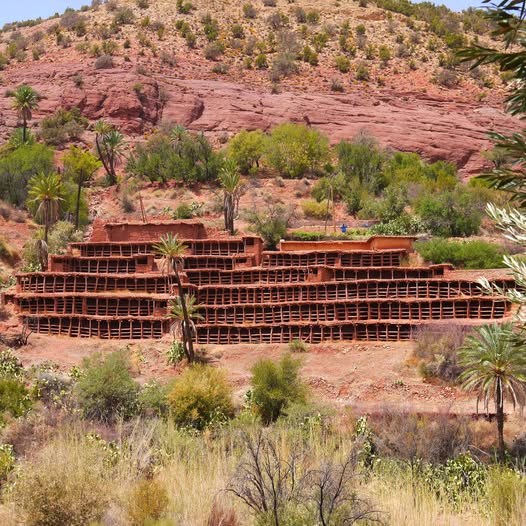
Terraced Design: The hives are stacked in rows within a multi-level stone-and-wood structure, resembling a vast honeycomb carved into the hillside.
-
Natural Materials: Builders used clay, stone, and timber sourced from the surrounding landscape, ensuring sustainability and harmony with the environment.
-
Orientation: The apiary faces the sun, optimizing warmth and light for the bees while providing natural protection against wind and rain.
The result is not only functional but also aesthetic, with the apiary resembling a monumental fortress dedicated to honey production.
Cultural and Spiritual Significance
In Amazigh culture, bees are seen as symbols of fertility, abundance, and divine order. Honey itself holds spiritual and medicinal value, often associated with purity and healing.
The Inzerki Apiary thus became more than just a site of production:
-
A Place of Community Gathering: Families gathered to tend their hives collectively, reinforcing bonds of trust and cooperation.
-
A Symbol of Prosperity: Honey supported trade and contributed to the local economy.
-
A Sacred Connection: Honey and beeswax were often used in religious ceremonies and healing practices, linking the apiary to spiritual traditions.
By preserving the apiary, the community also preserves a vital piece of intangible heritage that reflects values of sustainability, cooperation, and reverence for nature.
The Beekeeping Tradition of Inzerki
Beekeeping in Inzerki follows traditional practices passed down through generations.
-
Swarm Capture: Bees were carefully transferred into clay or wooden hives during swarming seasons.
-
Minimal Intervention: The bees were left largely to their natural rhythms, with harvesting done sparingly to avoid overexploitation.
-
Collective Maintenance: Each family maintained its own hives, but the community cooperatively built and repaired the overall apiary.
-
Honey Harvesting: Beekeepers extracted honey by hand, often once or twice a year, and shared it within the community or sold it in local markets.
This low-impact, sustainable method allowed both humans and bees to thrive together for centuries.
Challenges: Climate Change and Decline
In recent decades, the Inzerki Apiary has faced significant challenges:
-
Droughts and Water Scarcity: The Anti-Atlas region has experienced worsening droughts, reducing floral resources for bees.
-
Climate Change: Rising temperatures and desertification have stressed bee populations.
-
Structural Damage: The apiary has suffered partial collapses due to erosion and lack of maintenance.
-
Decline in Traditional Knowledge: Younger generations are moving to cities, leading to a gradual loss of traditional beekeeping skills.
These challenges threaten both the physical structure and the cultural practices tied to the apiary.
Restoration Efforts
Despite these difficulties, local communities and preservation groups have initiated restoration projects to safeguard the apiary.
-
Structural Repairs: Preservation teams have reinforced the clay and stone walls to prevent further collapse.
-
Cultural Preservation: NGOs and cultural organizations are working to document and transmit Amazigh beekeeping traditions to younger generations.
-
Tourism Potential: Communities and preservation groups increasingly promote the apiary as a heritage tourism site, drawing visitors interested in traditional ecology and architecture.
These efforts aim not just to restore the site physically but also to revive its cultural and ecological significance.
Global Importance of the Inzerki Apiary
The Inzerki Apiary is not only a Moroccan treasure but also a global heritage site in the history of human-bee relationships.
Why It Matters:
-
World’s Oldest Collective Beehive: Built in 1850, it predates most modern apiaries.
-
Largest in the World: With 4,000 hives, it remains unmatched in scale.
-
Model of Sustainability: It demonstrates how humans can practice low-impact, cooperative beekeeping in challenging environments.
-
Cultural Heritage: It embodies Amazigh values of community, ecology, and spiritual connection to nature.
In a time of global concern over bee population decline, the Inzerki Apiary offers valuable lessons on resilience and ecological harmony.
Visiting the Inzerki Apiary Today
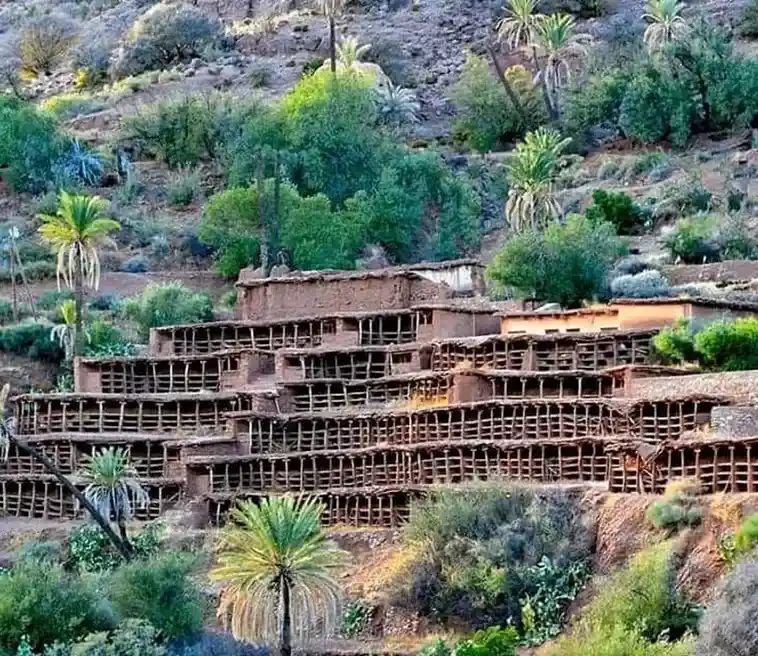
Travelers to Morocco can visit the Inzerki Apiary near Agadir, in the Argana Valley. While parts of the structure are damaged, restoration efforts have made sections accessible to visitors.
Visitors can experience:
-
The awe-inspiring architecture of thousands of hives stacked into terraces.
-
Guided tours explaining the history, culture, and traditions of Amazigh beekeeping.
-
The chance to purchase locally produced honey, continuing a centuries-old tradition.
For those interested in cultural tourism, ecology, or sustainable agriculture, the apiary is a destination of profound significance.
Conclusion: Sweetness from Stone and Clay
The Inzerki Apiary of Morocco is more than a structure. It is a living monument to human ingenuity, cooperation, and harmony with nature. Built in 1850 with clay, wood, and stone, and containing over 4,000 hives. It represents the largest and oldest collective beehive in the world.
Despite challenges from climate change and time. The apiary endures as a reminder of the timeless partnership between humans and bees. Its survival depends on preservation efforts, cultural pride, and the continuation of Amazigh traditions that have sustained it for nearly two centuries.
As we look to the future of sustainable living and ecological balance, the Inzerki Apiary teaches us that by cooperating, respecting nature, and fostering community spirit, we can create sweetness even in the harshest landscapes.
ALSO READ: The Bust of Nefertiti: Egypt’s Eternal Symbol of Beauty