Ice Age hunter tool pouch Discovered in the Czech Republic Reveals Upper Paleolithic Survival Skills
Ice Age Hunter’s Forgotten Moment in Time
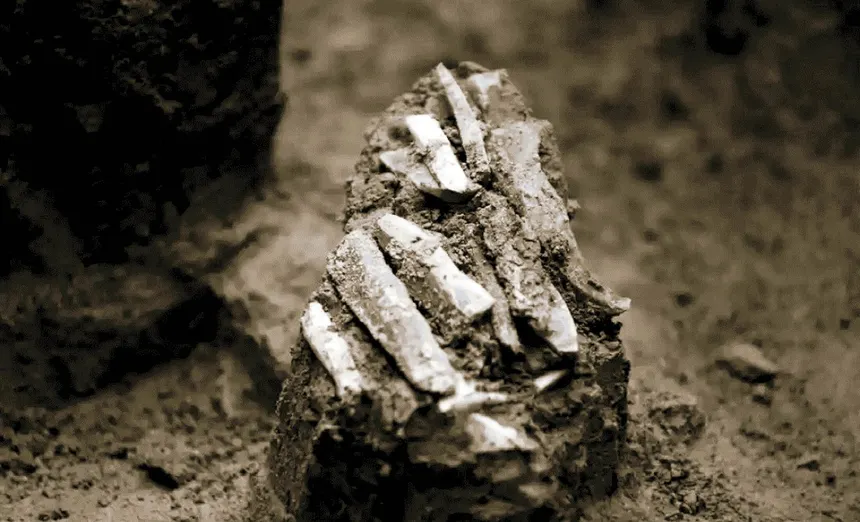
Around 30,000 years ago, a hunter in the heart of Ice Age Europe set down a small pouch of stone tools beside a crackling fire. For reasons that remain a mystery, the hunter never returned. Thousands of years later, in what is now the Czech Republic, archaeologists uncovered this pouch — a frozen moment in time, offering a rare glimpse into daily life during the Upper Paleolithic era.
The discovery is more than a collection of ancient objects; it’s a story of resourcefulness, adaptation, and survival in one of the harshest environments in human history. Each blade, point, and fragment within the pouch reveals the ingenuity of Ice Age humans, their ability to thrive against the odds, and their intimate understanding of the natural world.
The Discovery: A Hunter’s Lost Toolkit
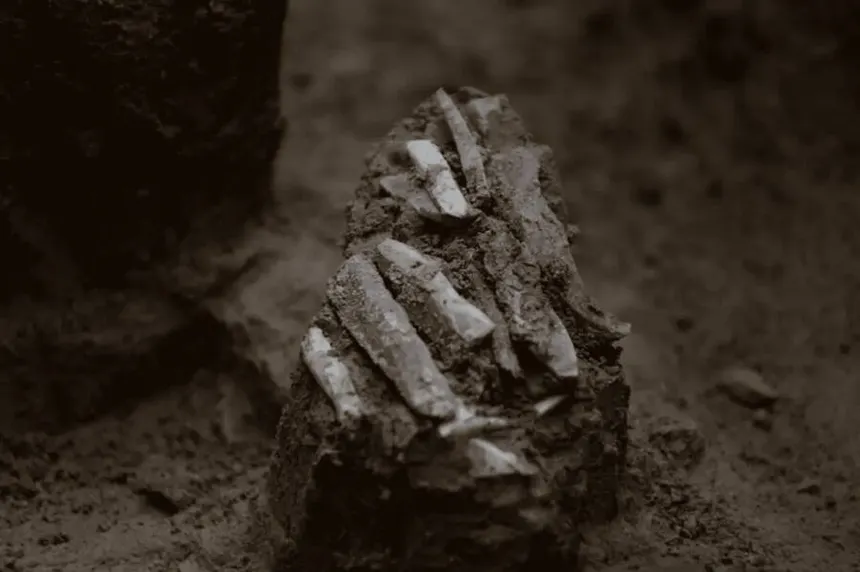
Archaeologists unearthed the hunter’s pouch during excavations at a site in the Moravian region of the Czech Republic — an area rich in Upper Paleolithic remains. Inside, they found 29 small blades and points, some finely crafted and others showing signs of wear and repair.
This seemingly modest find offers extraordinary insight into the daily practices of early humans who lived amid glaciers, megafauna, and constantly shifting climates.
The tools were discovered near what appeared to be the remains of a hearth or campfire, suggesting the pouch belonged to a hunter who paused to rest, repair equipment, or prepare for a hunt — before disappearing from history.
A Snapshot of Upper Paleolithic Life
The Upper Paleolithic period (roughly 50,000–10,000 BCE) marks a crucial phase in human evolution. During this era, modern humans (Homo sapiens) developed advanced toolmaking, art, and symbolic culture.
This pouch represents one of the most intimate forms of archaeological evidence — a personal toolkit, carried by an individual rather than left behind as a communal or ritual deposit. It helps researchers reconstruct not just technology, but also the behavioral and cognitive patterns of Ice Age people.
The Tools: Precision, Function, and Adaptation
The 29 items inside the pouch consist primarily of microblades and small stone points, skillfully shaped from flint and chert. Their sizes and forms suggest diverse functions, from cutting and scraping hides to preparing wooden shafts for spears or arrows.
1. Craftsmanship and Technique
Each tool displays evidence of flintknapping, a precise process of striking flakes from a stone core to achieve sharp, durable edges. Some pieces bear retouch marks — small secondary flake scars showing that the hunter repaired tools rather than discarding them.
This indicates a mindset of resource efficiency. In the Ice Age, raw materials could be scarce, and toolmaking was time-consuming. The ability to repurpose broken blades reflects strategic thinking and practical intelligence.
2. Multi-Functional Design
Unlike specialized modern tools, Paleolithic implements were versatile. A single blade could be used to cut meat, shape bone, or scrape hides for clothing. This adaptability was crucial for mobile hunter-gatherer groups who carried only what they could transport.
3. Symbolic or Personal Value
Some archaeologists suggest that the pouch might have held personal meaning — perhaps belonging to a skilled craftsman or a hunter whose tools represented his identity and survival. The careful arrangement of the pieces implies deliberate organization, not random storage.
Life During the Ice Age: A World of Extremes
To understand this discovery, one must imagine the world 30,000 years ago. The last Ice Age blanketed much of Europe with glaciers and tundra. Temperatures were frigid, and humans lived in small, nomadic bands following herds of reindeer, mammoths, and bison.
Despite the harshness, the Czech region of Moravia was a hub of prehistoric activity. Its valleys provided access to flint deposits, water sources, and migration routes for animals. Campsites, hearths, and hunting tools discovered here reveal a thriving human presence that adapted ingeniously to climatic challenges.
The discovery of the tool pouch near a campfire speaks to a moment of respite — perhaps a hunter resting after a long day, mending equipment, and preparing for another journey across the frozen landscape.
Archaeological Analysis: Reading the Stones
Archaeologists examined the blades using microscopic wear analysis, revealing traces of use — polishing, chipping, and residue consistent with cutting meat, wood, and hide. Some tools even showed evidence of hafting, meaning they were once attached to wooden handles or bone shafts.
Radiocarbon dating of surrounding sediments places the find within the Gravettian culture, a major Upper Paleolithic tradition known for its fine stone tools and elaborate art, such as the famous Venus figurines.
The Gravettians were expert hunters who roamed central and eastern Europe, building temporary shelters and developing sophisticated social and symbolic systems. This tool pouch, therefore, may have belonged to one of these people — a hunter-engineer whose skill kept his group alive.
What the Pouch Reveals About Human Behavior
This small discovery encapsulates the human capacity for foresight, learning, and innovation.
1. Planning and Mobility
Carrying a pouch of tools implies planning for future needs — anticipating repairs, hunts, or emergencies. Such foresight marks a significant step in human cognitive evolution.
2. Technical Learning
The mixture of complete and broken tools suggests the hunter understood how to sharpen, reshape, and reuse materials. This ability reflects a deep understanding of tool function and material science.
3. Adaptation and Resilience
The hunter’s kit demonstrates how Ice Age people adapted to uncertainty — maximizing limited resources, traveling light, and surviving in extreme conditions through creativity and discipline.
The Human Story Behind the Stones
While archaeology often deals in objects, each find connects us to a real human being. This pouch once belonged to a person — someone who hunted, built fires, and perhaps told stories beneath the stars.
Was this hunter part of a family group? Did they return from a hunt injured or fail to find food? We may never know. But their tools endure, testifying to their intelligence, skill, and humanity.
Every chipped flake is a whisper from prehistory — the echo of a hand that worked, survived, and left its mark on time.
Scientific and Cultural Significance
1. Archaeological Insight
The pouch provides a rare example of personal equipment, helping researchers reconstruct daily routines rather than monumental structures or ceremonial artifacts.
2. Technological Understanding
By studying the tool’s manufacturing techniques, archaeologists can trace cultural transmission — how knowledge spread among Ice Age communities across Europe.
3. Cultural Heritage
The find enriches our shared understanding of humanity’s deep past, reminding us that innovation and adaptability have always defined the human story.
Conclusion: A Legacy of Ingenuity and Survival
The discovery of the Ice Age hunter’s tool pouch in the Czech Republic opens a window into a world long gone but never forgotten. It reveals not just the tools of survival, but the mind of a maker — a human who could plan, adapt, and thrive in an unforgiving environment.
Through these ancient blades, we see reflections of ourselves: curiosity, ingenuity, and the enduring will to overcome. In every chipped edge and polished surface lies a story of resilience — a testament to how humanity learned to survive, create, and dream in the heart of the Ice Age.
Ice Age hunter tool pouch
ALSO READ: 3,000-Year-Old Ancient Maya City Complex with Pyramids Unearthed in Guatemala