Herodium: King Herod’s Desert Palace and Final Resting Place
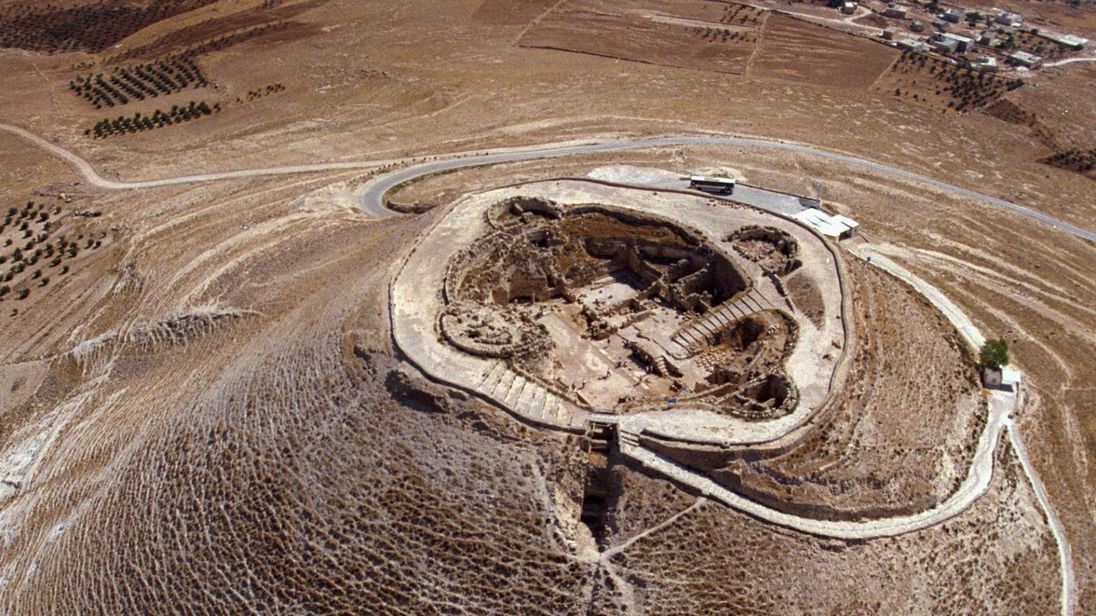
Rising from the arid landscape of the Judean Desert, near present-day Bethlehem in Israel, Herodium—also known as King Herod’s Palace-Fortress—is one of the most impressive and enigmatic archaeological sites of the ancient world. Built by Herod the Great between 23 and 15 BCE, this fortress-palace not only served as a symbol of royal authority and Roman allegiance but also became the king’s final resting place.
Today, Herodium stands as a testament to Herod’s grandeur, architectural vision, and enduring influence over Judean history.
The Origins of Herodium: A Monument to Victory and Legacy
Herodium was constructed on a man-made hill, an unusual feat in the ancient world. According to the Jewish historian Flavius Josephus, Herod named the fortress in honor of a military victory over Jewish rebels that occurred in the area. To mark the site, he built an elaborate and fortified complex designed to display his power, wealth, and loyalty to Rome.
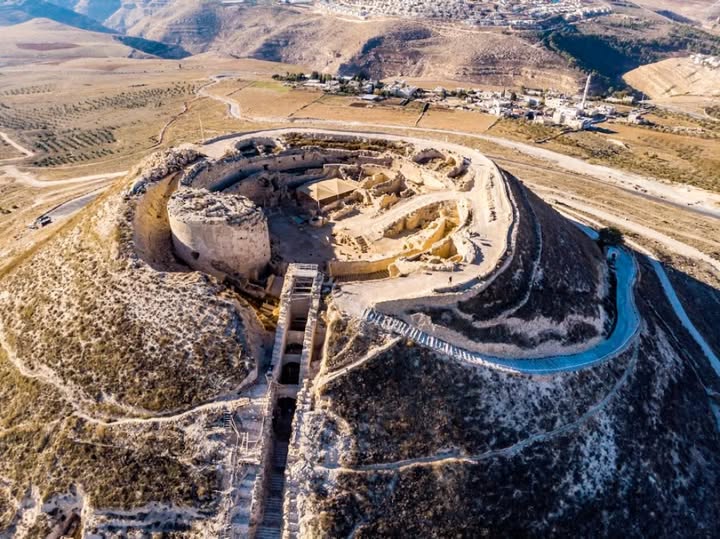
The hill itself was reshaped and heightened to accommodate the palace and create a cone-like silhouette, visible from miles across the desert. Herod’s vision was not only architectural but symbolic—Herodium was meant to be both a fortress against enemies and a mausoleum fit for a king.
King Herod: The Man Behind the Monument
Herod the Great, born in 73 BCE, was the second son of Antipater the Idumaean, a prominent official under Hyrcanus II, and Cypros, a Nabatean princess from Petra. His ancestry combined Edomite and Nabatean roots, and his family had converted to Judaism a generation earlier.
Appointed King of Judaea by the Romans, Herod ruled from 37 BCE until his death in 4 BCE. His reign was marked by political shrewdness, economic development, and ambitious building projects, including:
-
The Second Temple renovation in Jerusalem
-
The coastal city of Caesarea Maritima
-
The Masada fortress
-
And, of course, Herodium
Despite his controversial reign—known for tyranny, executions, and palace intrigue—Herod left a transformative architectural legacy that shaped the landscape of ancient Judea.
Architectural Features of Herodium: Fortress, Palace, and Tomb
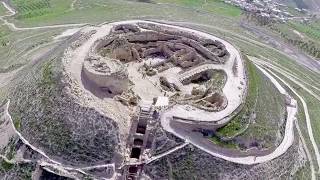
Herodium was both a residential palace and a military stronghold, combining luxury and security in one strategic location. Built atop an artificial hill rising nearly 758 meters above sea level, the complex offered panoramic views of Jerusalem, Bethlehem, and the Dead Sea.
Key Architectural Elements:
-
Circular Fortress: Herodium’s crown was a circular walled fortress, about 63 meters in diameter, with four towers. The eastern tower—larger than the others—likely served as Herod’s private quarters.
-
Luxurious Palace: The inner palace contained frescoed halls, marble floors, and mosaic decorations, reflecting Roman artistic influence.
-
Bathhouse and Gardens: Herod’s palace included a Roman-style bathhouse with caldarium (hot room), tepidarium (warm room), and frigidarium (cold plunge), along with well-irrigated gardens.
-
Underground Cisterns: A sophisticated water system supplied the arid site via aqueducts and cisterns, ensuring a steady water supply.
-
Mausoleum: On the slope of the hill, archaeologists uncovered what is believed to be Herod’s tomb, complete with a royal sarcophagus—badly shattered but unmistakably ornate.
Herod’s Burial and the Mystery of the Tomb
Herod had planned for Herodium to be his eternal resting place, embedding his legacy into the very stones of the fortress. For centuries, the location of his tomb remained a mystery, despite ancient texts hinting at its presence.
In 2007, Israeli archaeologist Ehud Netzer discovered remains of what he believed to be Herod’s mausoleum on the northeastern slope of Herodium. The structure, once an elegant two-story tower, held fragments of a red-colored limestone sarcophagus—though looters or anti-Herodian rebels may have deliberately destroyed it after his death.
While some debate continues around the tomb’s authenticity, most scholars accept it as the most likely burial site of King Herod.
Life at Lower Herodium: Administrative and Civic Spaces
At the base of the hill lies Lower Herodium, a sprawling complex that likely housed administrative offices, servants’ quarters, and recreational facilities. Among the significant finds:
-
A large pool and garden complex, possibly used for public ceremonies
-
Roman-style villa architecture indicative of Herod’s Roman affiliations
-
Evidence of syncretic cultural influences, blending Roman and Judean traditions
These lower facilities demonstrate that Herodium functioned as more than a fortress—it was a miniature city, a place of governance, entertainment, and cultural display.
Destruction and Rediscovery: From Jewish Revolts to Archaeological Triumph
After Herod’s death, Herodium played a key role during the First Jewish–Roman War (66–73 CE) and later during the Bar Kokhba Revolt (132–135 CE). Jewish rebels occupied the fortress, modifying parts of it for defense. The site was eventually captured and abandoned, and sand covered much of the once-majestic complex.
Herodium remained buried and largely forgotten until the 20th century, when systematic archaeological excavations began under various Israeli institutions. Since the early 1970s, the site has been partially restored and opened to the public as part of Herodium National Park.
Modern Significance and Tourism
Today, Herodium is a popular tourist destination, attracting history enthusiasts, archaeologists, and spiritual pilgrims. It offers:
-
Panoramic desert views
-
Interactive visitor centers
-
Reconstructed stairways and towers
-
A profound connection to biblical and Roman history
Ongoing conservation efforts ensure that the site’s delicate architecture and mosaics are preserved, while digital reconstructions help visitors visualize the splendor of Herod’s reign.
Herodium’s Place in Jewish, Roman, and Christian Histories
Herodium is more than a palace or a tomb—it is a crossroads of civilizations. It embodies:
-
Roman engineering adapted to the Judean environment
-
The tension between local Jewish culture and imperial Roman authority
-
A ruler’s desire for immortality through architecture
For Christians, Herod is remembered for his role in the Nativity narrative, particularly the Massacre of the Innocents. For Jews, he is a figure of both achievement and oppression. Herodium, therefore, serves as a historical lens through which to examine the complex legacies of power, faith, and identity in ancient Judea.
Conclusion: Herodium as a Lasting Legacy of Ambition
Herodium is a singular site where royalty, religion, and rebellion converge. Built by one of the most powerful—and controversial—figures in Jewish and Roman history. It continues to capture the imagination of modern visitors and scholars alike.
From its strategic hilltop fortress to the enigmatic tomb believed to house Herod himself. Herodium offers a rare glimpse into the ambitions of a king who sought eternity in stone. Its preservation not only honors the past but invites ongoing dialogue. About history, identity, and legacy in the land where three great world religions took root.
ALSO READ: The Jericho Mosaic: A Reclaimed Treasure of Palestinian Heritage