China’s Millennium Hanging Temple: An Architectural and Spiritual Marvel
A Temple Suspended in Time
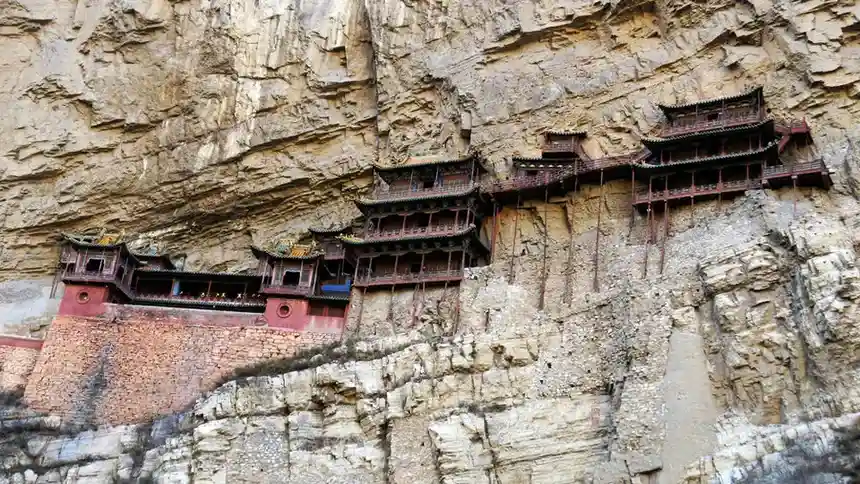
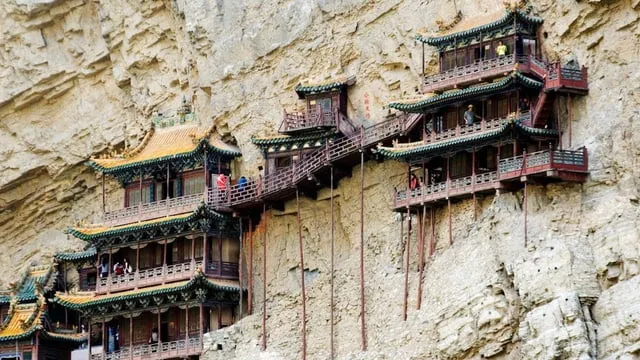
Clinging precariously to a cliff face in Shanxi Province, China, the Hanging Temple (Xuankong Si) is one of the most astonishing feats of ancient architecture in the world. Built more than 1,500 years ago, the temple appears to defy gravity, perched 75 meters above the ground on the side of Mount Hengshan.
This millennium-old structure has captivated travelers, architects, and spiritual seekers alike. Constructed without nails, supported by wooden beams embedded into rock, and adorned with shrines from three major Chinese religions—Buddhism, Taoism, and Confucianism—the Hanging Temple is a true cultural and engineering marvel.
Adding to its mystique is the shadow of a Buddha, said to appear near the top of the temple, offering visitors a spiritual experience that blends art, architecture, and natural wonder.
The Origins of the Hanging Temple
Founding and Early Construction
Historical records suggest the temple was first built around 491 CE, during the Northern Wei Dynasty. According to tradition, the monk Liao Ran designed the temple to provide a retreat for meditation, isolated from worldly distractions and safe from floods and bandits.
Purpose and Symbolism
By building it into the side of a cliff, the temple symbolized spiritual transcendence—a place suspended between heaven and earth. Its location on Mount Hengshan, one of China’s sacred mountains, further underscores its religious significance.
Architectural Marvel: How Is It Built?
Defying Gravity
The Hanging Temple appears impossibly delicate, yet it has stood for over a millennium. Its stability comes from a combination of:
-
Timber beams inserted into holes carved deep into the cliff.
-
Cantilevered design that distributes weight into the rock face.
-
Rock foundation that shields much of the structure from erosion and wind.
No Nails Used
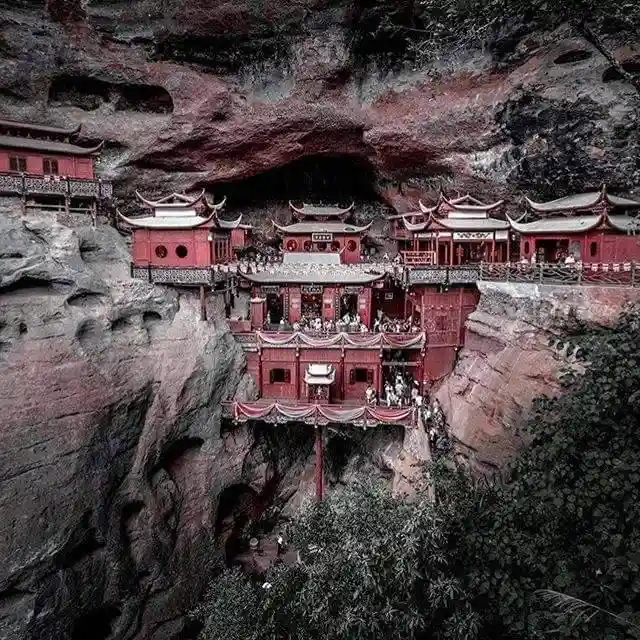
One of its most extraordinary aspects is that the temple was built without nails. Wooden joints and interlocking brackets hold the structure together, a testament to the ingenuity of ancient Chinese carpentry.
Scale and Layout
Although compact, the temple contains over 40 halls and pavilions, linked by narrow walkways, corridors, and staircases that cling to the cliffside. Visitors often describe the experience of walking along the temple as both exhilarating and humbling.
The Spiritual Dimension: Three Religions in One Temple
The Hanging Temple is unique in that it houses statues and altars dedicated to Confucianism, Buddhism, and Taoism under one roof.
-
Buddhism: Shrines honor the Buddha and bodhisattvas, representing enlightenment and compassion.
-
Taoism: Statues of Laozi and Taoist deities reflect harmony with nature and immortality.
-
Confucianism: Confucius is enshrined as a teacher of ethics and moral order.
This integration of three traditions demonstrates China’s long history of religious pluralism and syncretism.
The Shadow of the Buddha
A Mystical Phenomenon
One of the most remarkable features of the Hanging Temple is the shadow of a Buddha said to appear near the top of the structure. At certain times of the day, depending on sunlight and positioning, the interplay of light and rock creates a silhouette resembling a seated Buddha.
Symbolic Significance
For many pilgrims, this shadow is more than an optical effect—it is a spiritual sign, reinforcing the temple’s aura of mystery and sanctity. Visitors often describe it as a deeply moving moment, combining natural wonder with religious devotion.
Why Build a Temple on a Cliff?
Practical Reasons
-
Flood Protection: By building above ground level, the temple was safe from river floods.
-
Seclusion: Its remote location provided monks with isolation for meditation.
-
Defense: Its elevation offered protection from invaders or bandits.
Spiritual Symbolism
The cliffside design mirrors the Buddhist and Taoist ideals of transcendence, embodying the quest to rise above worldly concerns and approach spiritual enlightenment.
Preservation Through the Ages
Dynastic Renovations
The temple has been repaired and expanded across multiple dynasties, including the Tang, Ming, and Qing periods. Each renovation preserved its original style while adding new elements, ensuring continuity of its sacred role.
Modern Recognition
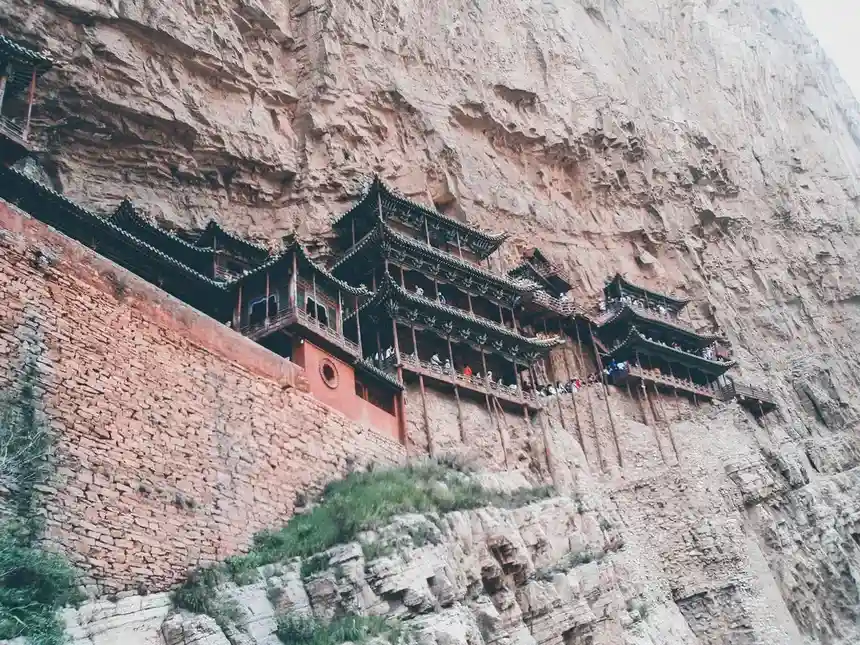
Today, the Hanging Temple is protected as a national cultural heritage site in China and is recognized globally as an architectural wonder. It draws scholars, tourists, and spiritual pilgrims from across the world.
Visiting the Hanging Temple Today
Location and Access
The Hanging Temple is located about 65 kilometers from Datong City in Shanxi Province. Visitors often combine it with a trip to the Yungang Grottoes, another UNESCO World Heritage site nearby.
Experience
-
Walk along wooden corridors suspended above dizzying drops.
-
Explore halls dedicated to Confucianism, Taoism, and Buddhism.
-
Witness the Buddha shadow, if fortunate enough to arrive at the right time.
For many, standing on the temple’s platforms offers both breathtaking views and a profound sense of awe.
The Hanging Temple in Global Context
The Hanging Temple joins the ranks of other extraordinary cliffside structures worldwide, such as:
-
Tiger’s Nest Monastery (Paro Taktsang), Bhutan
-
Meteora Monasteries, Greece
-
Sumela Monastery, Turkey
Like these, it embodies the human desire to connect the earthly and divine through daring architecture.
Fun Facts About the Hanging Temple
-
The temple’s name in Chinese, Xuankong Si (悬空寺), literally means “Temple Hanging in the Air.”
-
It is the only surviving temple in China that combines Buddhism, Taoism, and Confucianism.
-
The highest point of the temple sits around 246 feet (75 meters) above the ground.
-
Walking along its corridors gives the sensation of “floating between heaven and earth.”
Why the Hanging Temple Matters
The Hanging Temple is more than just an architectural feat—it is a symbol of faith, endurance, and creativity. It represents how human beings can harmonize with nature, turning an impossible location into a place of worship and wonder.
Its survival for over a millennium, despite exposure to the elements and seismic activity, highlights the brilliance of ancient Chinese engineering. At the same time, its spiritual inclusivity reflects a message of harmony between traditions that still resonates today.
Conclusion: A Temple That Touches Heaven
The Hanging Temple of China stands as one of the world’s most awe-inspiring monuments, where architecture, religion, and nature converge. Suspended against the cliffs of Mount Hengshan, it embodies both the fragility and resilience of human creation.
Whether one comes to marvel at its engineering, to honor its spiritual significance, or simply to feel the thrill of walking above the void, the Hanging Temple offers a timeless experience.
In its shadow and its silence, we find echoes of devotion, ingenuity, and the enduring human aspiration to reach for the divine.
ALSO READ: The Unexploded 406mm Mk. 13 Shell from USS New Jersey: A Relic of the Vietnam War