Hidden Passageway Discovered Inside the Great Pyramid of Giza: A New Chapter in Egypt’s Ancient Mystery
Dnlocking the Secrets of the Great Pyramid
The Great Pyramid of Giza, one of the Seven Wonders of the Ancient World, continues to captivate scientists and historians alike. For over 4,500 years, it has stood as a monumental symbol of ancient Egyptian ingenuity, architecture, and power. Yet, despite centuries of study, the pyramid still hides secrets within its massive limestone blocks.
In an astonishing revelation, Egypt’s Minister of Tourism and Antiquities, Ahmed Issa, announced the discovery of a nine-meter-long hidden passageway inside the Great Pyramid of Khufu. The corridor, located behind the north-facing chevron zone near the main entrance, represents one of the most significant findings in modern Egyptology.
This remarkable discovery is part of the ScanPyramids Project, an international scientific initiative that has been employing state-of-the-art imaging technologies since 2015 to uncover the hidden mysteries of Egypt’s most iconic monument.
The Discovery: A Nine-Meter Hidden Corridor
Researchers from the ScanPyramids Project identified the hidden corridor using cosmic-ray muon radiography, infrared thermography, and 3D reconstruction techniques. These non-invasive methods allow scientists to map the interior of the pyramid without physically drilling or disturbing the ancient structure.
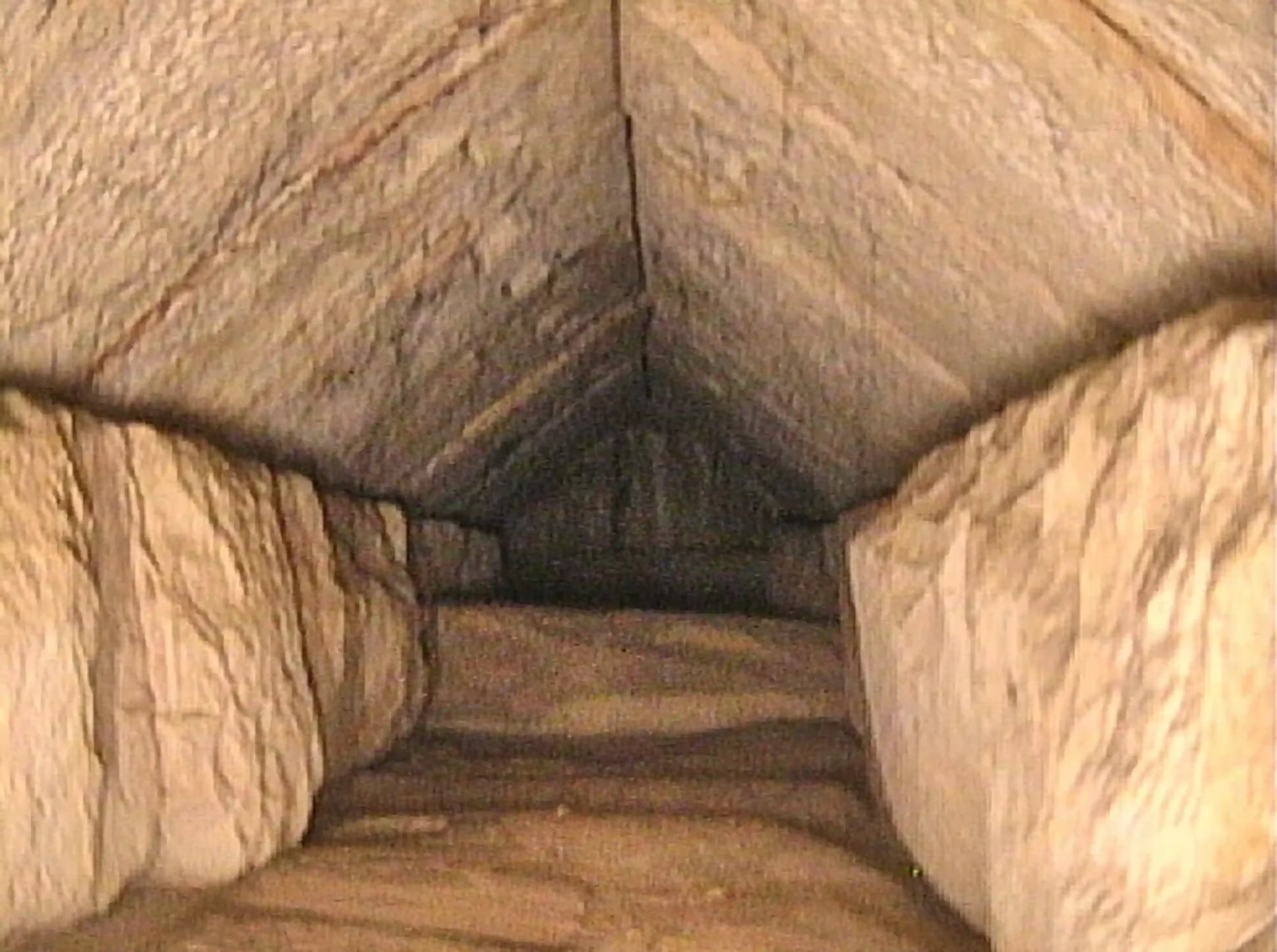
Located just behind the chevron zone—a distinctive architectural feature above the pyramid’s main entrance—the newly found corridor measures approximately nine meters in length and two meters in width. It lies within the northern face of the pyramid, concealed for millennia behind layers of stone.
According to Mostafa Waziri, the Secretary-General of Egypt’s Supreme Council of Antiquities, the corridor’s gabled ceiling suggests it was designed to relieve structural pressure on certain parts of the pyramid. However, its true function remains a mystery.
“A big question mark hangs over whether this corridor was created to relieve the weight on the main entrance or to lighten the load on a space yet to be discovered,” Waziri told reporters at the site.
This mystery leaves open the tantalizing possibility that the corridor may lead to an undiscovered chamber, potentially holding artifacts or even a royal burial chamber.
What Makes This Discovery So Important
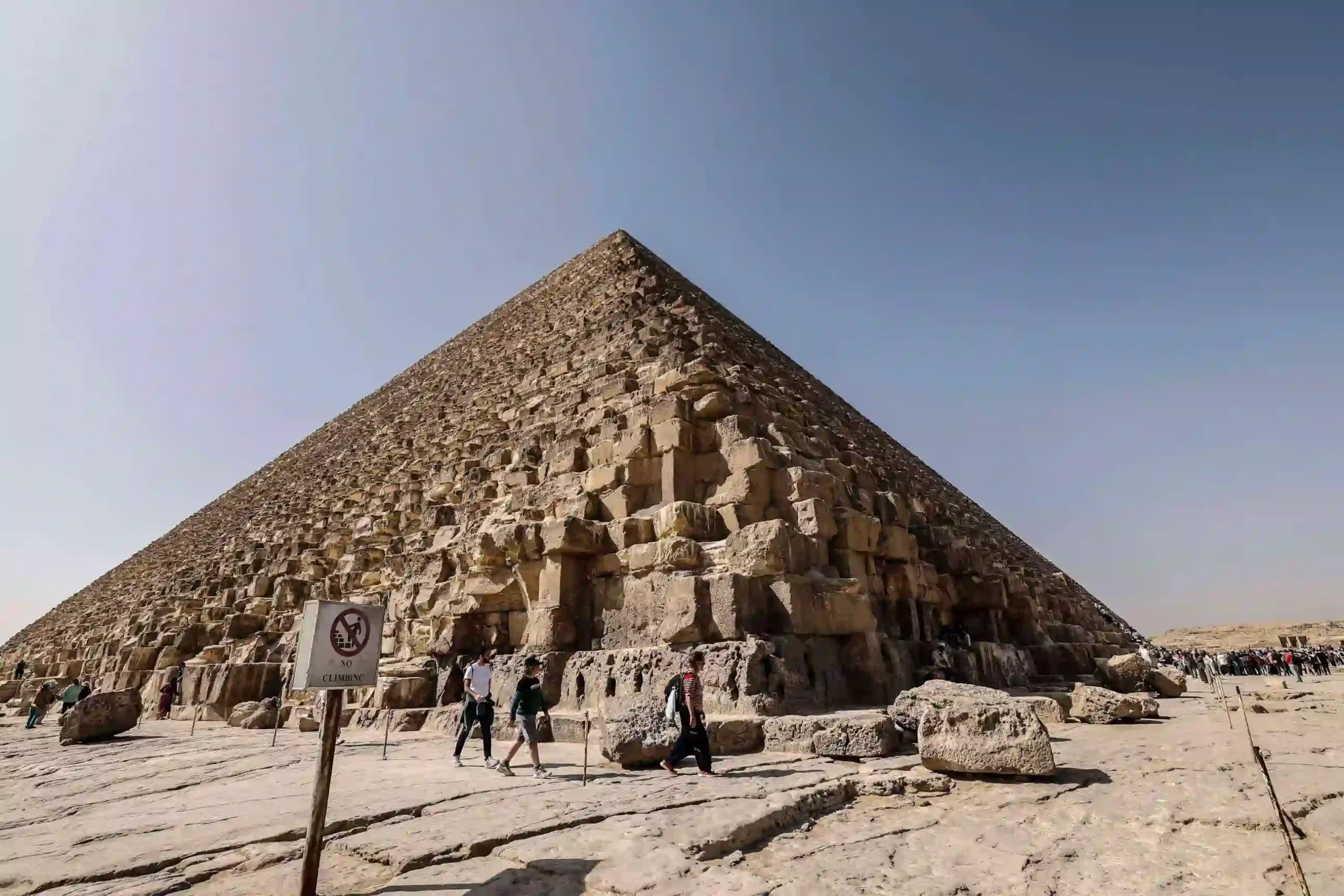
The Great Pyramid of Giza, also known as the Pyramid of Khufu or Cheops, has long been the subject of fascination for both scholars and explorers. Constructed around 2560 BCE during Egypt’s Fourth Dynasty, it served as a royal tomb for Pharaoh Khufu. It originally stood at 146.6 meters (481 feet)—making it the tallest structure on Earth for nearly 4,000 years.
Despite centuries of exploration, the pyramid has remained remarkably secretive. The discovery of this new corridor could provide invaluable clues about how such an enormous monument was constructed using ancient tools and engineering techniques.
Experts suggest that identifying unknown internal voids could help scientists understand:
-
How ancient Egyptians distributed weight and pressure throughout the pyramid.
-
Whether additional hidden chambers or burial rooms exist.
-
How advanced the construction techniques of the 4th Dynasty truly were.
The ScanPyramids Project – Science Meets Ancient History
Launched in 2015, the ScanPyramids Project is an international collaboration led by Egypt’s Ministry of Antiquities, the Faculty of Engineering at Cairo University, and the HIP Institute (Heritage Innovation Preservation) in France.
The project utilizes non-destructive scanning technologies to peer inside the massive stones of Egypt’s pyramids. Techniques include:
-
Muon Radiography:
This method uses cosmic-ray muons—tiny particles that constantly strike the Earth—to detect density differences inside massive structures. When muons pass through the pyramid, they are absorbed differently depending on the material’s density, revealing hidden spaces. -
Infrared Thermography:
By detecting variations in temperature on the pyramid’s surface, researchers can identify areas that may conceal voids or open spaces behind the stone blocks. -
3D Reconstruction and Endoscopy:
These techniques create digital models and allow small cameras to explore the interiors of discovered cavities for the first time.
It was through this combination of technologies that the hidden nine-meter corridor came to light—proving once again that modern science can illuminate the achievements of ancient civilizations.
Historical Context: The Legacy of Pharaoh Khufu
Pharaoh Khufu, who ruled during Egypt’s Fourth Dynasty (around 2589–2566 BCE), commissioned the Great Pyramid as his eternal resting place. The structure was designed with astounding precision, aligned with the cardinal points and built from an estimated 2.3 million limestone and granite blocks.
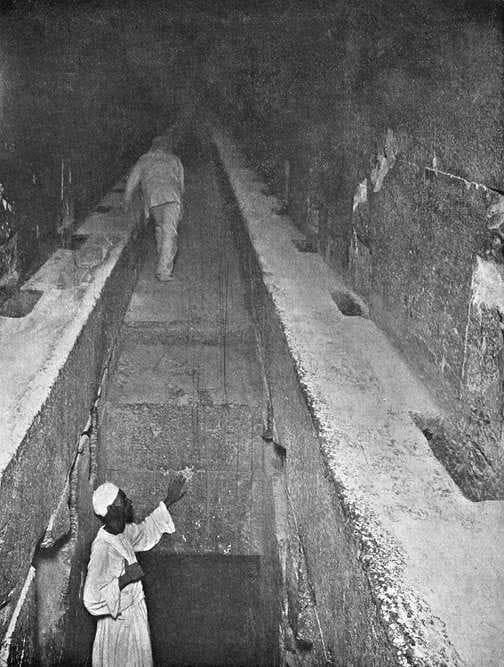
Inside, the pyramid contains a network of chambers and passageways, including:
-
The King’s Chamber, believed to hold Khufu’s sarcophagus.
-
The Queen’s Chamber, whose true purpose remains debated.
-
The Grand Gallery, a long ascending corridor leading to the King’s Chamber.
The newly discovered corridor may relate to this internal network—possibly an engineering solution or a symbolic architectural element tied to ancient Egyptian religious beliefs about the afterlife.
The Chevron Technique and Structural Design
The corridor was found behind the chevron blocks, triangular stone formations that form part of the pyramid’s outer structure. These chevrons were used as load-distribution devices, designed to redirect weight away from delicate internal spaces like corridors or chambers.
The gabled design of the hidden corridor’s ceiling reinforces the theory that it was meant to reduce structural stress on the main entrance—or protect a chamber that has yet to be found. The discovery of such architectural features deepens our understanding of the engineering brilliance of the ancient Egyptians, who achieved feats of construction that remain unparalleled even today.
Past Discoveries by the ScanPyramids Team
This is not the first major breakthrough by the ScanPyramids Project.
-
In 2016, the team detected an unknown cavity near the pyramid’s northeastern edge.
-
In 2017, they announced the discovery of a large internal void. Described as the first major inner structure identified since the 19th century.
Both findings reshaped our perception of the pyramid’s internal complexity. And the new hidden passage adds yet another layer to this ancient architectural puzzle.
Tourism and Egypt’s Archaeological Renaissance
Egypt has long relied on tourism as a cornerstone of its economy. Drawing millions of visitors eager to see its timeless monuments. However, the industry suffered setbacks due to political instability following the 2011 revolution and the global COVID-19 pandemic.
Now, with a renewed focus on archaeological discoveries and international collaborations, Egypt aims to revitalize its tourism sector. Recent high-profile finds—such as the “Lost Golden City” of Luxor. New Saqqara tombs, and the Avenue of the Sphinxes restoration—have already reignited global fascination.
The discovery of the hidden passage in the Great Pyramid of Giza adds to this momentum. Offering both scientific insight and touristic appeal.
The Continuing Mystery of the Great Pyramid
Despite centuries of study, the Great Pyramid of Giza continues to withhold many of its secrets. Each new discovery not only answers questions about Egypt’s ancient builders but also raises new ones.
Will the hidden corridor lead to another chamber?
Could it contain untouched relics or inscriptions that reveal more about Khufu’s reign?
The answers remain hidden within the pyramid’s limestone heart — waiting for technology, patience, and curiosity to reveal them.
Conclusion: A Monument That Still Speaks Across Millennia
The discovery of a nine-meter hidden passage inside the Great Pyramid of Giza. Is a testament to the enduring mystery of ancient Egypt. It bridges the gap between past and present. Showing how modern science and ancient craftsmanship continue to engage in a dialogue across thousands of years.
As scanning and excavation work continue, each new revelation at Giza reminds us that history is never truly finished. It merely waits to be rediscovered, one stone at a time.
ALSO READ: Villa Romana del Casale – A Journey Through Time in the Heart of Sicily