The Goseck Circle – Europe’s Oldest Solar Observatory
A Circle That Captured the Sun
In the rolling fields of Saxony-Anhalt, Germany, lies a quiet, circular structure that has watched over the earth and sky for nearly 7,000 years. Known as the Goseck Circle, this ancient enclosure represents one of humanity’s earliest attempts to measure time through the movement of the sun.
Dating back to around 4900 BCE, the Goseck Circle is older than Stonehenge and even the Egyptian pyramids. It stands as a symbol of humankind’s awakening curiosity — a bridge between earthbound existence and celestial wonder.
When the winter solstice dawn rises through its gates, light pours into the ancient circle as it once did thousands of years ago — a timeless alignment between human ingenuity and cosmic rhythm.
The Discovery of the Goseck Circle
The Goseck site was first detected in 1991, not through excavation, but from the air. Archaeologists spotted faint circular soil patterns — discolorations that hinted at buried structures. Excavations began in 2002, led by researchers from the University of Halle-Wittenberg and the State Museum of Prehistory in Halle.
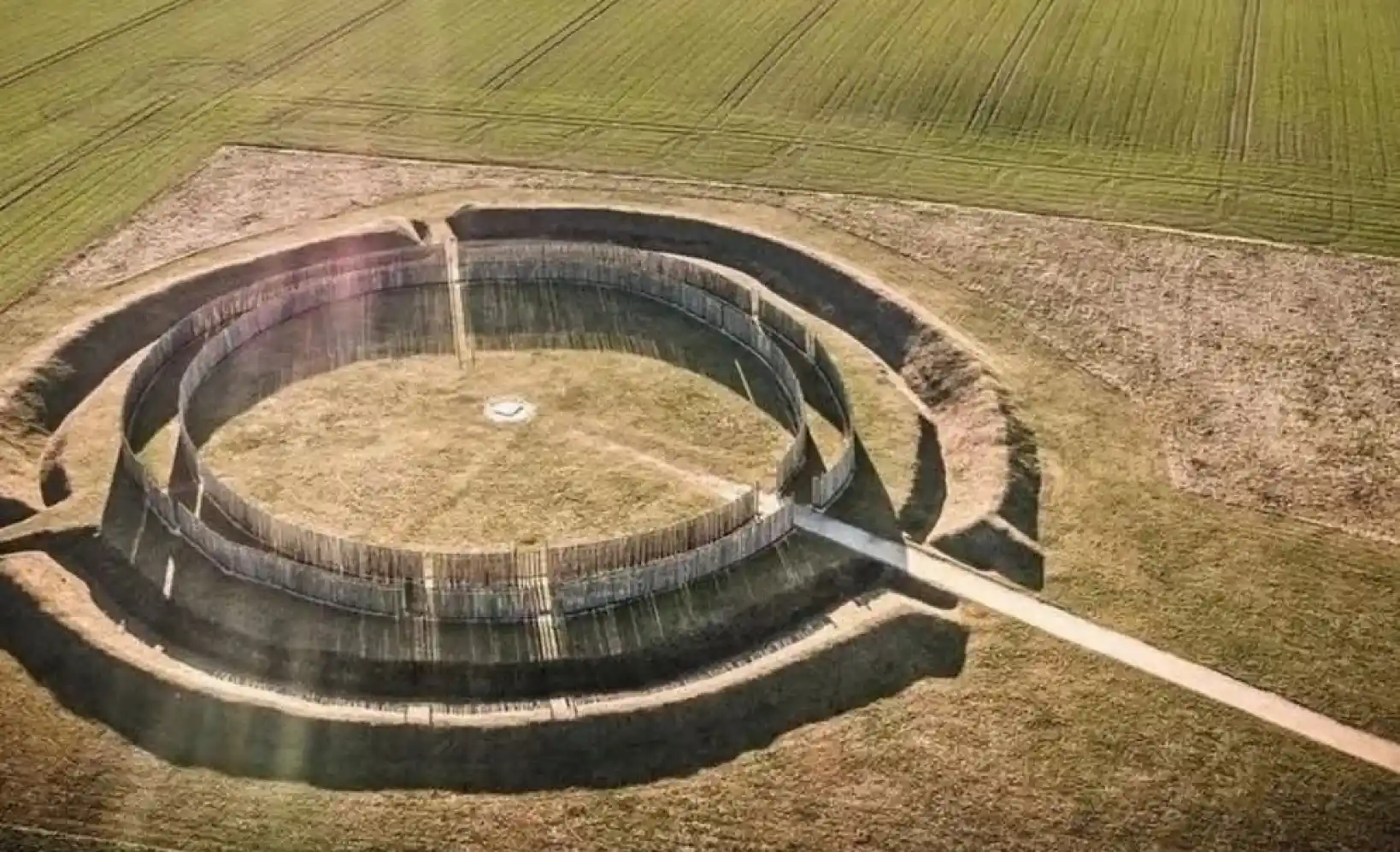
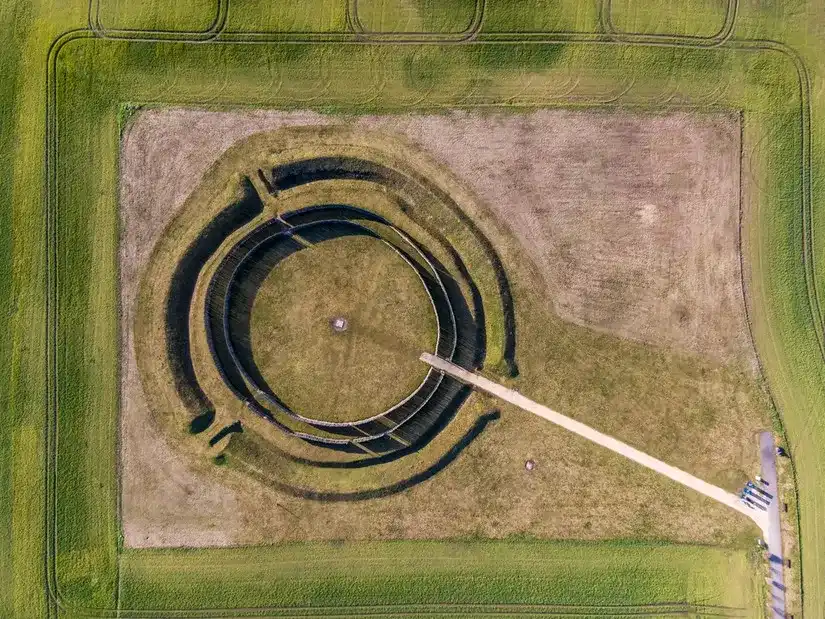
What they uncovered was astonishing: a perfectly circular complex consisting of
-
A 60-meter-wide ditch,
-
Two concentric wooden palisades, and
-
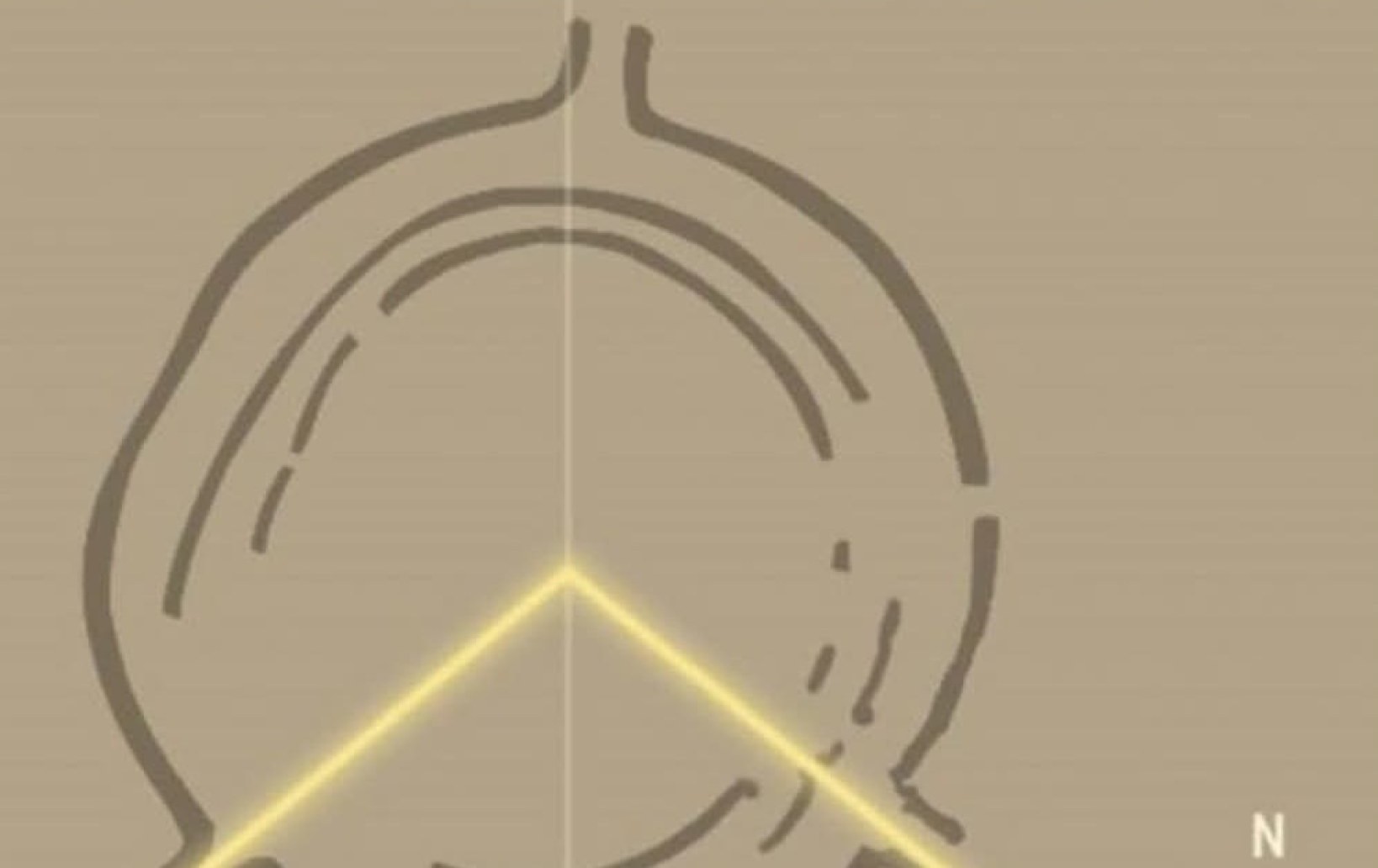
Three evenly spaced gates, precisely aligned with the winter solstice sunrise and sunset.
This remarkable structure, dated to the early Neolithic period, belonged to the Stroked Pottery Culture (STK), one of Europe’s earliest farming communities. These early agriculturalists built the Goseck Circle not merely as shelter or defense — but as a cosmic observatory.
Design and Structure: A Blueprint of the Heavens
The Goseck Circle’s design reveals a sophisticated understanding of astronomy far ahead of its time. The site features three narrow gates oriented to specific celestial events:
-
The southeastern gate aligns with the winter solstice sunrise.
-
The southwestern gate aligns with the winter solstice sunset.
-
The northern gate likely pointed toward the celestial pole, serving as a reference point for orientation.
When the sun rose or set during the solstice, its light would pierce through the two southern gates, illuminating the central space — a phenomenon that still occurs today when reconstructed.
Such precision implies that Neolithic people had systematically observed solar movements for generations, translating the cycle of the heavens into architecture and ritual.
A Solar Calendar for Survival
The alignment of the Goseck Circle was not accidental. For early agricultural societies, understanding the solar year was vital. The winter solstice — the shortest day and longest night of the year — marked the sun’s return, signaling the beginning of a new agricultural cycle.
By observing where the sun rose and set at different times of the year, ancient farmers could predict the changing seasons, ensuring the timing of planting and harvesting. The Goseck Circle, therefore, served as an agricultural calendar, a sacred tool for survival.
But it was also a place of spiritual renewal. The solstice likely symbolized rebirth — the triumph of light over darkness — celebrated with rituals that bound community, faith, and the cosmos together.
Rituals and Ceremonies: The Sacred Heart of the Circle
Though no written records survive, evidence suggests that the Goseck Circle was more than a scientific observatory — it was a ceremonial center. Archaeologists discovered traces of fires, animal bones, and pottery shards, indicating ritual feasting and offerings.
Some bones showed signs of sacrifice, possibly linked to solar worship or seasonal rites meant to ensure fertility and balance. The alignment of the gates with the solstice implies that gatherings occurred at specific times of the year — moments when the community communed with the cosmos.
The circle’s design — open to the heavens yet enclosed by wooden walls — created a sacred boundary, separating the world of the living from the divine. Within this space, the early Europeans performed the first cosmic ceremonies, linking human existence to the rhythm of the sun.
From Goseck to Stonehenge: Europe’s Prehistoric Skywatchers
The Goseck Circle is one of more than 250 “circular enclosures” discovered across Central Europe, stretching from Germany and Austria to the Czech Republic and Slovakia. Collectively, they reveal a pan-European tradition of astronomical observation long before the Bronze Age.
These sites are the forerunners of later megalithic monuments, including Stonehenge in England and Newgrange in Ireland. Each evolved independently, but all share a common theme: aligning the human world with celestial order.
While Stonehenge is built of stone and grandeur, Goseck represents the earlier wooden stage of this architectural lineage — a simpler yet equally profound dialogue between earth and sky.
The Goseck Circle Today: Reconstructed Heritage
In 2005, the Goseck Circle was reconstructed using wooden palisades on its original site. Visitors can now walk its circular paths, stand within its gates, and experience the winter solstice sunrise just as ancient observers did 7,000 years ago.
Each December, archaeologists, locals, and visitors gather to watch the dawn light cut through the circle — a living connection between past and present. The site also includes a visitor center and museum that displays artifacts, models, and research findings, allowing guests to explore the intersection of archaeology, astronomy, and spirituality.
Recognized as part of Europe’s Neolithic Heritage Network, Goseck stands as a UNESCO-worthy symbol of early scientific thought and collective human wonder.
Decoding the Mystery: Science Meets Faith
The purpose of the Goseck Circle has inspired much debate among scholars. Was it purely an observatory? A temple? A social gathering place? The truth likely lies in its multifunctional nature.
For Neolithic societies, science and spirituality were inseparable. Observing the sun’s path was not just practical — it was sacred. The precision of Goseck’s alignment suggests that ancient people viewed the cosmos as a living system, where human rituals echoed the cycles of the stars.
In this light, the Goseck Circle becomes not just an early calendar but an earthly reflection of cosmic order, a physical manifestation of humanity’s first attempts to understand its place in the universe.
Legacy: Humanity’s First Dialogue with the Cosmos
The Goseck Circle reminds us that our ancestors were not primitive, but deeply observant, attuned to nature’s patterns with a precision born of necessity and reverence. Long before telescopes or mathematics, they carved time into the land. Marking the sun’s journey as both science and sacred story.
Each solstice beam that cuts through Goseck’s gates is a message from the past. A whisper of awe, curiosity, and connection. The people who built this circle may be gone. But their dialogue with the cosmos continues, echoing in the sunlight that still traces its ancient paths.
Conclusion: The Light That Never Fades
As dawn spills through the wooden gates of the Goseck Circle each December, it reawakens one of humanity’s oldest dreams. To measure time, to understand the heavens, to find meaning in the movement of light.
In that moment, 7,000 years collapse into a single ray of sunlight. Proof that our search for cosmic order began not in laboratories or observatories, but in the quiet circles carved into the earth.
The Goseck Circle stands as a timeless reminder that from the very beginning. We looked up — and found ourselves reflected in the stars.
ALSO READ: The Ghost Fortress of the Silk Road – Jiayuguan Ancient City