The Gorilla Rock – A Mythic Vision of the Mediterranean
Where Myth Meets Stone
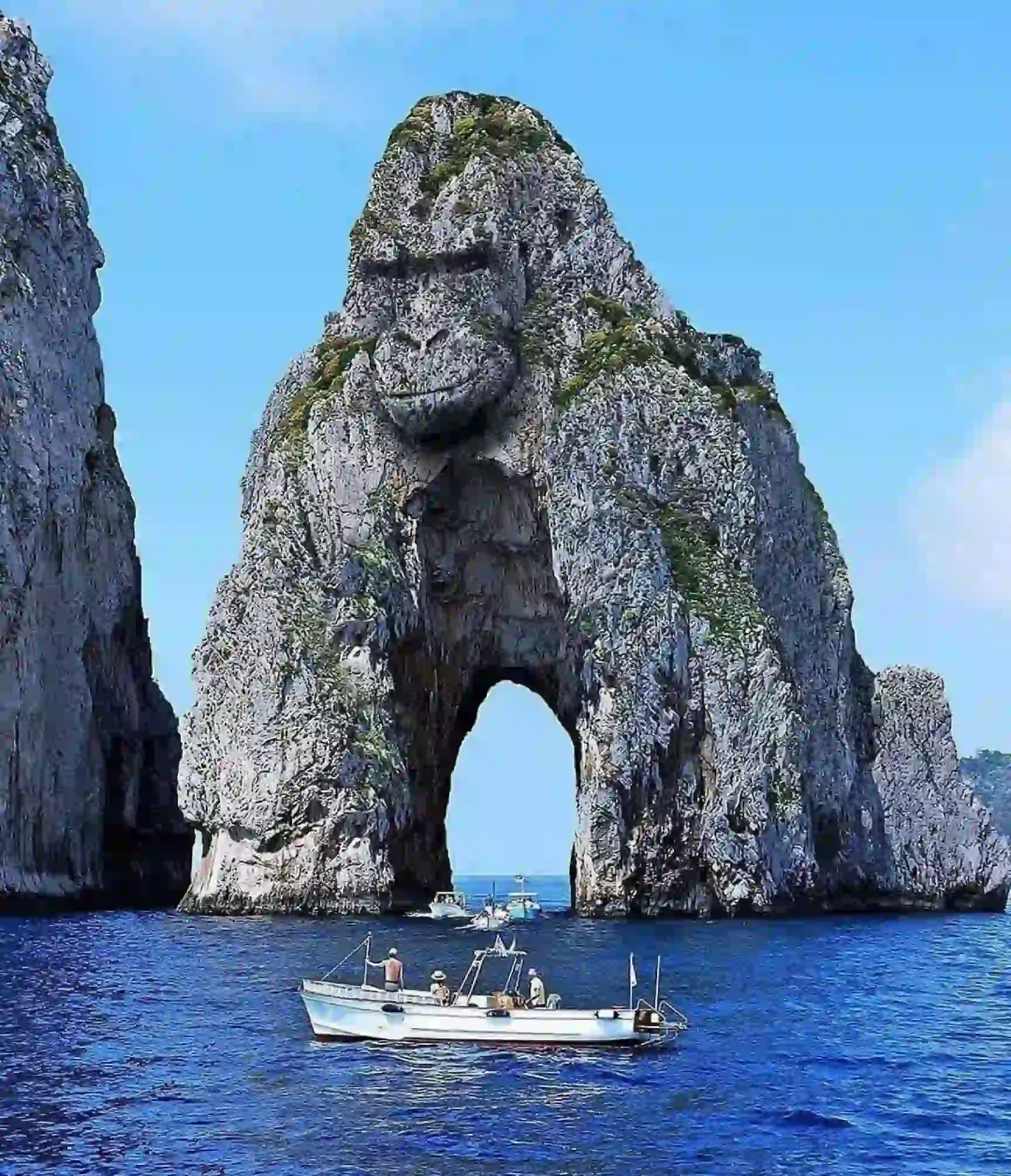
Rising from the sapphire waters of the Mediterranean Sea, The Gorilla Rock is more than a digital masterpiece—it is a dialogue between imagination and the natural world. Inspired by the legendary limestone formations of Capri’s Faraglioni, this conceptual artwork envisions a colossal sea arch that bears the unmistakable form of a gorilla’s face—a fusion of geological wonder and mythic symbolism.
The Gorilla Rock captures the essence of the Mediterranean, where sun, salt, and stone have shaped civilizations and stories for millennia. Here, the timeless power of nature meets the boundless creativity of human vision, evoking a deep question: what if the Earth itself could sculpt its guardians?
The Inspiration: Capri’s Faraglioni and the Spirit of the Sea
The real-life Faraglioni of Capri—three towering limestone stacks rising from the Tyrrhenian Sea—are among the most iconic coastal formations in the world. These natural sentinels have inspired artists, poets, and travelers for centuries.
A Geological Legacy
-
Formed by erosion and tectonic uplift, the Faraglioni date back millions of years.
-
Waves, wind, and saltwater carved the cliffs into arches, spires, and caverns, creating forms that seem alive.
-
Their pale limestone, glowing gold in the Mediterranean sun, reflects both fragility and endurance.
The Gorilla Rock draws from this natural artistry, imagining a new mythic figure within the Mediterranean’s geological language—a stone guardian that embodies strength, mystery, and evolution itself.
The Vision: A Guardian Shaped by Nature and Time
In this digital reimagining, The Gorilla Rock rises dramatically from azure waves, its contours echoing the face of a great ape—an ancient watcher carved not by hands, but by wind and water.
Features and Symbolism
-
The arching jaw forms a natural gateway, large enough for boats to pass through—symbolizing connection between realms.
-
Moss and vegetation crown its “head,” suggesting age, wisdom, and nature’s reclaiming touch.
-
The texture of the limestone, rough yet graceful, speaks of the millennia-long conversation between sea and stone.
The rock seems to breathe with the tide, as though the Mediterranean itself shaped this figure to remind humanity of its deep evolutionary roots—a reflection of life emerging from the sea.
The Artistic Process: Merging Nature and Digital Imagination
As a work of digital art, The Gorilla Rock bridges traditional landscape inspiration and cutting-edge visual creation.
Concept and Creation
-
Artists studied real geological references from Capri, Amalfi, and the Aeolian Islands.
-
3D modeling and texturing simulated natural erosion, layering virtual stone to mimic authentic limestone stratification.
-
Light and atmosphere were rendered to recreate the Mediterranean’s characteristic glow—that blend of turquoise reflection, golden haze, and oceanic depth.
The result is an immersive digital seascape that feels tangible, breathing with life and history, even though it exists in pixels and imagination.
Nature as a Sculptor: The Geology Behind the Myth
Even though The Gorilla Rock is a digital concept, it reflects real geological processes that shape our planet’s coastal wonders.
Erosion and Formation
-
Over millennia, wave action and chemical weathering carve arches and sea stacks from coastal cliffs.
-
Softer rock erodes faster, leaving behind dramatic forms—sometimes resembling animals, faces, or mythical beings.
-
In regions like Capri, these formations are made of Jurassic and Cretaceous limestone, remnants of ancient seabeds uplifted by tectonic forces.
Thus, the idea of a “gorilla-shaped” rock is not mere fantasy—it is a natural possibility, an artistic interpretation of what nature already does: create living shapes from stone.
Mythology and Meaning: The Gorilla as Symbol
Why a gorilla? In myth and modern symbolism, gorillas represent strength, intelligence, guardianship, and primal connection to the natural world.
Symbolic Layers
-
The gorilla’s face evokes Earth’s ancient consciousness—a reminder that humans share origins with all living beings.
-
Its gaze over the sea suggests protection and endurance, much like ancient Mediterranean deities who guarded sailors and coasts.
-
The natural arch in its “mouth” signifies passage and transformation—moving from one realm to another, from chaos to calm.
By combining these meanings with the Mediterranean’s mythic geography, the artwork invites reflection on how humanity and nature coexist in eternal dialogue.
The Mediterranean Landscape: A Canvas of Myths
From the cliffs of Amalfi to the caves of Capri, the Mediterranean has long been a cradle of myth and inspiration. Legends of sea gods, nymphs, and hidden guardians have emerged from these same waves.
-
Ancient Greeks believed sea caves were the homes of Nereids and spirits of the deep.
-
Roman poets described living rocks that watched over sailors and storms.
-
In local folklore, unusual rock shapes often symbolized divine presence or transformation.
The Gorilla Rock continues this tradition in a modern way—using digital art to breathe new mythic life into a landscape already rich with legend.
Environmental Reflection: Art as a Voice for Nature
Beyond aesthetics, The Gorilla Rock carries an environmental message. The Mediterranean region faces growing challenges—coastal erosion, pollution, and climate change threaten the very beauty that inspired the piece.
This artwork reminds viewers that nature is both fragile and resilient, capable of breathtaking creation but vulnerable to imbalance. Like a silent guardian, the gorilla-shaped rock becomes a metaphor for Earth itself—ancient, powerful, and watching humanity’s choices with quiet endurance.
Viewing the Artwork: A Digital Journey Through Myth and Sea
As part of the digital art movement that blends environmental storytelling and visual immersion, The Gorilla Rock can be experienced in high-resolution displays, VR galleries, and online exhibitions.
The Experience
-
Viewers can explore the rock from multiple angles, watching light shift across the limestone as waves lap its base.
-
Soundscapes recreate the echo of sea breeze, water, and gulls, enveloping the senses.
-
Interactive experiences allow users to sail beneath the arch, witnessing the gorilla’s face emerge gradually from natural shadow and reflection.
The piece stands as a bridge between imagination and environment, inviting global audiences to connect with the essence of the Mediterranean.
Conclusion: The Earth’s Mythic Face
The Gorilla Rock – Mediterranean Coast is more than a work of digital art; it is a visual meditation on time, nature, and myth. Born from the inspiration of Capri’s Faraglioni and sculpted through the language of erosion, light, and imagination, it symbolizes the living connection between humanity and the planet that shaped us.
As waves crash and wind whispers across its digital cliffs. The Gorilla Rock reminds us that beauty is never static—it is alive, evolving, and endlessly reborn.
Perhaps in its stone features we glimpse not only a guardian of the sea. But also a reflection of ourselves—ancient, creative, and bound forever to the rhythms of the Earth.
ALSO READ: Yangshuo Moon Hill: The Iconic Natural Arch of China