The Golden Egyptian Tablet: A Sacred Portal to Eternity
Among the many treasures of ancient Egypt, few carry the same aura of mystery and devotion as the Golden Egyptian Tablet. Dating to the Late Period through the Ptolemaic era (c. 664–30 BCE), this artifact embodies the civilization’s deep connection to ritual, eternity, and divine power.
Inscribed with hieroglyphs and sacred emblems, the tablet was likely created for ritualistic or funerary purposes, designed to invoke protection from the gods and guide the deceased into the eternal afterlife. Unlike mere decorative objects, the golden tablet blends art, language, and faith—transforming precious metal into a vessel of immortality.
Historical Context: Egypt’s Late Period and Ptolemaic Era
The Late Period of Egypt (664–332 BCE) marked a time of both foreign domination and cultural revival. Despite external pressures, Egyptian religious traditions remained strong, with gold and symbolism playing central roles in both state and private rituals.
When Alexander the Great conquered Egypt in 332 BCE, the Ptolemaic dynasty emerged. The Ptolemies blended Greek and Egyptian traditions, yet sacred objects like the golden tablet preserved the continuity of Egyptian spirituality. During this time, artisans crafted objects for temples, tombs, and households that invoked both traditional deities and cosmic forces.
The golden tablet belongs firmly to this tradition, representing a society where religion and eternity defined existence.
Material and Craftsmanship
Gold held immense significance in Egyptian culture. It symbolized:
-
Eternal brilliance, associated with the sun god Ra.
-
Incorruptibility, as gold resisted tarnish, just as the soul was believed to endure beyond death.
-
Divine essence, making it a favored material for ritual and funerary artifacts.
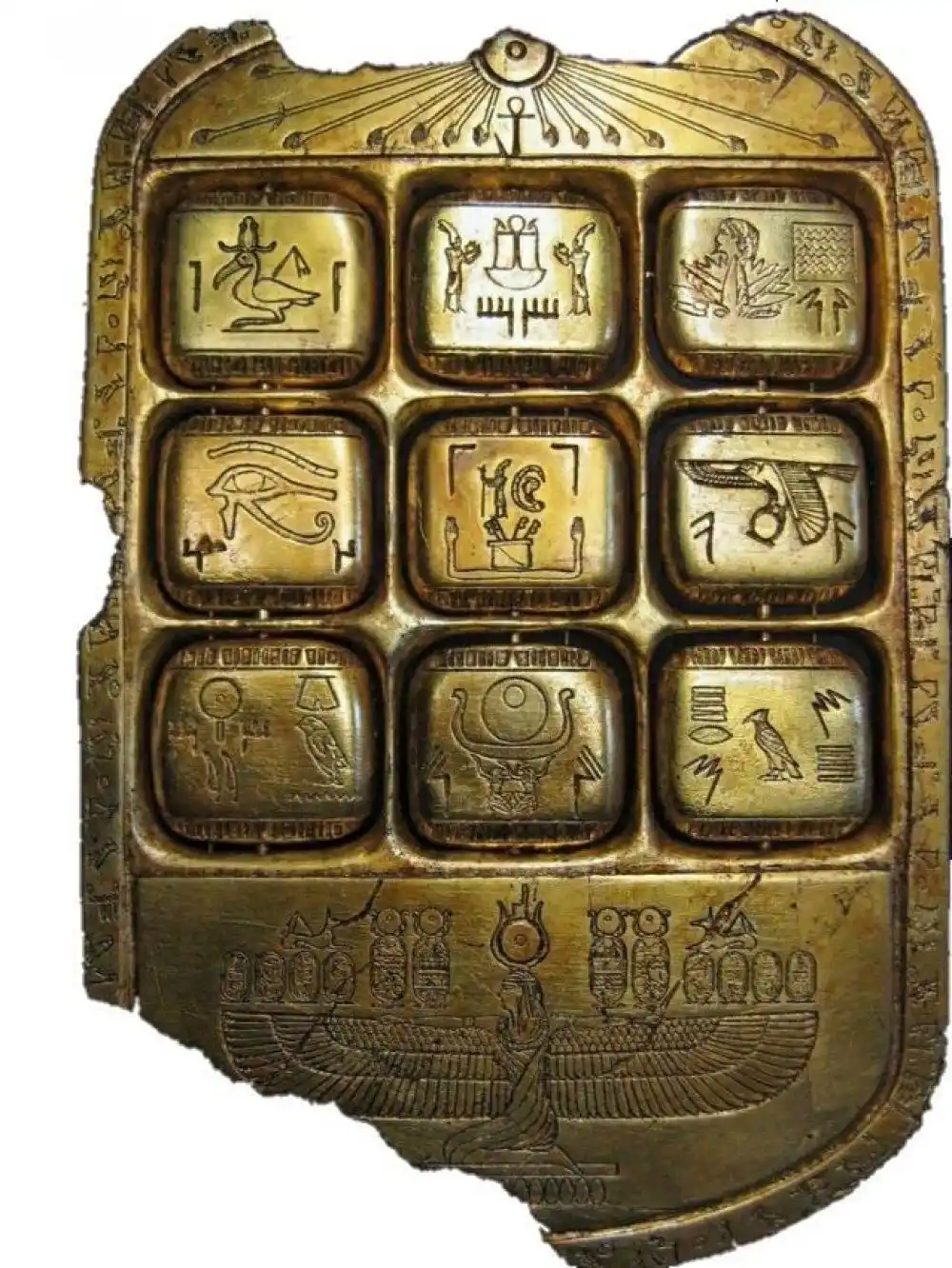
Craftsmen meticulously shaped the tablet, dividing its surface into nine compartments, each with carefully inscribed hieroglyphic symbols. The polished glow of the gold reflected not only wealth and status but also devotion to the gods and faith in the afterlife.
Symbolism of the Nine Compartments
At the heart of the tablet’s meaning lies its division into nine compartments, each carrying a hieroglyphic emblem of profound spiritual weight.
-
The Eye of Horus (Wedjat)
-
Represents protection, health, and restoration.
-
Often used as an amulet, it was thought to safeguard the deceased from harm.
-
-
The Solar Disk
-
Symbolizes rebirth and the eternal rising of the sun.
-
Connects the soul with the daily cycle of death and regeneration.
-
-
Sacred Birds
-
Messenger figures between the human world and the divine.
-
Possibly representations of falcons (linked to Horus) or ibises (linked to Thoth).
-
-
Offerings and Food Symbols
-
Signify abundance and eternal sustenance in the afterlife.
-
Reinforce the idea that the deceased would never hunger.
-
Together, these compartments formed a cosmic map of protection and renewal, ensuring that the soul’s passage into eternity was secure.
The Eye of Ra and the Rays of Life
Above the compartments, the Eye of Ra dominates the tablet’s design. This powerful emblem radiates with sun rays ending in ankhs, the hieroglyph for life.
-
The Eye of Ra: Represents divine authority, vengeance against evil, and the life-giving force of the sun.
-
Rays with Ankhs: Signify the distribution of life and vitality, extending divine energy to all creation.
The combination of these symbols shows how the artifact linked the deceased with the cosmic power of the sun, a vital force for resurrection and immortality.
The Winged Goddess at the Base
At the base of the tablet spreads the wings of a goddess—likely Maat (goddess of truth, balance, and cosmic order) or Isis (goddess of magic, protection, and motherhood).
-
Maat’s Role: Embodied truth, justice, and balance—the foundation of both life and afterlife. Souls were judged against her feather of truth in the Hall of Judgment.
-
Isis’ Role: A central figure in resurrection myths, Isis restored Osiris to life and protected their son Horus.
The goddess’s wings not only shield the deceased but also symbolize divine embrace, enfolding the soul within cosmic order.
Ritual and Funerary Purpose
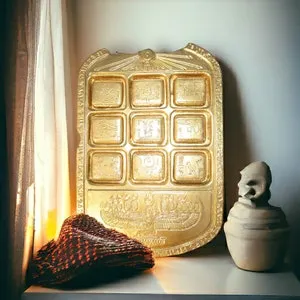
The golden tablet likely served as a ritual or funerary object, placed in tombs or used during ceremonies. Its functions may have included:
-
Invocation of Protection: Shielding the deceased from evil forces.
-
Guidance to the Afterlife: Acting as a symbolic map for the soul’s journey.
-
Union with the Gods: Ensuring the deceased’s eternal presence with divine powers.
By combining protective symbols with solar imagery and divine figures, the tablet represented a complete cosmological program, uniting death with eternal rebirth.
A Window into Egyptian Worldview
Gazing upon this golden artifact is like stepping into the ancient Egyptian worldview. The symbols are not random decorations; they are carefully chosen messages of faith, protection, and cosmic order.
-
Art: Expressed through delicate hieroglyphic engravings.
-
Language: Encoded in sacred signs that carried layered meanings.
-
Faith: Embodied in every emblem, reminding the living and the dead of divine presence.
The artifact reflects the Egyptian belief that eternity was carefully constructed—each symbol, material, and ritual forming part of a larger system to ensure everlasting life.
Comparison with Other Golden Artifacts
The golden tablet stands among other famous Egyptian artifacts, such as:
-
Tutankhamun’s Funerary Mask – a golden masterpiece symbolizing eternal protection.
-
Golden Amulets and Scarabs – placed with the dead to safeguard the soul.
-
Solar Jewelry – designed to connect the wearer with the regenerative power of Ra.
While smaller than monumental treasures, the tablet’s symbolic density makes it just as powerful a testimony to Egyptian spirituality.
Modern Significance and Preservation
Today, artifacts like the golden Egyptian tablet continue to inspire awe. Museums and archaeological institutions preserve these objects not only as artworks of antiquity but as voices of a vanished civilization.
They remind us that ancient Egyptians viewed life and death as inseparable parts of a cosmic cycle. Each artifact, carved or inscribed, carried promises of protection, renewal, and unity with the divine.
Conclusion
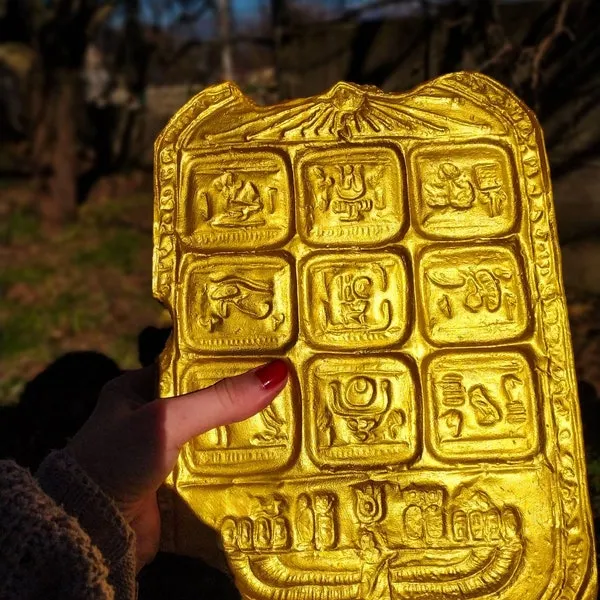
The Golden Egyptian Tablet, with its gleaming surface and sacred inscriptions, stands as a timeless testament to the Egyptian pursuit of eternity. From the Eye of Horus and Ra’s radiant life-giving rays to the winged goddess of order and protection, every detail reflects a civilization that sought to bridge the mortal and divine.
This relic is more than an artifact—it is a portal into an ancient worldview, where art was sacred, language was eternal, and faith was carved into gold. Its enduring glow continues to remind us that, for the Egyptians, death was not an end but a golden beginning in the journey beyond life.
ALSO READ: The Ceremonial Chariot of Civita Giuliana: A Rare Roman Pilentum from Pompeii