Göbekli Tepe: The World’s Oldest Known Temple
Deep in the hills of southeastern Turkey lies Göbekli Tepe, a monumental archaeological site dating back to around 10,000 BC. Often referred to as the world’s oldest known temple, it has reshaped our understanding of human history and civilization. Characterized by massive stone pillars arranged in circular formations, many adorned with carvings of animals and abstract symbols, Göbekli Tepe predates both agriculture and permanent settlements.
Its discovery has forced archaeologists and historians to rethink the timeline of human cultural evolution. Could hunter-gatherers have built sophisticated religious or ceremonial structures long before the advent of farming? Göbekli Tepe suggests they did, making it one of the most important archaeological sites ever unearthed.
Discovery of Göbekli Tepe
Göbekli Tepe was first noted in the 1960s, but it was not until the 1990s that German archaeologist Klaus Schmidt began excavations that revealed its true significance. Situated on a limestone plateau near the city of Şanlıurfa, the site covers more than 20 acres and contains multiple circular enclosures built with T-shaped limestone pillars.
What makes Göbekli Tepe remarkable is its age. Radiocarbon dating places the structures at nearly 12,000 years old, thousands of years older than Stonehenge or the Pyramids of Giza. This positions Göbekli Tepe not only as a pioneering monument but also as a key to understanding the origins of organized human society.
The Architecture of Göbekli Tepe
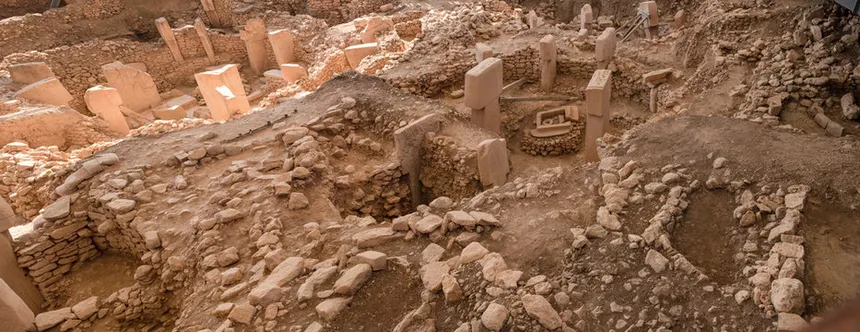
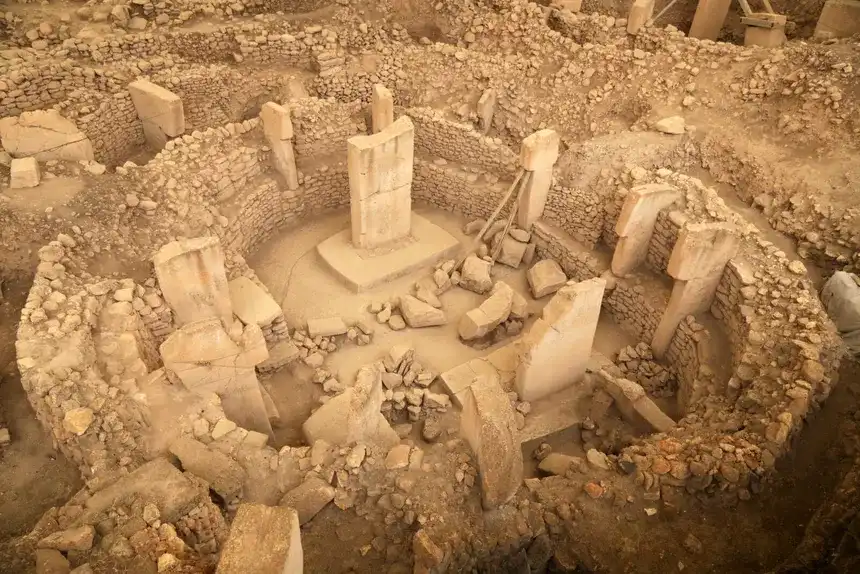
The most striking features of Göbekli Tepe are its massive stone pillars, some reaching heights of up to 6 meters (20 feet) and weighing as much as 20 tons. These pillars are arranged in circles or ovals, often with two larger central pillars surrounded by smaller ones.
Carvings and Symbols
Many pillars are intricately decorated with relief carvings of animals such as lions, snakes, boars, vultures, and foxes, along with abstract symbols and humanoid figures. These carvings suggest that the builders had not only technical skill but also a rich symbolic and spiritual world.
The T-shaped pillars themselves are thought to represent stylized human forms, possibly ancestors, deities, or spiritual beings. Together, the carvings and shapes imply that Göbekli Tepe may have served as a ritual or ceremonial center.
The Mystery of Its Builders
Göbekli Tepe predates the advent of farming, pottery, and settled villages. Its builders were likely hunter-gatherers, which challenges the long-standing theory that complex architecture and social structures emerged only after the development of agriculture.
This discovery suggests the opposite: that religion and communal ritual may have driven people to come together, cooperate, and eventually develop farming to support such projects. Göbekli Tepe, then, could represent the spark that ignited the transition from small nomadic groups to organized societies.
The Purpose of Göbekli Tepe
The exact purpose of Göbekli Tepe remains debated among scholars. Several theories exist:
-
A Religious Center: The monumental scale and carvings suggest it was a place of worship, possibly dedicated to animal spirits, ancestors, or early deities.
-
A Ceremonial Gathering Place: The circular structures may have served as spaces for communal rituals, feasts, or seasonal gatherings.
-
A Burial or Ancestor Site: Some believe it functioned as a necropolis, although no human remains have been found in the enclosures.
-
A Proto-Agricultural Catalyst: By creating a central meeting place, Göbekli Tepe may have encouraged the beginnings of agriculture to sustain larger gatherings.
While its purpose is not fully understood, its sheer scale and symbolism confirm it held immense importance for the people who built it.
A Monument Older Than History
To grasp the significance of Göbekli Tepe’s age, consider this: when it was constructed, the last Ice Age had only recently ended, and writing, metallurgy, and urban settlements were still millennia away.
Yet, the builders were able to quarry, transport, and carve massive stones with remarkable precision. This level of organization implies advanced social coordination, specialized labor, and shared cultural or religious motivation—all previously thought impossible for societies of that era.
The Enigma of Its Abandonment
Around 8,000 BC, Göbekli Tepe was deliberately buried under tons of earth and rubble. The reason for this remains unclear. Some scholars suggest it was part of a ritual closure, while others believe it was abandoned as new cultural practices emerged.
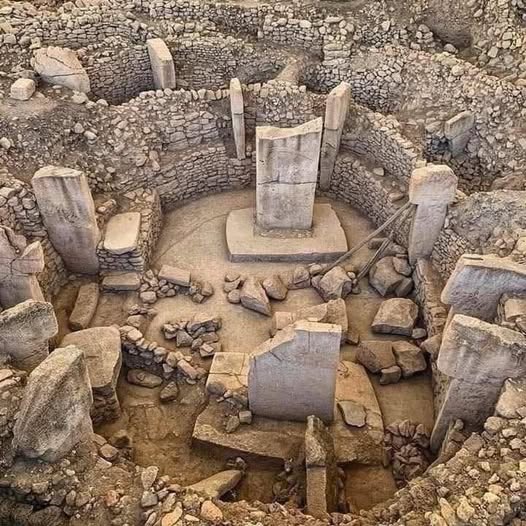
Ironically, this act of burial preserved the site in extraordinary condition. Allowing modern archaeologists to study its enclosures, carvings, and layout with minimal damage from time.
Göbekli Tepe and the Redefinition of Civilization
Göbekli Tepe has upended traditional assumptions about human history. For decades, scholars believed that agriculture led to permanent settlements. Which then allowed religion, monumental architecture, and organized societies to develop.
Göbekli Tepe reverses this narrative. It suggests that spirituality and communal rituals may have come first. Providing the social glue necessary for people to settle and eventually invent agriculture. In this sense, the site could be seen as the birthplace of civilization itself.
UNESCO World Heritage Status
In 2018, Göbekli Tepe was inscribed as a UNESCO World Heritage Site, recognizing its unparalleled importance to humanity’s shared heritage. UNESCO described it as “one of the most important archaeological discoveries of the 21st century.”
This designation has helped protect the site while also promoting sustainable tourism. Today, Göbekli Tepe draws visitors from across the world. Who come to marvel at its enigmatic pillars and experience the cradle of human culture.
Visiting Göbekli Tepe
Göbekli Tepe is located about 15 kilometers northeast of Şanlıurfa, a city in southeastern Turkey. The site has been developed with visitor facilities, including a museum and protective shelters over the main enclosures.
Travel Tips
-
Best Time to Visit: Spring and autumn offer the most comfortable weather.
-
Accessibility: The site is accessible by road from Şanlıurfa, with guided tours available.
-
Combine Visits: Pair a trip to Göbekli Tepe with the nearby Şanlıurfa Archaeology Museum, which houses many artifacts from the site.
Conclusion
Göbekli Tepe is not just an archaeological site—it is a revolution in our understanding of human history. Built nearly 12,000 years ago by hunter-gatherers, it predates farming, cities, and writing. Yet demonstrates remarkable social organization and spiritual depth.
Its massive stone pillars, intricate carvings, and mysterious purpose continue to intrigue researchers and inspire visitors. More than just ruins, Göbekli Tepe is a window into humanity’s earliest attempts to connect with the sacred. Proving that the roots of civilization may lie not in agriculture alone. But in the shared rituals and beliefs that bind people together.
ALSO READ: The Mouth of Truth in Rome: History, Legends, and Cultural Significance